
Last Updated: August 1, 2026
Who This Article Is For
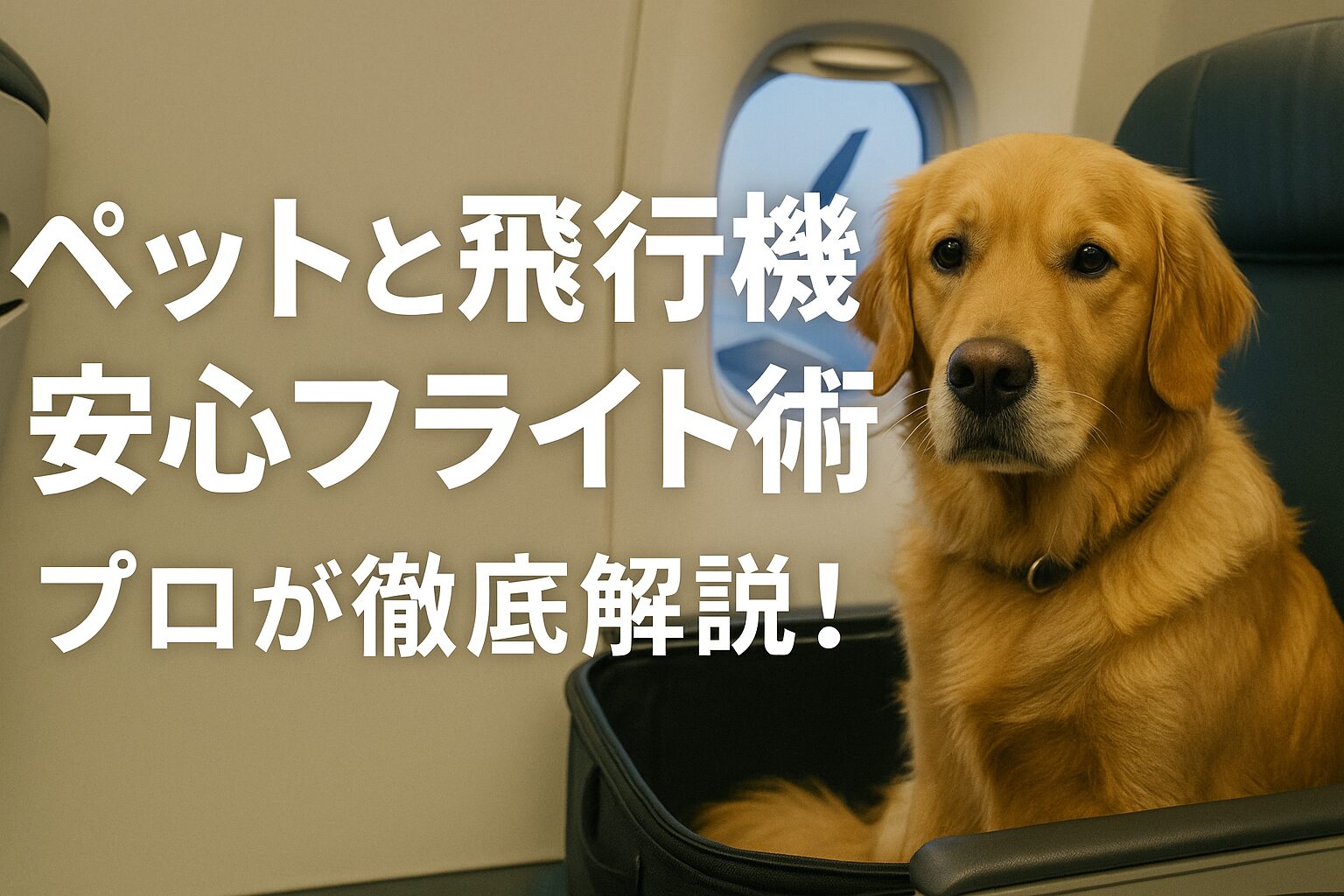
- This article covers what to do when transporting your dog or cat by plane.Assessing Passenger Fitness to Fly and Safety Measures in the Cabin and Cargo HoldThis explanation focuses specifically on these points.
- A comprehensive overview covering everything from travel preparations to what to do once you arriveIf you want to know about,A Guide to Preparing for Overseas Travel with Your Petfor more details.
- How to Ease Anxiety and Stress on Long-Haul FlightsThe content focused on is:A Guide to Coping with the Stress of Long-Haul FlightsThis is summarized in detail here.
- Adapting to Environmental Changes After Relocationas forA Guide to Managing Stress After Moving Abroadfor more information.
Is that flight the right choice for your dog or cat?
Whether air travel is suitable for your pet depends largely on its health, age, breed-specific characteristics, and personality. Before considering air travel, be sure to check these four points first. At PetAirJPN, when we receive inquiries about international transport, we begin the preparation process by conducting this suitability assessment together with the pet owner.
4 Things to Check Before Boarding
- Health Condition: Pets with chronic conditions (especially heart or respiratory diseases), recent illnesses or injuries, or those that are pregnant may be at increased risk. If you are considering traveling with your pet, be sure to have your veterinarian perform a health checkup beforehand.
- Age: Newborns and elderly pets may require more careful consideration when it comes to their ability to regulate body temperature and adapt to environmental changes. Since there is significant individual variation, do not make blanket judgments based solely on age or how old they are; please consult your regular veterinarian.
- Characteristics of Dog and Cat Breeds (Especially Brachycephalic Breeds): It is widely recognized in the field of veterinary medicine that brachycephalic dog breeds—such as Bulldogs, French Bulldogs, Pugs, Pekingese, and Shih Tzus—as well as brachycephalic cat breeds—such as Persians and Himalayans—are at a higher risk of respiratory problems and heatstroke than other dog and cat breeds due to their anatomical characteristics (Reference:American Veterinary Medical Association (AVMA)(etc., as of August 2026). Since many airlines have transportation restrictions in place, be sure to check the latest information from the airline you plan to use. Regarding brachycephalic dog breeds,Summary of Checked Baggage Policies by AirlineandGuide to Preparing for BoardingThis is explained in detail there.
- Personality: Pets that are extremely timid, nervous, or aggressive may have difficulty adjusting to the changes in their environment during transport. Pets with severe separation anxiety should also be closely monitored, in conjunction with prior training.
During the pre-trip medical examination, you’ll undergo a comprehensive evaluation to determine whether you’re physically able to handle air travel, including assessments of your heart and respiratory systems, the condition of your ears, nose, and throat, and your body’s ability to regulate temperature. If you have a pre-existing medical condition, it’s a good idea to discuss whether your symptoms are stable and whether you can adjust your medication schedule to accommodate your travel plans.
If any of the above apply to you—even slightly—or if you would like more information about specific conditions or risks unique to certain dog or cat breeds, be sure to consult your regular veterinarian. Your veterinarian will not only check your pet’s health but also advise you on whether air travel is appropriate in the first place.
What Are the Risks of Air Travel? Insights from Cargo Hold Conditions and Statistics
Traveling by airplane carries risks such as stress caused by an unfamiliar environment and changes in conditions specific to the cargo hold. However, the incidence of accidents is low, and these risks are generally considered to be manageable with proper preparation.
Key Facts and Real-World Insights on Data and the Environment
- Statistical Reality:米国運輸省(DOT)は、航空会社から報告された動物輸送中の死亡・負傷・紛失を毎月集計・公表しています。2024年通年では、報告義務のある米国の航空会社(60席を超える機材で定期便を運航する会社)の合計で13件(死亡10件、負傷3件、紛失0件)が報告されました。月によっては報告インシデントがゼロという月もあります(出典:U.S. Department of Transportation Air Travel Consumer Report (Full-Year 2024 Edition)(Confirmed in August 2026). While the number of cases isn't particularly high, it's important to recognize that there are indeed some cases.
- Cargo Hold Environment: Although the cargo hold is climate-controlled, temperature and humidity may fluctuate while the aircraft is on the ground or in flight. Regarding air pressure, it is generally maintained below the international standard upper limit (approximately 8,000 feet), but actual values vary by country and aircraft type. It is also reassuring to be aware that you will be exposed to engine and mechanical noise. For international flights with layovers, the ground layover time at the stopover and the environmental control measures in place are also important factors to consider when selecting a flight.
- Emergency Procedures: Many airlines’ regulations require that pets be left on board in the event of an emergency evacuation. Since specific procedures vary by airline, be sure to check with the airline you plan to use in advance if you have any concerns.
It is believed that the risks associated with transporting pets in the cargo hold increase even further during periods of high temperatures. For example, some airlines—such as American Airlines in the United States—impose restrictions on certain pet shipments during periods of high temperatures for temperature-control reasons (Source:American Airlines Official(Confirmed in August 2026). Since the applicable periods and conditions vary by airline, if you are planning to travel during the hot season, be sure to check the latest acceptance criteria for the airline you plan to use.
These considerations can be effectively managed and mitigated through proper preparation and expert support. Whether traveling for leisure or for work-related reasons such as an overseas assignment, it is of the utmost importance to create a transportation plan that prioritizes your pet’s safety and well-being above all else. In particular, carefully following the guidelines for selecting a crate and conducting pre-travel training—as well as thoroughly understanding the procedures required by airlines and animal quarantine authorities—is the surest way to minimize risks.
Things to Do Before Your Flight
Before your flight, you must complete a health examination, prepare the necessary documents, confirm the airline’s regulations, and select and train your pet to use a carrier. If you are traveling overseas on an international flight, you must also have your pet microchipped, complete rabies vaccination requirements in accordance with the destination country’s entry regulations (including a rabies antibody titer test if you plan to return to Japan), and complete export procedures with the Animal Quarantine Service. If you are traveling only on domestic flights, these quarantine-related procedures are generally not required. Let’s go through them step by step.
Health Checkups and Required Documents
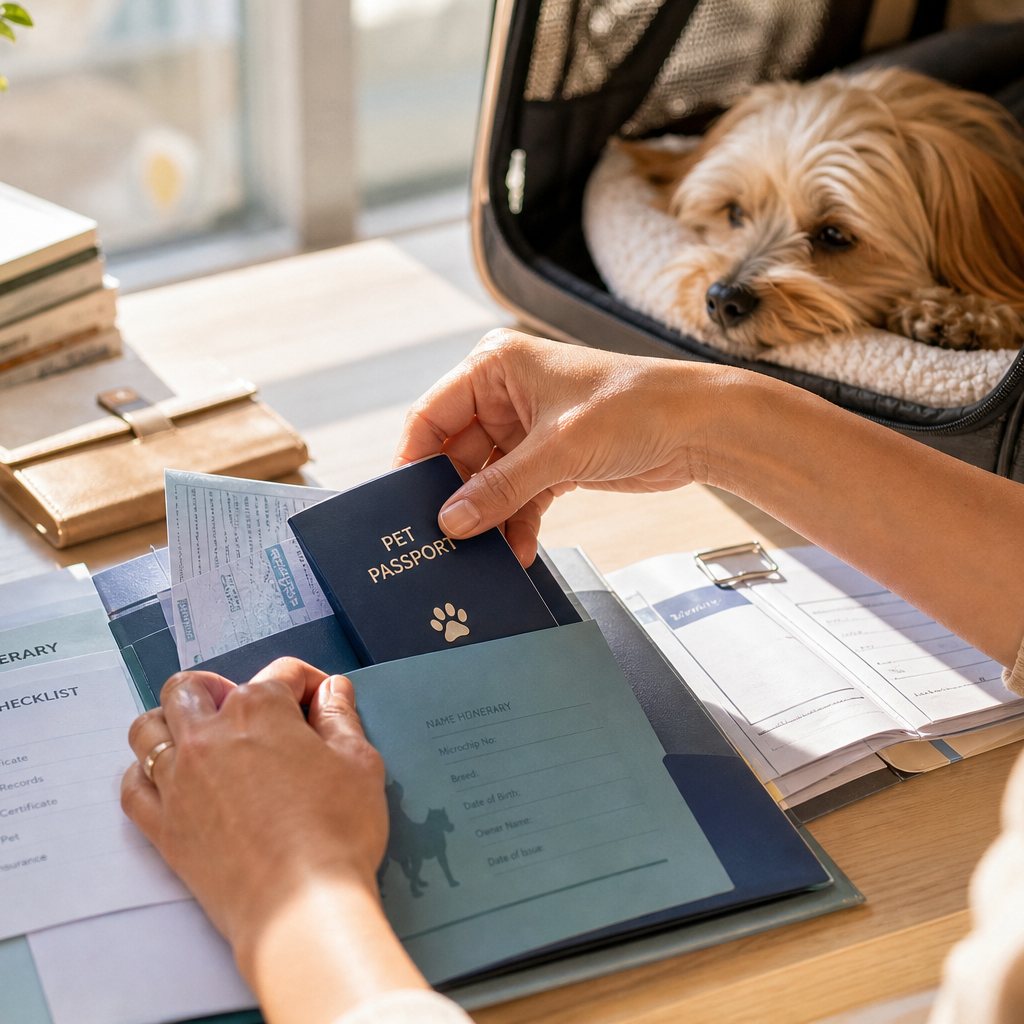
Many airlines and destination countries require the submission of a health certificate issued by a veterinarian, as well as proof of rabies vaccination and proof of combination vaccinations. Health certificates typically state the pet’s health condition at the time of examination and confirm that the pet is fit to travel by air. Many destinations require that the certificate be “issued within a certain period prior to departure,” but since the specific validity period varies by destination, be sure to check the official information provided by the destination’s authorities. Regarding rabies vaccinations:A Basic Guide to Rabies VaccinationsThis is explained in detail there.
Microchips and Rabies Antibody Titer Testing
Many countries require that dogs be fitted with an ISO-compliant microchip and receive a rabies vaccination after the microchip is implanted as a condition of entry. Regarding microchips,The Complete Guide to Microchipping Dogs and Catsfor more details.
in particularIf you plan to return to JapanAnd, furthermore,Outside the designated regions (Iceland, Australia, New Zealand, Fiji, Hawaii, and Guam)If you are entering Japan from one of these countries, the Animal Quarantine Service requires that your rabies antibody titer be 0.5 IU/mL or higher; this test result is valid for two years from the date of blood collection. Additionally, a waiting period of at least 180 days is required between the blood collection and your arrival in Japan (Source:Animal Quarantine Service: "Procedures for Importing Dogs and Cats"(Confirmed in August 2026). If you do not meet these requirements, you may be subject to a quarantine (isolation) period of up to 180 days. Since separate procedures are established for entry from designated regions, the antibody titer test and waiting period requirements do not necessarily apply in the same way. Please be sure to check the Animal Quarantine Service’s designated regions page to confirm whether your return route falls under a designated region (Source:Animal Quarantine Station “Designated Area”(Confirmed in August 2026). On the other hand, for trips where you do not plan to return to Japan, the necessity and criteria for antibody testing must follow the conditions set by the authorities of your destination country, and Japan’s requirements may not apply directly. In either case, please verify the applicable conditions using official information from both the Animal Quarantine Service and the authorities of your destination country before making your preparations.
Plan your trip well in advance.
If you plan to return to Japan and your entry falls under the category of arrival from a non-designated region, the waiting period of at least 180 days following an antibody test alone takes nearly half a year. Since you’ll also need to factor in the time required to receive your test results and other preparatory steps, we recommend that you begin planning your trip as early as possible. If your situation involves entry from a designated region, the required procedures will differ, so please check the official information from the Animal Quarantine Service.
Export Procedures at the Animal Quarantine Station
When exporting dogs or cats from Japan, the application for an export inspection must be submitted輸出日の14日前までThis is carried out using NACCS (Animal Quarantine-Related Operations). The actual export inspection isWithin 10 days of departureThe process involves undergoing these tests, being screened for rabies (and leptospirosis in the case of dogs), and then receiving an export health certificate (Source:Animal quarantine office "to export dogs and cats."(Confirmed in August 2026). Please be careful not to confuse the different deadlines for the “application” and the “inspection.” The documents required at the time of application are specified by the Animal Quarantine Service, and the requirements may vary depending on the individual animal’s circumstances; therefore, please prepare your application while checking the latest guidelines on the official website listed above.
Checking Airline Policies
Pet acceptance policies, crate specifications, fees, and booking procedures vary significantly by airline. Be sure to check the official website of the airline you plan to use for the latest information on the following items.
Airline policies change frequently. This is especially true for international flights and when traveling with a dog in the cabin, as the policies of stopover destinations may also apply. If you find it difficult to verify these details on your own, please feel free to contact PetAirJPN.
Packing Checklist for the Day Before and the Day of Departure
To avoid leaving anything behind, be sure to check the following items by the day before departure.
How to Choose a Crate
A crate is the most important item for ensuring the safety and comfort of pets during transport. Many airlines require crates that comply with the IATA (International Air Transport Association) Live Animal Regulations (LAR). The LAR establishes standards such as sturdy materials, adequate ventilation, and escape-proof locks. For soft carriers carried into the cabin, more specific criteria are outlined, such as requiring ventilation openings totaling at least 16% of total wall area, distributed on all four sides (Source:IATA Live Animals Regulations(Confirmed in August 2026). Adequate ventilation is also required for crates checked in the cargo hold; however, since specific standards vary depending on the aircraft type and crate model, please refer to the IATA document mentioned above or contact your airline for details. It is also important to ensure there is enough space for your pet to move around naturally inside the crate. If your pet is traveling in the cabin, be sure to check the size restrictions specified by the airline. For specific guidance on selecting a crate,The Complete Guide to Choosing a CrateThis is explained in detail there.
Crate training: a secure "hiding place
To ensure your pet stays calm inside its crate on the day of the flight, advance crate training is essential. The goal is to help your pet recognize the crate as a safe and calming place.
Getting Your Dog Used to the Crate
Place the crate in a part of your home where your dog spends time and allow them to come and go as they please. The key is to leave the door open and not try to force them inside.
Make a good impression
Use treats and toys to help your dog associate the crate with positive experiences. Feeding your dog inside the crate is also an effective method.
Practice closing the door
Start practicing closing the door for short periods of time, and gradually increase the duration while monitoring how things go.
Practicing Separation from the Owner
We place the dog in a crate and move to another room to help the dog get used to staying calm even when separated from its owner.
Simulate movement
Let your pet get used to situations that closely resemble actual travel, such as riding in the car while in a crate. If you have any questions about the procedure, please feel free to contact PetAirJPN.
Cats are animals that are sensitive to changes in their environment. Since they tend to get stressed by being transported in an unfamiliar carrier, keeping the carrier in their living space on a daily basis so they can freely go in and out of it will help reduce their stress on the day of the move. If you have multiple cats, the general rule is to provide a separate carrier for each one.
Pre-flight meals, hydration, and exercise
It’s generally recommended to feed your pet a light, easily digestible meal a few hours before departure. Boarding a flight on a full stomach can cause motion sickness. Make sure your pet has access to fresh water right up until departure, and place a spill-proof water bottle in the carrier. Taking your pet for a good walk before heading to the airport and before check-in, so they can relieve themselves, will put both your pet and you at ease.
Tips for Managing Stress and Anxiety
Placing a familiar blanket or a towel that smells like you inside the crate can help your pet feel secure. However, be sure to choose items that pose no risk of being swallowed or causing entanglement.
Regarding the use of sedatives, the International Air Transport Association (IATA) and the American Veterinary Medical Association (AVMA) do not recommend administering them to pets during transport. This is because there is a risk of side effects such as respiratory depression, low blood pressure, and impaired thermoregulation, and special caution is required inside an aircraft where air pressure fluctuates (Source:IATA Traveler’s Pet Corner/AVMA(Confirmed in August 2026). If you prioritize your pet’s safety, you should focus on methods that reduce stress at its source—such as crate training in advance, making adjustments to the environment, and, if possible, considering bringing your dog with you on the flight—and avoid using sedatives unless directed by a veterinarian.
Have you decided on your destination and when you plan to leave?
If you could tell us about your pet's situation, we'll let you know how much time you'll need to prepare and what the initial steps are.
Procedures on the Day of Departure and Precautions on Board and in the Cargo Hold
On the day of your flight, the process will proceed as follows: check-in and security screening at the airport; handling of your pet—whether checked as baggage or carried on board; and what you can do as the owner during the flight. Here, we’ll explain the day-of-flight procedure and key points to keep in mind.
Check-in and security at the airport
If you’re traveling with a pet, be sure to leave for the airport earlier than usual. Since the recommended arrival times vary by airline for both domestic and international flights, it’s best to check in advance. At check-in, present the required documents at the airline counter and pay the pet transport fee. A final inspection of the crate will also be conducted at this time. Security screening procedures differ depending on whether you’re taking a domestic or international flight, or carrying your pet on board. To ensure you can handle the process without rushing, it’s a good idea to check with the airport or airline in advance.
Important Points to Note for Checked Baggage and Carry-On Baggage
When checking a pet in the cargo hold, after check-in, airline staff will transport the pet to a designated holding area, and it will then be loaded onto the aircraft. The airline makes every effort to keep pets in an air-conditioned area while they wait and to handle them with care.
On flights that allow dogs to travel in the cabin, it is standard practice to place them in a soft carrier or crate of the specified size and stow it under the seat in front of you. While dogs generally cannot be removed from their carriers during the flight, the peace of mind that comes from having them by your side is a major benefit. Be sure to be considerate of other passengers regarding barking, odors, and other factors. The basic guidelines regarding whether dogs are allowed in the cabin and how carriers should be handled are as follows:IATA Traveler’s Pet CornerAs mentioned above, the actual conditions vary by airline. Please feel free to contact PetAirJPN for assistance in finding airlines that allow pets to travel in the cabin and for details on their specific requirements.
Key Considerations for Deciding Between the Cargo Hold and Carrying Onboard
- Cargo hold: It is characterized by a large number of participating airlines and a relatively wide range of dog breeds and sizes to choose from. On the other hand, owners cannot directly check on their dogs during the flight.
- Carry-on: While this option offers the reassurance of having your pet by your side, it is limited to certain airlines and has fairly strict size restrictions. For pets at particularly high risk—such as brachycephalic breeds—it is worth considering as an option.
- Whichever option you choose, it’s essential to do crate training in advance and check with the airline well in advance.
In the cargo hold, owners cannot directly check on their pets during the flight; however, some airlines have systems in place where staff check on the pets while on the ground or during takeoff and landing. Even when traveling with a pet in the cabin, the basic rule is not to open the carrier’s zippers or locks unnecessarily during the flight, but to keep it stowed under the seat until instructed otherwise. Even if your pet appears restless, speaking to it quietly from nearby can sometimes help put it at ease.
What Pet Owners Can Do During the Flight
If you check your pet in the cargo hold, you will not be able to stay with it directly during the flight. However, making the following preparations will help put your mind at ease.
Things to Keep in Mind After Arrival
Upon arrival, you’ll need to follow these steps in order: pick up your pet, disembark, complete import procedures with the authorities at your destination (if traveling on an international flight), and monitor your pet’s condition. Even after a long flight, your responsibilities as a pet owner aren’t over yet.
If you checked your pet in the cargo hold, it will typically be handed over to you at a dedicated counter in the baggage claim area or directly by airline staff. If you brought your pet on board, you will disembark after the other passengers have exited the aircraft, following the flight attendants’ instructions. Upon arrival on an international flight, you will often be required to complete import procedures with the quarantine authorities at your destination. However, the specifics and necessity of these procedures vary by country and country of origin, and in some cases, the process may be simplified depending on the circumstances. In any case, the authorities will verify the documents you submitted and the pet’s condition; if there are no issues, you will be granted entry. Regarding import procedures when returning to Japan,Animal Quarantine Service: "Procedures for Importing Dogs and Cats"Please check there for the latest information.
When you’re reunited with your pet, start by carefully observing its condition. Check their breathing, level of consciousness, and whether they have any injuries. Give them fresh water as soon as possible and let them relieve themselves in a quiet, comfortable place. Since the fatigue and stress of a long trip can sometimes cause them to become unwell, keep them resting for a few days after returning home and carefully monitor their appetite, energy levels, and bowel movements. If you notice anything unusual, consult a veterinarian immediately.
What's the difference between domestic and international flights?
The procedures and regulations for transporting pets differ significantly between domestic and international flights. If you assume, “It’s fine because I’ve flown with my pet domestically before,” and put off preparing for an international flight, you may not have enough time to gather the necessary documents and complete the quarantine procedures. We’ve summarized the main differences in the table below.
| Items | Domestic Flights (Travel Within Japan) | International Flights (Travel to and from Overseas) |
|---|---|---|
| Required Documents | The focus is primarily on the consent forms required by the airline. In many cases, a medical certificate is not required. | Health certificates, vaccination certificates, microchip certificates, rabies antibody titer test certificates, import permits, and other documents required by the destination country and airline. These documents must generally be prepared in English. |
| Quarantine and Procedures | Not required in principle. | When leaving the country, export quarantine at a Japanese animal quarantine station is required. Upon arrival, many countries require import procedures to be carried out by the destination country’s authorities; however, the specifics and whether these procedures are required vary by country. When returning to Japan, if you are entering from a region other than a designated area and do not meet the requirements, your pet may be subject to quarantine (isolation for up to 180 days, according to the Animal Quarantine Service). |
| Dogs in the cabin | Some airlines allow this under certain conditions. | Policies vary significantly depending on the airline and destination country. It is essential to check in advance. |
| Preparation Period | Typically, it takes anywhere from a few days to a few weeks. | This varies significantly depending on your destination and the required tests. If you plan to return to Japan and are entering from a region other than those designated, we recommend that you begin planning at least six months in advance, taking into account the 180-day waiting period following an antibody test (according to the Animal Quarantine Service). |
| Costs | Prices tend to be relatively low. Please check each company’s official website for details. | In addition to airfare, there are document-related fees and inspection fees. Since the specific amounts vary depending on your destination and your pet’s circumstances, please contact us for more information. |
| complexity | Relatively simple. | Regulations vary by country and change frequently, so it is essential to always check for the latest information. |
Source: Animal Quarantine Service, “Procedures for Importing Dogs and Cats”https://www.maff.go.jp/aqs/animal/dog/import-other.html(Verified in August 2026). The figures in the table regarding quarantine and waiting periods, etc., are subject to change, so be sure to check the latest official information before traveling.
As you can see, transporting pets on international flights is more complex than on domestic flights and requires specialized knowledge and experience. In particular, if you want to travel with your dog in the cabin, you may need to gather detailed information and confirm details with the airline. Incomplete documentation or delays in the process can, in the worst-case scenario, lead to your pet being denied entry or being held in quarantine for an extended period. While each individual step is not difficult in itself, the unique challenge of international travel lies in the fact that, because you must coordinate with multiple parties, it’s easy to overlook details. At PetAirJPN, we provide comprehensive assistance with travel preparations, including guidance on the latest regulations in each country, support with preparing the necessary documents, organizing the information required for applications to animal quarantine offices, assistance with airline arrangements and coordination, and on-site support at your destination.
In case of any problems.
To prepare for any unforeseen problems, it’s important to check the following five items in advance: procedures for flight delays or cancellations, contact information in case your pet becomes ill, the details of your pet insurance, a list of emergency contacts, and the climate at your destination. Even if something unexpected happens, you’ll be able to respond calmly if you’re prepared.
Support Provided by PetAirJPN
PetAirJPN is an agent specializing in the international transport of pets. Guided by our vision of “eliminating borders for pets,” we support you in traveling abroad with your beloved dogs and cats through the following services.
- Counseling & Estimates: We’ll ask you about your destination, your pet’s breed, the travel dates, and other details, and then propose a plan tailored to your situation. Please also let us know if you’d like to bring your dog on board with you.
- Notice Regarding the Latest Regulatory Information: We provide easy-to-understand explanations of import and export regulations in various countries, as well as airline policies regarding items carried on board, and offer advice on the necessary preparations.
- Assistance with Preparing Documents: We’ll help you organize the information needed for complex procedures, such as health certificates and import/export documents. Formal applications to the Animal Quarantine Station will be submitted either by you or, if necessary, by a certified administrative scrivener with whom we collaborate (the certified administrative scrivener will handle the application process).
- Collaboration with Veterinarians and Related Organizations: As needed, we can refer you to partner veterinary clinics and assist with scheduling microchip implantation and vaccinations.
- Help Choosing a Crate or Carrier: We’ll help you select a crate that’s right for your pet, choose a carry-on carrier that meets IATA standards, and verify that it complies with IATA regulations.
- Support at Departure and Arrival: We can also provide assistance with airport check-in and guidance on quarantine procedures upon arrival (in coordination with local agents).
- Arrangements for Ground Transportation: We can also arrange for the ground transport of your pet from your home to the airport and from the airport to your new home.
- Proposals for Transportation Methods That Prioritize Animal Welfare Above All Else: With the goal of minimizing stress for your pet, we offer transportation options that are as stress-free as possible.
- Post-Arrival Follow-Up: We can also assist you with inquiries after your arrival, such as providing information on local partner veterinary clinics.
As a team specializing in international pet transportation, we stay up to date on the latest regulatory information and prioritize the safety and well-being of your pets in our planning. For more details or personalized recommendations tailored to your specific situation, please feel free to contact us via LINE or our contact form.
Frequently Asked Questions (FAQ)
Summary: Early preparation and accurate information ensure a worry-free flight
Traveling by plane with a pet—especially on international flights—is by no means easy. Still, as we’ve seen so far, if you carefully assess your pet’s suitability based on its health and breed-specific characteristics, select the right carrier, provide proper training, confirm airline regulations, and follow the procedures at the animal quarantine office one step at a time, these hurdles are certainly not insurmountable.
The most important things are planning and preparation well in advance, creating a realistic plan that takes your pet’s individual needs into account, gathering accurate information, and consulting with trusted professionals. By carefully addressing every detail—from assessing your pet’s suitability for air travel to choosing the right carrier, planning the day of the flight, and providing care upon arrival—your air travel with your beloved dog or cat will be much more manageable than you might expect. For information specifically tailored to brachycephalic dog breeds,Summary of Checked Baggage Policies by Airline, Ways to Cope with the Stress of Long-Haul FlightsThis articlePlease see this as well.
🐾 Traveling abroad with your pet, start with a free consultation
Please let us know your destination, desired departure date, and pet situation.
A summary of the required procedures and deadlines will be provided.
Completely free of charge|Online support available|Open on weekends and holidays
Written by: PetAirJPN Editorial Department (International Pet Transportation Operations Team)
*The information in this article is current as of August 2026. Quarantine regulations in various countries and airline policies are subject to change without notice. This article is intended to provide general information only; to determine whether travel is permitted and to confirm specific requirements, please be sure to check the latest official information from the relevant national authorities, animal quarantine offices, and airlines.

 English
  Japanese
  Chinese
  Korean
  German
  Spanish
  Portuguese