
![Moving Abroad with Your Pet: A Guide to Reducing Stress and Adjusting After Arrival [Updated for 2026]](https://petair.jp/wp-content/uploads/2024/02/1-1.webp)
Last Updated: July 29, 2026
Who This Article Is For
- For those planning to take their pets with them when moving abroad or relocating for work, from pre-departure preparations to helping them adjust after arrival,Approaches and Practical Tips for Reducing Stress in Petsfocuses on
- If you'd like a comprehensive overview of the entire relocation process,How to Take Your Pet from Japan to Another Country | A Complete Guide to Procedures and Preparationsfor more details
- Ways to cope with the stress of traveling during a flightA Guide to Stress Management for a Comfortable Air Travel Experience for Your Pet, Safety Measures on Board AreA Guide to Safety Precautions for Traveling by Air with Your PetPlease see the following as well
Why is moving abroad so stressful for pets?
The reason moving abroad is so stressful for pets is that, in addition to a drastic change in their familiar surroundings, they must endure the unusual experience of being transported, and the owner’s own anxiety is transmitted to them.
Main Causes of Stress
- Drastic Environmental Changes:Almost every aspect of daily life will change—from where you live, to smells, sounds, your walking routes, and your eating and sleeping patterns.
- The Extraordinary World of Transportation:Long trips in a crate, the sound of airplane engines, changes in air pressure, and contact with strangers and staff can be very stressful for pets. Transport in the cargo hold, in particular, adds to the anxiety of being separated from their owners.
- The Spread of Owners' Anxiety:When things get hectic while preparing for a move, your frustration and anxiety can easily be picked up by your pet. Staying calm as you make preparations will help keep your pet feeling secure.
To Make Sure You Don't Miss the Signs of Stress
Stress in pets can manifest as changes in behavior or physical condition. If you notice any of the following signs, be sure to address them promptly.
- Restless, excessive barking, hiding
- Loss of appetite or overeating, accidents
- Excessive grooming, loss of energy
- Diarrhea, vomiting, trembling, and rapid breathing
If these signs persist for more than a few days, or if the symptoms are severe, please consult your veterinarian as soon as possible.
What is the best way to go about preparing to move abroad?
If you break down the process of moving abroad with your pet into three phases—"Preparation," "Transportation," and "Adjustment"—it becomes easier to organize the necessary steps.
| Phase | Main Content | Estimated Timeframe |
|---|---|---|
| Preparation | Gathering Information, Health Care, Preparing Documents, Crate Training | Six to ten months before departure |
| Transportation Period | Final Check on the Day of Departure, Care During Transport | From Just Before Departure to Arrival |
| Adaptation Period | Creating a Sense of Security in Your New Home, Rebuilding Your Daily Routine | A few days to a few weeks after arrival |
Let's take a look, step by step, at what you can do in each phase to reduce stress.
What can you do during the preparation phase to reduce stress?
The key to reducing stress during the preparation phase is to gather information early and follow the correct sequence of veterinary procedures.
Check the rules for your destination using official sources.
Each country and region has its own regulations regarding the importation of animals (such as quarantine conditions, required documentation, vaccination requirements, and restricted species). Failure to meet these requirements may result in denial of entry or prolonged detention. Please check with the embassy or consulate of your destination country in Japan, as well as the official website of the animal quarantine authorities in your destination country,Japan's Animal Quarantine Service (AQS)It is essential to check primary sources, such as the country’s official website. Since regulations are subject to change, be sure to check the latest information before traveling.
In veterinary medicine, the order and timing of procedures are crucial.
In many travel destinations, the standard procedure is to have your pet microchipped, followed by a rabies vaccination, an antibody titer test, and a waiting period. However, since the applicable countries, specific time frames, and threshold values vary by country, be sure to check the official information provided by the authorities in your destination country.
Be Mindful of the Sequence of Veterinary Procedures
- As a general rule, rabies vaccinations administered before the microchip was implanted are not considered valid. Please check with the Animal Quarantine Service or the authorities at your destination to confirm whether your pet’s vaccination is valid in your specific case.
- If you get the order or timing wrong, it could cause a significant delay in departure. We recommend that you consult a veterinarian or specialist with experience in international transport as soon as possible, rather than making a decision on your own.
For Those Planning to Return to Japan in the Future
If there is a possibility that you may return to Japan at some point, it’s a good idea to familiarize yourself with the requirements for re-entry as well. For returns from areas other than designated regions, your pet must be implanted with a microchip that complies with international standards (ISO 11784 and 11785), have received at least two doses of the rabies vaccine (administered starting at 91 days of age, with the second dose given at least 30 days after the first, counting the first dose as Day 0), a rabies antibody titer test (0.5 IU/ml or higher, valid for two years from the date of blood collection), and a waiting period of at least 180 days from the date of blood collection until arrival in Japan (Source: Animal Quarantine Service: "Procedures for Importing Dogs, Cats, and Other Animals (From Areas Other Than Designated Regions)"(as of July 2026). Since these 180 days can be fulfilled while staying abroad, if you plan to return to Japan, getting an antibody test early on can reduce the burden upon your return.
For more detailed information on microchips and rabies vaccines, please see the article below.
Essential for pet travel abroad! A Thorough Guide to Microchipping Dogs and Cats
Rabies Vaccination Basics You Need to Know: Traveling Safely Abroad with Your Pet
There is no room for even a single mistake in the paperwork.
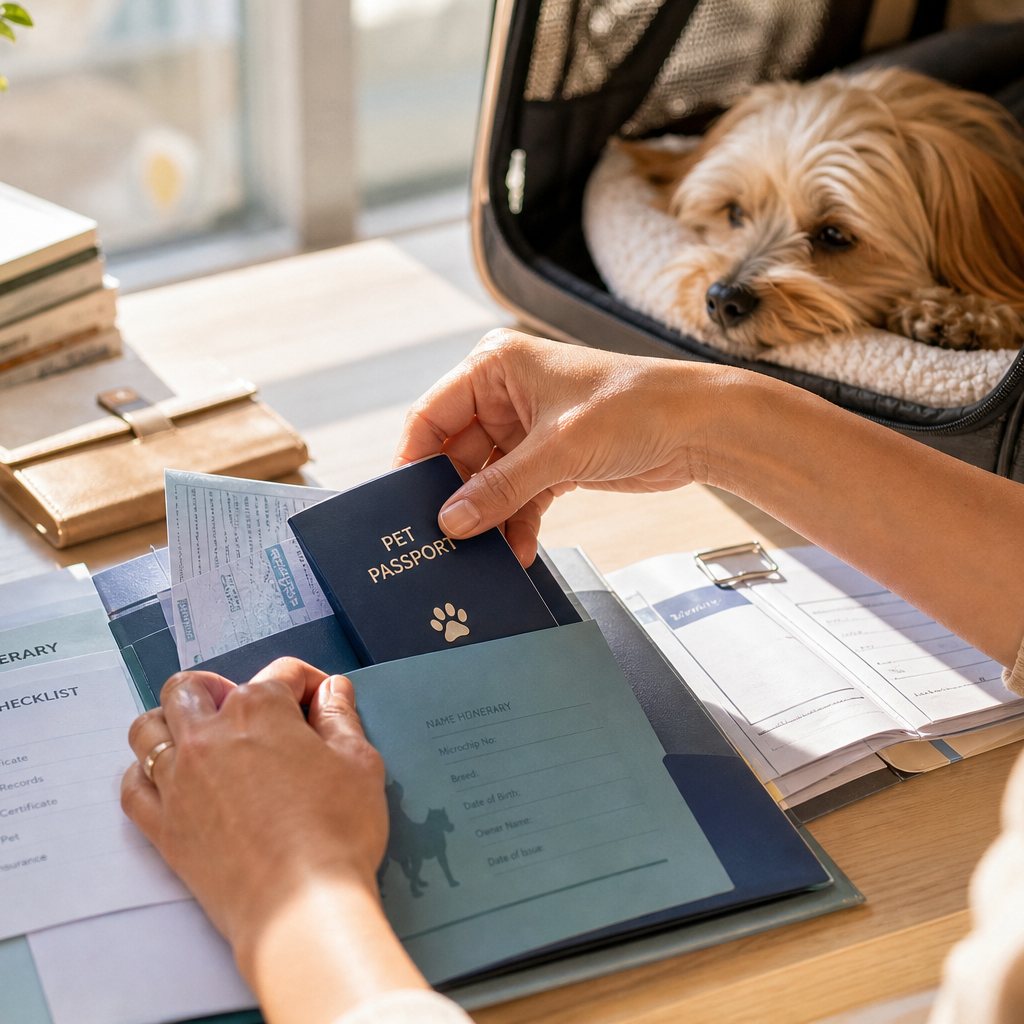
Prepare all required documents (microchip certificate, vaccination certificate, original antibody titer test results, health certificate, import/export-related documents, airline-specified documents, etc.) accurately and completely. Be sure to double-check all documents multiple times to ensure the microchip numbers match exactly and that there are no errors in the dates. Even a minor error in the documentation can lead to a delay in departure or the need to reobtain the documents.
For pre-shipment export inspections, the timing of the application and the inspection itself differ.
When departing from Japan, please specify the date you wish to be tested:At least 14 days beforeApply for an export inspection via NACCS (the online system for animal quarantine-related operations) and schedule an inspection time. The actual export inspection isWithin 10 days of departureThe procedure is conducted there, where the animal undergoes testing for rabies (and leptospirosis in the case of dogs) before an export health certificate is issued (Source: Animal Quarantine Service: “Exporting Dogs and Cats Overseas”(Verified July 2026). Be sure not to confuse the two deadlines: “Applications must be submitted at least 14 days in advance” and “Inspections must be completed within 10 days.”
Doing some research on your new home will also help you adjust more smoothly.
Whether your pet will feel comfortable after you arrive depends in part on how much information you can gather about the destination before you leave. Even when you’re busy packing, be sure to take the time to do the following research.
How Can You Create a “Safe Space” Through Crate Training?
Whether your pet perceives the transport crate as a “safe place” rather than just a means of transportation plays a major role in determining the level of stress during transport.
Points to consider when selecting a crate
- International Air Transport Association (IATA)Check with the airline you are using to see if it meets the standards set by [organization].
- It must be made of a durable material (typically plastic)
- Adequate ventilation must be ensured
- The carrier must be spacious enough for your pet to stand up and turn around inside (if it is too small or too large, you may be denied boarding).
For detailed instructions on how to choose a crate, see the article below.
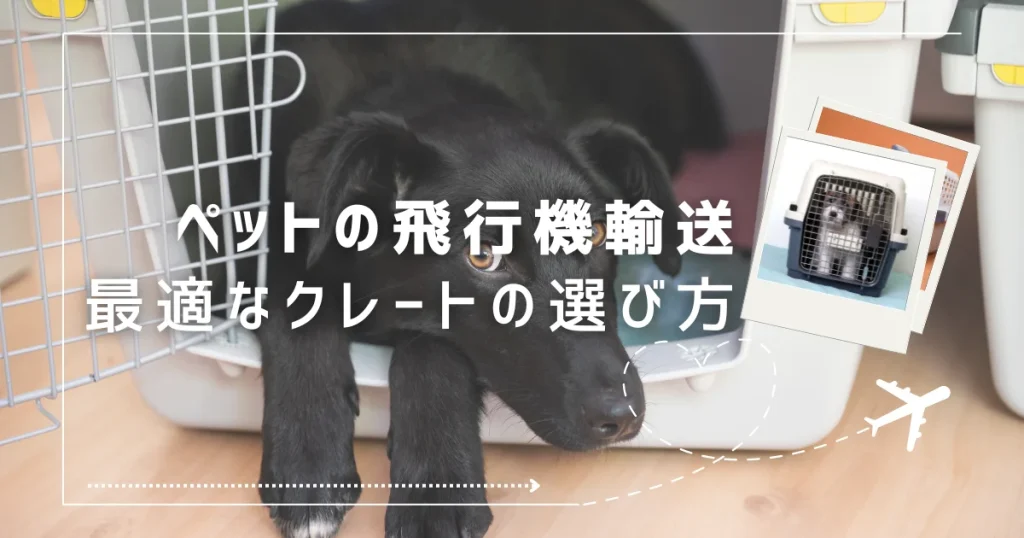
The Complete Guide to Choosing a Crate for Safe Air Travel with Your Pet
The familiarization training consists of four steps:
- Positive Encounters:Place the crate in the room so your dog can come and go as it pleases. Put treats and toys inside to help it associate the crate with a “nice place.”
- Start with short sessions:Try feeding your dog inside the crate or closing the door for a short time. When your dog comes out, be sure to praise him or her.
- Extend the length of stay:Start in a place where the pet can see its owner, and practice so that it can remain calm even as you gradually move further away.
- Establishing it as a “safe haven”:You're all set once your dog starts seeing the crate as a "safe and comfortable place" rather than a "punishment." Take your time—this process can take anywhere from a few weeks to a few months.
It’s also effective to place a blanket or towel that carries the owner’s scent inside the crate. Pets that have undergone thorough crate training will experience noticeably less stress on the day of transport.
Why not check what you need in your specific situation?
Please let us know your destination and planned departure date.
Here is information on the required preparation period and the initial procedures.
How should I choose a mode of transportation to minimize the stress on my pet?
The method of transport should be chosen based on your pet’s size, temperament, health, and the regulations of the destination country; however, regardless of the method, it is important to prioritize minimizing your pet’s stress as much as possible.
| Transport Method | Place of transport | Key Features |
|---|---|---|
| (of luggage, etc.) able to be taken into the cabin of the aircraft | Inside the cabin (at the owner's feet) | This causes relatively little stress for pets, and owners can stay by their side. However, the eligible pet sizes and available routes are very limited. |
| Checked baggage | Cargo Compartment (Climate-Controlled Section) | You can travel on the same flight as your owner, but you won't be able to see how your pet is doing. The available airlines and conditions are limited. |
| Cargo transport | In the cargo hold (sometimes on a separate flight) | We can accommodate large pets, but they may have to travel on a separate flight from their owners, and the procedures can be complicated. |
The available options, size requirements, carrier regulations, temperature restrictions, and other details vary significantly by airline. Be sure to check the latest pet transport policies on the official website of the airline you plan to use before making a reservation.IATA "Traveling with Pets"That page is also a helpful resource.
Things to Check with the Airline Before Booking
If possible, choose a direct flight, as this will reduce waiting times associated with layovers and minimize changes in environment, making it easier to minimize stress on your pet. However, flight schedules vary by season, so please check the airline’s official website for the latest information on the availability and status of direct flights.
For a comparison of shipping methods, please see the following article for a more detailed explanation.
What can you do to reduce stress on the day of departure?
On the day of departure, it’s important to allow plenty of time and make sure your pet stays calm.
Is it okay to use sedatives?
PetAirJPN does not recommend the use of sedatives for pets during air travel. This is because there are risks associated with sedatives, including adverse effects on the pet’s physical condition at high altitudes, injuries inside the crate due to impaired balance, reduced ability to regulate body temperature, and the inability to accurately assess the pet’s condition in an emergency. If you are considering using sedatives, please be sure to consult your veterinarian in advance.
Here are some ways to calm your pet without using sedatives:
- Making the Crate More Comfortable:Put in the blanket they usually use or clothing that has the owner's scent on it
- Pheromone products and supplements:If you are considering using synthetic pheromone products for dogs or cats, or natural calming supplements, be sure to consult your veterinarian beforehand and test them before your trip to confirm their effectiveness and safety.
- Temperature Control:Depending on the season, place a cooling mat or a warm blanket in the crate.
It also helps your pet feel secure when you, as the owner, remain calm and composed. Since anxiety is easily picked up on, make a conscious effort to interact with your pet in a calm manner.
Do the things you need to be careful about vary depending on a dog or cat's age and personality?
Yes. Puppies, kittens, senior pets, and animals that are naturally timid or nervous will experience stress differently and recover at different rates, even when facing the same move.
- Puppies and Kittens:This is a time when they haven’t yet developed a tolerance for new stimuli. Gradually incorporating “practice runs”—such as crate training or car rides—into their daily routine can help reduce the stress when the real thing happens.
- Senior Pets:If your pet has a pre-existing condition or physical concerns, be sure to consult with your regular veterinarian in advance to determine whether the trip itself will put a strain on your pet’s health.
- Timid and Nervous Personality:Crate training and adjusting to a new home may take longer for some dogs than others. Please be patient and respect your dog’s pace.
- For households with multiple pets:Each pet may react differently to the move. Be sure to closely observe each one individually.
Before moving, try doing some “practice runs” as part of your daily routine—such as walking around the neighborhood with your pet still in its carrier or taking short car rides—to ensure a smoother transition during the actual move and help your pet adapt to the new environment.
What should I do first after arriving? (Keep the decompression period in mind)
After arriving, the key to helping your pet adjust smoothly is to focus on creating a comfortable environment for them before unpacking, and to allow them a “decompression period” to recover physically and mentally—rather than forcing them to get used to their new life right away.
Arrival procedures and joining
In accordance with the regulations of your destination country, complete the quarantine procedures and customs inspections at the arrival airport. If your pet is being transported as cargo, be sure to confirm the pickup location and procedures in advance.
Ensuring a "Safe Space" Where People Feel Secure
Before unpacking, set up a quiet, safe space with your pet’s familiar bed, blankets, toys, and dishes. Be sure to check your home for potential hazards (such as electrical cords, poisonous plants, and escape routes).
Decompression period
Immediately after arrival, your pet will be in a very delicate state due to the stress of travel and the change in environment. For a few days to a few weeks, don’t try to force your pet to adjust; instead, take the time to gently watch over it.
Restructuring the Daily Routine
Maintain a schedule that is as close as possible to your pre-move routine—including mealtimes and locations, walk times and routes, playtime, and bathroom locations. A consistent daily routine provides your pet with predictability and a sense of security.
Gradual Adjustment to a New Environment
Start in a safe space, and gradually expand the areas of the house your pet explores. When it comes to walks, start with short distances and short durations—such as around the house—and proceed at your pet’s pace without rushing.
Establishing a Local Support System
Find a trusted regular veterinarian and an emergency clinic that provides care at night and on holidays as early as possible. It’s also a good idea to gather information on pet hotels, pet sitters, and grooming salons for peace of mind. Be especially careful when choosing a pet sitter to ensure you’re dealing with someone you can trust.
What signs should I look out for while I'm getting used to my new environment?
Among the changes observed during the adjustment period, some can be monitored over time, while others require prompt consultation with a veterinarian.
Immediately after a change in environment, it’s a natural reaction for your pet to experience a slight loss of appetite or increased wariness. However, since not drinking water can affect your pet’s health more quickly than a loss of appetite, please don’t wait too long to see how things go—consult a local veterinarian as soon as possible. Similarly, if any other signs persist for more than a few days or if the symptoms are severe, please seek advice promptly.
What are the costs associated with the procedures and preparations?
Since the cost of moving abroad varies significantly depending on your destination, your pet’s size, and the method of transport, this article does not list specific amounts. The breakdown of the main costs is as follows.
- Veterinary expenses (examinations, vaccinations, tests, microchipping, etc.)
- Fees for Issuing and Applying for Various Certificates
- Airfare (based on pet size, weight, and method of transport)
- Cost of purchasing shipping crates
- Import and Export Quarantine-Related Costs
- Costs When Hiring a Professional
An accurate estimate depends on your destination, planned departure date, and your pet’s size. If you have any concerns about the cost, please feel free to contact us for a consultation.
Which is better: handling the process yourself or hiring a professional?
There are pros and cons to both arranging travel on your own and hiring a professional service, and since delays caused by mistakes can directly lead to stress for your pet, it’s worth considering your options carefully.
| Benefits | Points to Keep in Mind | |
|---|---|---|
| Arranged on one's own | There is a possibility of reducing costs | The process takes time and effort. Any mistakes can lead to a delayed departure or prolonged docking, which can also place a significant burden on your pet. |
| Hire a specialized contractor | They provide support with complex procedures and communication. This reduces the time and mental burden, and you can expect them to handle matters based on the latest information. | It costs money |
If you’re traveling to a destination with particularly strict regulations or need to ship cargo, it’s helpful to seek support from a provider with specialized expertise. The following article provides a detailed explanation of the time required for these procedures.
Time Required for Pet Transportation Procedures and the Benefits of Using Professionals
Key Points for Successful Preparation, Transportation, and Adaptation, and Common Pitfalls
Key Points to Keep in Mind
- Planning:Start preparing well in advance, between six months and 10 months ahead of time
- Health Care:Work closely with veterinarians to ensure that all necessary procedures and paperwork are completed without omission
- Crate Training:This is an important investment in reducing transportation stress.
- Avoid sedatives:Let's Manage Stress with Safe Alternatives
- Maintaining Daily Life:Routines Provide Emotional Support for Pets
- Adaptation Support:Don't rush—just watch over your pet and go at their pace.
Frequently Asked Questions (FAQ)
Summary: Make your pet’s physical and emotional well-being your top priority, and plan with plenty of flexibility.
Moving abroad with your pet is a major challenge, but it’s not an insurmountable obstacle. The keys to success are early preparation, ensuring your pet’s safety and managing stress during transport, and providing patient support to help your pet adjust after arrival. Above all, an owner’s commitment to prioritizing their pet’s physical and mental well-being will ensure a smooth start to your new life together.
While the preparations take time and effort, they are an investment to ensure that your beloved pet—a cherished member of your family—can live a healthy and peaceful life in its new environment. If you have any questions or concerns, don’t keep them to yourself; please consult a veterinarian or an international pet transport specialist as soon as possible. PetAirJPN is also always available to advise you on how to proceed with your preparations based on your destination and planned departure date.
Reference Information and Related Links
- Animal Quarantine Station: Exporting Dogs and Cats Overseas
- Animal Quarantine Station: Procedures for Importing Dogs, Cats, and Other Animals (For Areas Other Than Designated Regions)
- IATA: Traveling with Pets
- How to Take Your Pet from Japan to Another Country | A Complete Guide to Procedures and Preparations
- A Guide to Stress Management for a Comfortable Air Travel Experience for Your Pet
- A Guide to Safety Precautions for Traveling by Air with Your Pet
🐾 Traveling abroad with your pet, start with a free consultation
Please let us know your destination, desired departure date, and pet situation.
A summary of the required procedures and deadlines will be provided.
Completely free of charge|Online support available|Open on weekends and holidays
Written by: PetAirJPN Editorial Department (International Pet Transportation Operations Team)
*The information in this article is current as of July 2026. Quarantine regulations in various countries and airline policies are subject to change without notice. This article is intended to provide general information only; to determine whether travel is permitted and to confirm specific requirements, please be sure to check the latest official information from the relevant national authorities, animal quarantine offices, and airlines.


 English
  Japanese
  Chinese
  Korean
  German
  Spanish
  Portuguese