
![Guide to Reducing Stress for Pets During Air Travel [Updated for 2026]](https://petair.jp/wp-content/uploads/2025/03/pet-airplane-stress-care.jpg)
Last Updated: August 1, 2026
Who This Article Is For
- This article is,Preparations and Care on the Day of Travel to Reduce Stress for Pets During Air TravelThis explanation focuses specifically on these points.
- A comprehensive overview covering everything from travel preparations to entry and departure proceduresIf you want to know about,The Complete Guide to Traveling Abroad with Your Petfor more details.
- Safety Measures in the Cabin and Cargo Hold, and Assessing Passenger Fitness to Fly,A Guide to Safety Measures for FlyingThis is explained in detail there.
- Support for Adjusting to a New Environment After Moving Abroad,Guide to Managing Stress When Moving Abroadfor more information.
What Kind of Environmental Changes Do Pets Experience When Traveling by Air?
When traveling by plane, pets face several environmental changes that differ from their usual surroundings. The four main changes are the noise inside the cabin, fluctuations in air pressure, temperature and humidity, and the time spent in an unfamiliar crate. Understanding the characteristics of each of these changes will make it easier to take preventive measures in advance.
Major Environmental Changes and Characteristics
- Noises on the Plane: At first, pets may react sensitively to unusual sounds, such as engine noise or in-flight announcements. However, most pets gradually get used to these sounds once they become consistent and eventually calm down.
- Fluctuations in Atmospheric Pressure: Just like humans, dogs may experience a sensation of pressure in their ears during takeoff and landing. Giving them a small treat may help them equalize the pressure naturally through chewing and saliva production.
- Temperature and Humidity Conditions: Although the cargo hold is climate-controlled, conditions may vary depending on the season and the aircraft, so please be mindful of the outside temperature when boarding.
- Staying in a New Space: Your pet will be spending more time in a crate or carrier. Having a towel that smells like you or a favorite toy will help them relax.
Dogs and cats are animals that adapt well to changes in their environment. Even if they’re nervous at first, it’s not uncommon for them to fall asleep due to the vibrations of the flight. Careful preparation beforehand can make a big difference in how comfortable they feel on the day of the flight.
How to Feel More at Ease When Preparing for a Flight
The key to a successful flight lies in advance preparation. Start working on the three key areas—choosing and getting your pet accustomed to the crate, conducting health checks and verifying necessary documents, and adjusting your pet’s diet, hydration, and exercise routine on the day of travel—in a step-by-step manner several months before departure.
How Do You Choose the Right Travel Crate for Your Pet?
When choosing a crate—which serves as your pet’s “home” during travel—be sure to select one that offers both comfort and safety. Since standards for crate size and ventilation vary by airline, it’s important to check the official website of the airline you plan to use in advance. As a reference when reviewing these standards, the IATA (International Air Transport Association) has published guidelines on the transport of live animals (Live Animals Regulations) (Reference:IATA Live Animals Regulations(Verified in July 2026).
Guidelines for Choosing a Crate
- It's spacious enough for your pet to stand up and turn around inside.
- The design ensures proper ventilation and allows the door to be securely locked.
- It is sturdily built and features a leak-proof design at the bottom.
- There's a space where you can store your pet's favorite towels and toys
The 4 Steps to Crate Training
Getting your pet used to the crate before departure will make things much easier on the day of travel. To help your pet recognize it as a “safe place,” let’s gradually get them used to it by following the steps below.
Leave the door open
Leave the crate open in the room and place your pet’s favorite toys and treats inside. If you put their favorite bed in there as well, they’ll often go inside on their own.
Close the door for just a short while
Once they start going in on their own, practice closing the door for just a short time.
Extend the time spent
Gradually increase the amount of time they spend in the crate so they can learn to relax while inside it.
Getting Used to Riding in a Car
If possible, put the dog in its crate and take it for a short drive to help it get used to the motion.
It’s important to help your pet see the crate not as a “scary place,” but as a “safe and comfortable space of their own.” If you’re prepared in this way, your pet will feel much more at ease on the day of the flight. For detailed guidance on choosing a transport crate,How to Choose the Right Crate for Air Travel with Your PetThis is explained there.
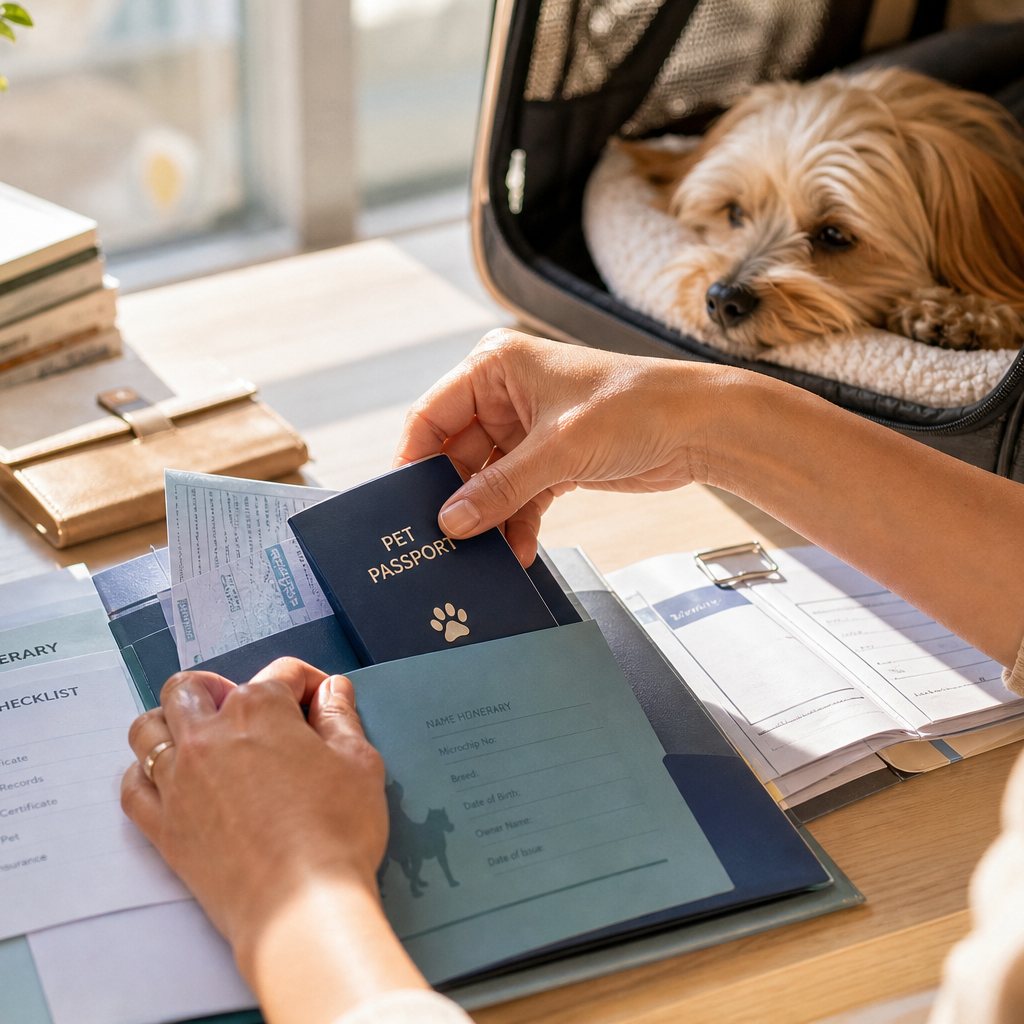
Health check and preparation of necessary documents
For peace of mind, it’s a good idea to have your pet undergo a health checkup at a veterinary clinic before departure. Tell the veterinarian about your plans to travel by plane and have them check your pet’s heart and respiratory health, vaccination status, and whether your pet is in good enough health for the trip. Pets with pre-existing conditions or brachycephalic breeds may require special care. Regarding travel with brachycephalic breeds,Can Snub-Nosed Breeds Fly? Airline-by-Airline Acceptance Policies & What You Can DoThis is explained in detail there.
The required documents vary depending on your destination. While the process is relatively straightforward for domestic flights, international flights generally require you to submit documents such as a health certificate, proof of vaccination, and proof of microchipping. Be sure to check the official information from the local authorities well in advance to confirm the exact requirements for your specific destination.
From JapanDogs & Catsを出国させる場合は、動物検疫所への輸出検査の申請が必要です。申請は輸出日のAt least 14 days beforeThis is done through NACCS (animal quarantine-related operations), and the actual inspection takes place at departureWithin 10 daysI will take it (Source:Animal quarantine office "to export dogs and cats."(Verified in July 2026).Dogs & CatsIf you plan to return to Japan, entry from areas other than the designated regions (Iceland, Australia, New Zealand, the Fiji Islands, Hawaii, and Guam) requires additional conditions, such as a rabies antibody titer of 0.5 IU/mL or higher and a waiting period of at least 180 days after the blood draw. Since the procedures for entry from designated regions differ from these requirements, be sure to confirm which category applies to you as soon as possible (Source:Animal Quarantine Service: "Procedures for Importing Dogs and Cats"(Verified in July 2026).The procedures required for small animals such as rabbits, ferrets, and birds differ from those for dogs and cats.For detailed requirements for each type of animal, please refer to the Animal Quarantine Station’sOfficial SitePlease be sure to check this. For an overview of the procedures for both departure and return,The Complete Guide to Traveling Abroad with Your PetI've summarized them here.
Don't forget to check each airline's pet policies
- JAL:International Flight Pet Travel Assistance / Domestic Flight Pet Services
- ANA:Information on Traveling with Pets on International Flights / Information on Traveling with Pets on Domestic Flights
- Conditions such as crate size, maximum number of pets allowed, and fees vary by airline, so be sure to check the official website before making a reservation.
Pre-Flight Preparation Schedule (Guideline)
Preparing well in advance will ensure that everything goes smoothly on the day of travel. The following is a general guideline for your preparation schedule. Please adjust the details based on your pet’s condition and your destination.
| Timing | For domestic flights | For international flights |
|---|---|---|
| 2 to 3 months ago | Check the airline's pet policies; purchase a crate and start getting your pet used to it | Check the entry requirements for your destination, have your pet microchipped, start researching necessary vaccinations, and purchase a crate and begin getting your pet used to it |
| 1 month ago | Health checkup by a veterinarian, finalizing flight reservations, and continuing crate training | Begin preparing health certificates, conduct necessary examinations as needed, and continue crate training |
| 1–2 weeks ago | Purchasing travel essentials, testing relaxation products, and making final confirmations with the airline | Final check of required documents, purchasing travel essentials, and testing relaxation items |
| day before departure | Final health check, final check of luggage, plenty of exercise, and regular meals | Final health check, final review of all documents, final check of luggage |
| The day of departure | A light meal, plenty of water, one last bathroom break, and placing comfort items in the crate | A light meal, staying well-hydrated, using the restroom one last time, and keeping all documents on hand |
How should you manage your meals, hydration, and exercise on the day of departure?
We recommend having a lighter-than-usual meal a few hours before departure. Make sure your pet stays well-hydrated, but limit fluid intake to small amounts right before departure. If you let your pet get plenty of exercise beforehand, they’ll be more likely to stay calm during the flight.
Tips: Making the Most of Frozen Water
It’s helpful to put frozen water in your pet’s crate. Since it’s solid when you leave, it won’t spill, and it will gradually melt during the flight, allowing your pet to hydrate whenever needed. This is especially useful when traveling during hot weather.
If you're unsure how to proceed with your preparations, please feel free to contact us first.
Please let us know your destination and planned departure date. We will inform you of the preparation time required and the first steps you should take.
How can you make your pet comfortable on a flight?
Whether your pet is comfortable during the flight depends on whether you bring it into the cabin or check it in the cargo hold—the precautions you take will vary accordingly. In either case, the key is to create a safe and comfortable environment for your pet.
What should you keep in mind when bringing a guest to your room?
Many major Japanese airlines, such as JAL and ANA, require pets to be checked as cargo on international flights; they cannot be brought into the cabin (e.g.,JAL International Flight Pet Travel Assistance, ,ANA International Flight Pet Information). Some airlines allow you to bring them into the cabin; in such cases, it is common to place them in a soft-sided carry-on bag and store them under your seat. However, since policies regarding whether this is permitted, as well as the size and number of pets allowed, vary significantly by airline, be sure to check the official website of the airline you plan to use before making a reservation.
Tips for Flying with Airlines That Allow Carry-On Baggage
- Choose a carry-on case that matches the airline's regulation size.
- Choose items that are breathable, lightweight, and durable
- Place a thin pet sheet or absorbent pad inside.
- Include your pet's favorite toy or blanket.
During the flight, speaking to your pet gently from time to time or gently petting them through their carrier can help them feel secure. Be sure to be considerate of other passengers, and having quiet toys or treats on hand can help distract them.
Considerations for checking in the cargo compartment
When traveling with medium- to large-sized dogs in the cargo hold, advance preparation is essential in addition to making the crate comfortable. The following items can be helpful.
For peace of mind, be sure to clearly label the crate with your pet’s name and age, your contact information, the destination and flight number, and brief care instructions. Many airlines have staff trained in handling animals who will take special care of your pet. Many owners report that if their pets are thoroughly accustomed to the crate beforehand, they remain calm even after arrival.
Special seasonal considerations
Measures for Summer and Winter
- Summer: Choose an early morning or late evening flight to avoid the hottest part of the day. Make sure to stay well-hydrated, and place frozen water in the crate to help keep it cool.
- During the winter: Place a blanket with good heat retention inside the crate. Keep the dog in a warm indoor area before boarding, and avoid exposing it to the cold until just before departure.
By taking season-specific precautions, you can reduce the stress of traveling throughout the year. Since flight schedules may change right before your trip, please check the official website of your airline for the latest flight information.
Things You Can Do to Reduce Anxiety During a Flight
There are two ways to ease anxiety during a flight: using relaxation aids and working with flight attendants and airline staff. It’s natural to worry when your pet is out of sight, but many pets adapt to their surroundings better than their owners realize.
Products to Help You Relax
There are also natural products available to help your pet relax. If you’re considering using them, we recommend consulting your veterinarian beforehand and trying them out once before the flight.
Products with strong sedative effects are generally considered unsuitable for air travel. Choose a product that promotes natural calm, and be sure to consult your veterinarian before use.
Cooperation with Flight Attendants and Airline Staff
If you’re checking your pet into the cargo hold, letting the check-in counter or a flight attendant know before boarding may ensure that special care is taken during loading and handling. However, since the cargo holds on most passenger aircraft are off-limits to crew members during flight, flight attendants cannot directly check on your pet while the plane is in the air. If you’re taking a long-haul flight with a layover, you may be able to visit your pet at the layover destination, but since policies vary by airline, be sure to check in advance.
Relieve Travel Fatigue with Post-Arrival Care
Once your pet arrives safely, prioritize a gentle reunion and plenty of rest. While individual differences exist, most pets return to their normal selves within a few days.
A peaceful reunion
If your dog is excited, move to a quiet place, secure the leash firmly, and then open the crate. Don’t pick your dog up immediately after letting it out; first, let it stretch its legs and take a look around.
Hydration and rest
Give them fresh water in small amounts and make sure they have time to use the bathroom. The key is to feed them small portions at a time, once they’ve settled down.
Health Status Check
Check your pet’s energy level, appetite, bowel movements, and breathing. If you notice any concerning symptoms, please consult a local veterinary clinic.
Adapting to a New Environment
Set up their usual bed and toys to create a safe and comfortable space. Gradually expand their living area and the duration of their walks. If you place familiar items—such as their favorite blanket or cat tree—they may come to recognize the space as “their own” within a few days.
It’s natural for pets to show signs of mild fatigue after a long trip. With plenty of rest and water, most pets will bounce back quickly.
Additional Points to Check When Planning a Long-Term Stay or Relocation
If you're planning a long-term stay or relocation rather than a trip, it's important to make preparations with your life after arrival in mind.
Care Tips by Pet Type
The considerations for air travel vary depending on the dog or cat breed and the type of animal. Since acceptance and transport conditions differ by airline, please refer to the official website of the airline you plan to use or the IATA (International Air Transport Association) for details.Live Animals Regulations(Verified in July 2026) Please be sure to review this as well. Make sure you understand the proper care for each type.
For brachycephalic breeds (such as Pugs, French Bulldogs, and Shih Tzus)
Brachycephalic breeds are prone to respiratory strain, and many airlines have established specific transport conditions for them.
For more information.Can Snub-Nosed Breeds Fly? Airline-by-Airline Acceptance Policies & What You Can DoandGuide to Flying with Brachycephalic DogsThis is explained in detail there.
For Large and Small Dogs
- Large dogs: Make sure to provide a crate that is large enough for your dog’s size, and carefully conduct crate training in advance. Keep in mind the strain on your dog’s joints, and pay attention to maintaining a balance between exercise and rest.
- toy dog: It’s a good idea to bring a light blanket or similar item to help maintain body temperature, and to have a small amount of high-calorie snacks on hand to prevent hypoglycemia. If you’re allowed to bring a carrier into the cabin, choose a comfortable one.
In the case of cats
Cats tend to be more sensitive to changes in their environment than dogs. Keeping the following points in mind can help reduce the stress of moving for your cat.
For small animals such as rabbits, ferrets, and birds
Animals other than dogs and cats can also travel by plane if proper preparations are made. Be sure to check the following points in particular.
Summary: Preparation and Care for a Smooth Flight with Your Pet
With the right preparation and care, flying with your pet can be a much smoother experience than you might expect. From choosing the right carrier and training your pet, to conducting health checks and preparing the necessary documents, to adjusting their meals, water intake, and exercise on the day of travel, and providing attentive care upon arrival—by taking each of these steps carefully, you can steadily reduce your pet’s stress.
We have separate articles that provide detailed explanations regarding cases requiring special consideration—such as brachycephalic breeds—as well as entry requirements for your destination and procedures for returning to Japan. If you have any concerns, please feel free to contact PetAirJPN early in your planning process.
Frequently Asked Questions (FAQ)
🐾 Traveling abroad with your pet, start with a free consultation
Please let us know your destination, desired departure date, and pet situation.
A summary of the required procedures and deadlines will be provided.
Completely free of charge|Online support available|Open on weekends and holidays
Written by: PetAirJPN Editorial Department (International Pet Transportation Operations Team)
*The information in this article is current as of August 2026. Quarantine regulations in various countries and airline policies are subject to change without notice. This article is intended to provide general information only; to determine whether travel is permitted and to confirm specific requirements, please be sure to check the latest official information from the relevant national authorities, animal quarantine offices, and airlines.

 English
  Japanese
  Chinese
  Korean
  German
  Spanish
  Portuguese