
![Moving Abroad with Multiple Pets | A Guide to Preparations and Procedures for Traveling with Multiple Pets [2026 Edition]](https://petair.jp/wp-content/uploads/2025/06/multiple-pets-overseas-relocation-guide.jpg)
Last Updated: July 29, 2026
Why isn't moving abroad with multiple pets just a matter of "simple addition"?
The reason moving abroad with multiple pets is complicated isn’t just because the number of procedures increases as the number of pets increases. It’s also because each pet has a different age, health status, and vaccination history, adding the task of “organizing and managing” the necessary documents and schedules for each one. Mistakes that you’d notice right away if you had just one pet can easily get buried in the cross-referencing when you have multiple pets.
Four Factors That Contribute to Increasing Complexity
- Individual schedule management: The dates for rabies vaccinations and antibody titer testing vary depending on each pet’s age, health status, and vaccination history.
- Cross-referencing of documents: Information for all animals—including microchip numbers, dates, and details of procedures—must match across all documents.
- Secure transportation quotas: Airlines have a limit on the number of pets they can carry per flight, so it is not always possible to transport all pets on the same flight.
- linkage risk: If the paperwork for even one animal is delayed, it can affect not only that animal but the entire travel plan.
How long should I plan for the preparation period?
If you plan to keep multiple pets, we recommend allowing a longer preparation period than the guidelines for single-pet households. As a general rule, it’s best to start preparing at least six months in advance—or, if possible, 10 months to one year in advance—for peace of mind. In particular, if you are returning to Japan from outside designated regions, you will need to wait at least 180 days after the rabies antibody titer test (Source: Animal Quarantine Service(as of July 2026), if you have multiple animals, it is important to align the examination dates for all of them as closely as possible and work backward from there. For countries with strict quarantine requirements, we recommend planning with even more time to spare.
What should you check when choosing a place to move to?
When choosing a place to move to, it’s a good idea to check three key points early on: restrictions on the number of pets you can keep, whether certain dog breeds are allowed to enter the country, and how easy it is to find housing. Let’s take a look at each of these points.
How do pet ownership limits vary by country and housing type?
The first thing households with multiple pets should check is the pet ownership limit at their new residence. Even within the same country, conditions can vary significantly between public housing and private housing.
| Country/Housing Type | Limits on the Number of Animals Kept | remarks |
|---|---|---|
| Singapore (Public Housing / HDB) | Up to one dog (HDB-approved breeds only) and up to two cats | The ban on keeping cats will be lifted in September 2024. Registration with PALS (Pet Animal Licensing System) is required, and the transition period ends on August 31, 2026. |
| Singapore (Private Housing) | Up to 3 dogs and cats combined | Condominiums, single-family homes, etc. |
| Hong Kong (Public Housing) | As a general rule, dogs are not allowed. | Exceptions include assistance dogs for people with visual or hearing impairments and mental health companion dogs recommended by a doctor. Under the jurisdiction of the Hong Kong Housing Authority |
| Hong Kong (Private Housing) | In accordance with the building's management regulations | We were unable to confirm a nationwide uniform cap on the number of animals set by the government. |
| Australia | It varies significantly from one local government (council) to another | Be sure to check the official website of the local council in your intended relocation area beforehand. |
Source: Singapore isSingapore National Parks Board (NParks/AVS) Official Website. Hong Kong isResponse to LCQ10 in the Hong Kong Legislative Council(April 30, 2025). All information was verified on July 30, 2026. As these details are subject to change, be sure to check the latest information with the official office in your destination country before traveling.
We also provide a detailed explanation of moving to Singapore in the following article.
Are there any dog breeds that are not allowed to enter the country?
There are countries and regions that restrict or prohibit the import of certain dog breeds. For example, in the United Kingdom, under the Dangerous Dogs Act, it is prohibited to keep dogs classified as Pit Bull Terriers, Japanese Tosa Inu, Dogo Argentino, Fila Brasileiro, or XL Breed (effective February 2024 and later) without a certificate. It is important to note that these regulations are based on a “type” determined by physical characteristics rather than the breed name itself, so mixed-breed dogs resembling these breeds may also be subject to the restrictions (Source: Official UK Government Website: GOV.UK(Last checked on July 30, 2026). Since the types of dogs subject to these restrictions and the nature of the regulations (whether they are airline-imposed restrictions or national import bans) vary significantly by country and region, please be sure to check the official government website of your destination country if you believe you may be affected.
What should you keep in mind when looking for a place to live?
One major hurdle that often arises after arrival is finding a rental property that allows multiple dogs. Depending on the property, there may be limits on the number of pets allowed, or additional fees based on the number of pets, and in some cases, tenants with large dogs or certain breeds may be refused. These restrictions can often prolong the search for a home and extend the period spent in temporary housing, so it’s a good idea to confirm the terms in writing before signing a lease.
Step-by-Step Preparation Schedule: What Needs to Be Done by When?
Below, we’ll outline the general preparation process, covering everything from departure from Japan to your return. Please note that the actual schedule may vary depending on your pet’s age and your destination, so please use this as a general guide.
Identify the status of all animals at an early stage
Compile a list of each pet’s age, health status, and vaccination history, and compare it with the requirements of your destination. If you have multiple pets, it will make things easier later on if you organize which contact point (such as your regular veterinary clinic) is responsible for each pet at this stage.
Microchip Implantation (All Animals)
We will implant a microchip that complies with ISO 11784 and 11785 standards. Due to requirements for returning to Japan, the microchip must be implanted before the first rabies vaccination (Source: Animal Quarantine Service; verified July 2026).
1st rabies vaccination
This procedure is performed after the microchip has been implanted and when the animal is at least 91 days old (Source: Animal Quarantine Service; verified July 2026).
Second Rabies Vaccination
The second dose is administered at least 30 days after the first dose, with the first dose counted as Day 0 (Source: Animal Quarantine Service; verified July 2026).
Rabies antibody titer test
After the second vaccination, a blood sample taken at a veterinary clinic must be sent to a designated testing facility for analysis, and the result must show an antibody titer of 0.5 IU/ml or higher (Source: Animal Quarantine Service; verified July 2026). The date of this blood draw serves as the starting point for the 180-day or longer waiting period required when returning to Japan from outside designated areas. If you have multiple pets, the starting date will vary for each animal depending on the date of their blood draw; therefore, we recommend keeping track of these dates in a spreadsheet.
Prepare the entry documents for your destination
Since the required documents and conditions vary by destination, we will proceed while checking the official websites of the authorities in the destination country. If health certificates or import permits are required, we will manage the application and acquisition schedule individually for each animal.
Apply for an export inspection (no later than 14 days before the desired inspection date)
Animal Quarantine ServiceApply for an export inspection via NACCS (the online system for animal quarantine-related operations) and schedule an inspection time (Source: Animal Quarantine Service; verified July 2026).
Undergo an export inspection (within 10 days of departure)
You must undergo an export inspection at the Animal Quarantine Station and receive an export quarantine certificate (Source: Animal Quarantine Station, verified July 2026). The application deadline (14 days prior) and the inspection date (within 10 days) are separate, so be sure not to confuse them.
Once your return date is set, submit a prior notification to the Animal Quarantine Station.
Once you have decided to return to Japan, you must submit a prior notification to the Animal Quarantine Station with jurisdiction over the airport or seaport of your intended arrival at least 40 days before your scheduled arrival date (Source: Animal Quarantine Station; verified July 2026).
In what order should microchipping, vaccinations, and antibody titer testing be performed?
For the procedures involved in returning to Japan, the order of these three steps is important. As a general rule, rabies vaccinations or tests conducted before the microchip is implanted will not be recognized as valid for the return procedures. There are exceptions if certain conditions are met, so if you believe this may apply to you, please consult the Animal Quarantine Service individually.
| Step | Details |
|---|---|
| 1. Microchip Implantation | Equipped with chips that comply with ISO 11784 and 11785 standards |
| 2. First Rabies Vaccination | Vaccinate after microchipping, starting at 91 days of age |
| 3. Second Rabies Vaccination | Receive the second dose at least 30 days after the first dose (with the first dose counted as Day 0) |
| 4. Rabies Antibody Titer Test | Blood sample taken after the second dose. The threshold is an antibody titer of 0.5 IU/ml or higher. |
| 5. Waiting Period | More than 180 days from the date of blood collection to arrival in Japan |
Source: Animal Quarantine Service: "Procedures for Importing Dogs, Cats, and Other Animals (From Areas Other Than Designated Regions)", as of July 2026. These are the requirements for returning to Japan from areas other than designated regions.
For more information on microchips and rabies vaccinations, please see the article below.
Essential for pet travel abroad! A Thorough Guide to Microchipping Dogs and Cats
Rabies Vaccination Basics You Need to Know: Traveling Safely Abroad with Your Pet
How should I manage documents for multiple pets?
When handling documents for multiple people, special attention must be paid to the following points. Since an error in a single person’s documents could affect the entire group’s travel plans, we recommend implementing a system where multiple people review the documents.
Why not organize the schedules for all your pets in one place?
Please let us know your destination, your planned departure date, and the condition of each pet.
Here is a summary of the procedures and deadlines for each animal.
What should I keep in mind when arranging transportation?
When arranging transportation, two points are particularly important: confirming the boarding requirements of the airline you’ll be using and determining how to prepare cages when transporting multiple animals. Let’s take a look at each of these.
Checklist for Choosing an Airline
For households with multiple pets, choosing an airline is a particularly important decision.
Policies regarding whether pets are allowed and the conditions for their transport vary by airline and may also change depending on the time of year. Be sure to check the official website of the airline you plan to use for the latest flight and pet transport information.
How should I set up multiple cages?
IATA (International Air Transport Association)According to the standards, as a general rule, one animal is housed per cage. However, exceptions are permitted for housing multiple animals in the same cage, limited to the following two cases.
Two Situations in Which Sharing a Cage Is Permitted
- Siblings from the same litter: Up to three puppies or kittens born to the same mother—each under 6 months old and weighing less than 14 kg—may live together.
- Between adult animals that are used to each other: Two adult dogs or cats (each weighing less than 14 kg) that are similar in size and accustomed to each other
For combinations not covered above, each pet requires its own cage (Source: Explanatory article on the IATA Live Animals Regulations, accessed July 30, 2026. Since the official IATA manual is available for a fee, please check with the airline you plan to use for details).
We also recommend gradually acclimating each pet to its cage over a period of several weeks to several months. If you have multiple pets, prepare an individual training program for each one so they can feel comfortable in their own cages.
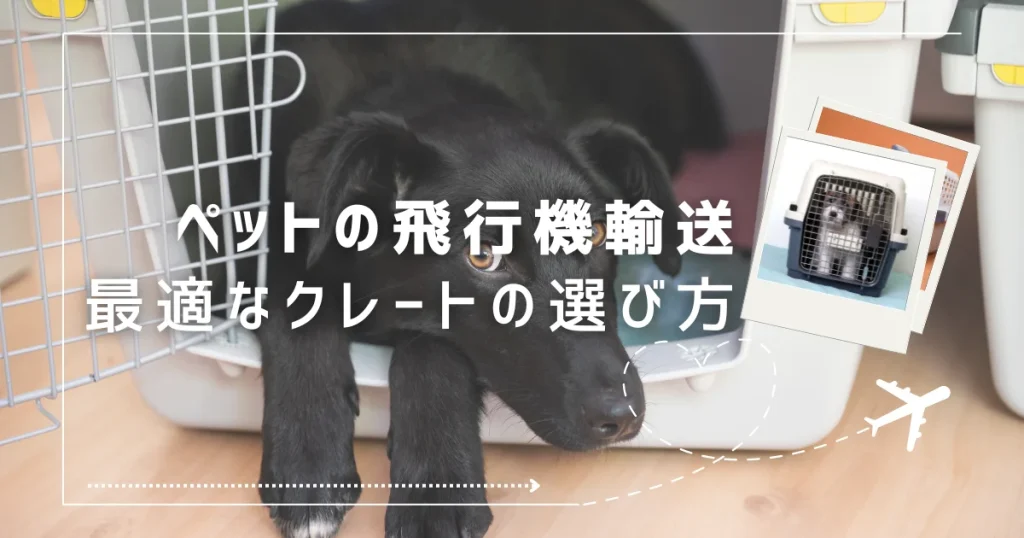
For more detailed tips on choosing a crate, please see this article.
A complete guide to choosing a crate to fly safely with your pet - PetAir JPN
How much will it cost?
Since the cost of moving abroad with multiple pets varies significantly depending on the number of pets, their size, the destination, and whether you use a professional service, this article does not list specific amounts. The breakdown of the main costs is as follows.
| Cost Categories | Main Content | Main Factors Affecting Fluctuations |
|---|---|---|
| Veterinary-related expenses | Microchipping, vaccinations, antibody titer testing, health checkups, etc. | Veterinary Clinic, Tests Performed, Number of Animals |
| Document-Related Expenses | Fees for obtaining export quarantine certificates, translations, and various applications, etc. | Number of Required Documents; Whether Translation Is Required |
| Air transportation costs | Shipping charges, crate fees, handling fees at transit points, etc. | Pet size and weight, layover locations, airline, and whether it is peak season |
| Quarantine and Testing Fees at the Destination | Quarantine inspections at the destination, mooring fees as necessary, etc. | Regulations at the destination and status of document preparation |
| Fees for Professional Services (if you hire a professional) | Fees Based on the Scope of Support Requested | Details of the Request, Number of Animals |
Accurate quotes vary depending on the destination, scheduled departure date, and the size of each pet. For requests involving multiple pets, we will provide a quote tailored to your specific situation, so please contact us first. We recommend comparing quotes from multiple providers to ensure you have a budget plan with some flexibility.
What are the benefits of hiring a professional?
When relocating overseas with multiple pets, there are the following differences between handling the process yourself (DIY) and using a professional service.
| Items | Personal procedures (DIY) | Use of Specialized Contractors |
|---|---|---|
| Time and effort | It often takes time to adjust for the number of animals. | Tends to save time |
| Risk of Mistakes | It's hard to notice cross-reference errors in documents | A multi-check system makes it easier to prevent errors |
| Accuracy of information | It is difficult to keep up with frequently changing regulations | Easy access to the latest information |
| Cost of Redesign | Additional costs may arise due to procedural errors. | Preliminary checks make it easier to keep additional costs down |
When choosing a specialized service provider, it’s a good idea to check the following points.
Points to Consider When Choosing a Specialized Service Provider
- Do you have a track record and experience with multi-pet households?
- Are you familiar with the latest regulations in your destination country?
- Is there a system in place for collaboration with veterinarians and government agencies?
- Is the emergency contact point clearly defined?
- Is the pricing structure clearly stated?
We recommend obtaining quotes from multiple providers and comparing their services and costs.
Tips for Smooth Preparation and Common Pitfalls
Key Points for Moving Forward with Preparations
- Early preparation: Plan your actions by working backward from at least 6 months—and ideally 10 months to 1 year—in advance.
- List Management by Item: List the vaccination date, antibody titer test date, and document status for each individual
- Multiple Checks of Documents: Be sure to have multiple people review the document for any errors or omissions before submitting it.
- Early Collaboration with Experts: Consult with a veterinarian or a specialized transport company early on
- Securing a Backup Date: Plan a schedule with some flexibility to prepare for unexpected situations
Frequently Asked Questions (FAQ)
Summary: Correctly complete the necessary procedures for each animal, one by one.
Moving abroad with multiple dogs requires more effort than moving with just one dog, as you’ll need to prepare and manage the necessary paperwork and schedules for each dog. Nevertheless, by checking the destination country’s limits on the number of pets allowed and breed restrictions well in advance, and proceeding in the correct order for each pet—from microchipping to rabies vaccinations, antibody titer tests, and the 180-day or longer quarantine period required when returning from non-designated areas—you can steadily build up your preparations. Rather than trying to handle everything on your own, collaborating with a veterinarian and a specialized pet transport company early on is another way to reduce your burden.
If you'd like to get an overview of the entire process of moving abroad, please check out this pillar article.
Reference Information and Related Links
- Animal Quarantine Station: Export Quarantine for Dogs and Cats (Removal from Japan)
- Animal Quarantine Station: Procedures for Importing Dogs, Cats, and Other Animals (For Areas Other Than Designated Regions)
- IATA: Traveler’s Pet Corner (Live Animals Regulations)
- Singapore National Parks Board (NParks/AVS): Limits on the Number of Animals Kept
- UK Government GOV.UK: List of Prohibited Dog Breeds
- Hong Kong Legislative Council: Response Regarding Dog Ownership in Public Housing (LCQ10)
🐾 Moving Abroad with Multiple Pets: Start with a Free Consultation
Please let us know your destination, desired departure date, and pet situation.
A summary of the required procedures and deadlines will be provided.
Completely free of charge|Online support available|Open on weekends and holidays
Written by: PetAirJPN Editorial Department (International Pet Transportation Operations Team)
*The information in this article is current as of July 2026. Quarantine regulations, housing rules, and airline policies in each country are subject to change without notice. This article is intended to provide general information only; to determine whether travel is permitted in your specific case and to confirm the requirements, please be sure to check the latest official information from the relevant national authorities, animal quarantine offices, and airlines.



 English
  Japanese
  Chinese
  Korean
  German
  Spanish
  Portuguese