
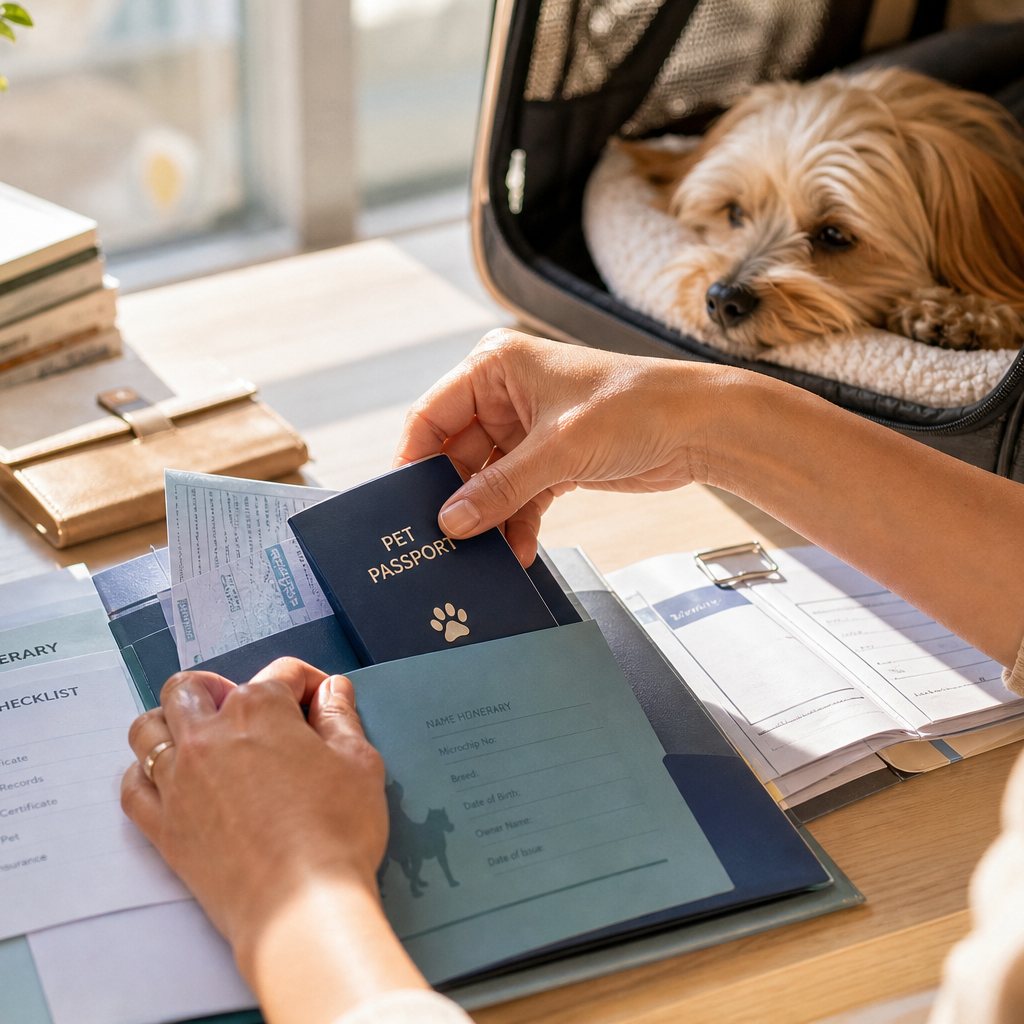
![Traveling from Japan to Thailand with Your Pet | Guide to Procedures and Preparations [July 2026]](https://petair.jp/wp-content/uploads/2025/08/Complete-Guide-to-Pet-Travel-Procedures-from-Japan-to-Thailand.jpg)
Last Updated: July 29, 2026
What You'll Learn in This Guide
- How Have the Rules for Advance Applications Changed for Traveling to Thailand with Pets?
- Differences in Procedures Between Hand-Carry (Accompanied) and Cargo Shipping
- Procedures and Schedule at the Animal Quarantine Station Before Departing Japan
- The Process for Entering Thailand at Suvarnabhumi Airport
- Common Mistakes During Preparation and How to Avoid Them
- Important Points to Know in Advance When Returning to Japan from Thailand
Is advance application still required for traveling to Thailand with a pet?
If you are traveling to Thailand with dogs, cats, or rabbits (either as carry-on or checked baggage), the prior email application (import permit application) that was previously required is no longer necessary. The required documents must now be submitted upon arrival in Thailand at the Suvarnabhumi Airport Animal Quarantine Office (administered by the Department of Livestock Development (DLD), located near Baggage Claim Carousel No. 8) (Source: Consular Section, Royal Thai Embassy in Japan: “Procedures for Bringing Pets to Thailand”(Verified in July 2026).
Previously, it was generally understood that “at Suvarnabhumi Airport, you can choose between on-site application and advance application,” while “at other airports, advance application is mandatory,” but this assumption itself may have changed. Based on the primary sources cited in this article, we were unable to confirm the procedures for entry via airports other than Suvarnabhumi Airport (such as Don Mueang Airport and Chiang Mai Airport). Once you have decided on your departure airport, be sure to check the latest requirements using official information from the Royal Thai Embassy in Japan or the Office of the Agricultural Attaché at the Royal Thai Embassy.
The requirements for the procedure have changed.Specific procedures for advance applications—such as the number of days required for review and the process for submitting the R1/1 application (import permit application) in advance—which were previously outlined, are likely no longer applicable under the current system, where advance applications are no longer required. This article does not make any definitive statements and provides guidance on the assumption that you will verify the information with the embassy’s official sources.
Should you choose to carry your items by hand or ship them as cargo?
There are two main methods for traveling with pets to Thailand: “hand-carry (accompanied)” and “cargo transport.” The characteristics of each are as follows.
| Method | Main Procedures | Points to note |
|---|---|---|
| Hand-carried (accompanied, carried on board, or checked baggage) | Submit the documents to the Animal Quarantine Office at Suvarnabhumi Airport upon arrival | Previously, an advance email application was required, but this is no longer necessary. If you are entering the country through an airport other than Suvarnabhumi Airport, please check the official embassy information for specific details. |
| Freight Transport (Cargo) | Procedures must be followed as the importer/consignee | The procedures may differ from those for hand-carry, including whether prior application is required. Be sure to check the official information from the Thai Embassy and the DLD (Department of Livestock Development) for details. |
The procedures described above are based on information provided by the Consular Section of the Royal Thai Embassy in Japan (Source: Consular Section, Royal Thai Embassy in Japan: “Procedures for Bringing Pets to Thailand”(Verified in July 2026).
The following article provides a detailed explanation of how to choose the right method for transporting your pet.
▶︎ The Complete Guide to Air Transportation of Pets: From How to Choose to Prepare
What vaccination and health requirements should I check?
When bringing dogs and cats into Thailand, the primary requirements are a rabies vaccination and an English-language certificate issued by a veterinarian. Since the primary sources cited in this article did not specify the exact timeframe (from how many days before entry to how many days before entry) within which the vaccination must be completed, we cannot state a definitive number of days. However, as the vaccination must be completed within the prescribed period, we recommend taking action as soon as possible once your scheduled departure date is confirmed.Official Information from the Thai EmbassyPlease check the latest period there.
In addition, the Office of Agricultural Affairs at the Embassy of the Kingdom of Thailand requires that dogs receive a combination vaccine against distemper, infectious canine hepatitis, parvovirus, and leptospirosis in addition to the rabies vaccine, and that cats receive a vaccine against panleukopenia in addition to the rabies vaccine. Since these are not merely optional vaccinations for health maintenance but may be subject to document verification, please confirm the vaccination schedule with your regular veterinarian before traveling and ensure you have the necessary certificates ready.Office of the Agricultural Attaché, Embassy of the Kingdom of ThailandPlease check the official information for details.
Things to Keep in Mind When Bringing a Rabbit Along
Rabbits may require different care than dogs and cats.
Like dogs and cats, rabbits are animals permitted to be brought into Thailand; however, separate verification may be required regarding the need for a rabies vaccination and how to fill out the export health certificate, as these requirements differ from those for dogs and cats. It cannot be definitively stated that “Japan is a rabies-free country, so all rabbits are automatically exempt.” Please verify the details on a case-by-case basis—including the information to be included on the certificate—using official information from the Royal Thai Embassy in Japan and the Animal Quarantine Service.
The basic principles of rabies vaccination are also explained in the following article.
▶︎ Rabies Vaccination Basics You Need to Know: Traveling Safely Abroad with Your Pet
▶︎ Traveling Abroad with Pets|Experts Explain Required Vaccinations, Vaccine and Antibody Titer Tests
For Those Who Are Unsure If Their Vaccination Schedule Is Correct
Please let us know your planned travel dates and your pet's current vaccination status.
Here is the order in which you should prepare and the estimated timeframes.
How should I plan my schedule leading up to departure?
Since advance applications from Thailand are no longer required, preparations before departing Japan will primarily focus on “export procedures at the Animal Quarantine Station.” The general process is as follows:
Early Preparation Period
- Check to see if your pet has a microchip (if not, make an appointment at the vet)
- Check the status of your pet’s rabies vaccinations and consult a veterinarian if necessary.
- Consider the method of transport (hand-carry or cargo) and the flight to take
- Check the official website of the airline you plan to fly with to see if there are any restrictions on checking in pets, such as brachycephalic breeds.
As your departure approaches,
- If your pet has not been vaccinated against rabies, have it vaccinated and ask your veterinarian to prepare an English-language certificate.
- Check the latest list of documents you need to bring on the day of your trip, based on official information from the Thai Embassy
- Confirm the reservation with the airline and arrange for a pet carrier
At least 14 days before your preferred inspection date
Apply for an export inspection at the Animal Quarantine Station using NACCS (Animal Quarantine-Related Operations) (Source: Animal quarantine office "to export dogs and cats."(Verified in July 2026).
Within 10 days of departure
You will undergo an export inspection (clinical examination) at the Animal Quarantine Station and receive an export quarantine certificate in English.
The day of departure
- Carry English-language export health certificates and vaccination certificates
- Final Check of the Pet Cage (To Ensure Compliance with Airline Standards)
- Final Check on Your Pet's Health
Upon Arrival in Thailand
Pick up your pet in the large baggage claim area, then proceed to the Suvarnabhumi Airport Animal Quarantine Office near Baggage Claim Carousel No. 8 to submit your documents.
What documents are required to enter Thailand?
You will need a certificate in English issued by a veterinarian.
It is issued by the Animal Quarantine Station after the completion of the export inspection, which must be conducted within 10 days of departure.
You may be asked to provide a color photo that clearly shows your face.
You may be asked to provide a copy of your photo ID page.
Of these, the English-language rabies vaccination certificate and the Japanese export health certificate are documents required for entry into Thailand. While we have listed a pet’s photo and a copy of the owner’s passport as examples of documents commonly required for international pet travel, the embassy’s guidance is limited to stating that “required documents must be submitted upon arrival in Thailand,” and we were unable to confirm a detailed list of documents from the primary sources cited in this article. Please be sure to check the latest list of required documents via official sources before your trip.
Please note that the R1/1 application form (Import Permit Application) previously mentioned was a form required for advance email applications. Since advance applications are no longer required for accompanying travelers, please check the embassy’s official website to confirm whether submission of this form is currently required. The latest version of the application form is available atEmbassy of the Kingdom of Thailand in JapanAlternatively, information is available on the official website of the Agricultural Affairs Office of the Royal Thai Embassy.
What should you keep in mind when transporting cargo?
When shipping a pet as cargo, the applicant is treated as the importer/consignee (Source: FAQ from the Consular Section of the Royal Thai Embassy in Japan(Confirmed in July 2026). In addition to the documents required for hand-carry, you will generally need to provide additional information such as your addresses in Japan and Thailand, the animal’s details (species, sex, age, coat color, microchip number, etc.), a photo of the pet, the scheduled date and time of entry and flight number, and the name of the departure airport.
For cargo shipments, the procedures may differ from those for hand-carry, including whether prior application is required. Since we cannot make any definitive statements, if you are considering shipping cargo, be sure to check the latest requirements on the official websites of the Thai Embassy and the DLD.
How much does it cost to enter Thailand?
A fee is charged for animal quarantine on the Thai side. Since the specific amount could not be confirmed from the primary sources cited in this article, no definitive figure is provided here. Before traveling,Thai Embassy・Please check the DLD official website for the latest rates.
| cost item | Details |
|---|---|
| Animal Quarantine Fees in Thailand | This fee is charged upon arrival. Please check the official information from the Royal Thai Embassy in Japan and the DLD for the amount. |
| Airline Pet Transportation Fees | This varies depending on the airline, travel class, and carrier size. Please check the official website of the airline you plan to fly with. |
| Vaccinations, Health Checkups, and Certificate Issuance Fees | This varies by veterinary clinic. Please check with your regular veterinarian. |
| Costs Associated with Animal Quarantine on the Japanese Side | Please review the information provided by the Animal Quarantine Station (Source: Animal Quarantine Service) |
Are there any pets that can't enter the country, or any restrictions?
In the FAQs of the Royal Thai Embassy in Japan, the answer to the question “Are there any restrictions on the breeds of dogs I can bring?” is clearly stated as “No” (Source: FAQ from the Consular Section of the Royal Thai Embassy in Japan(Confirmed in July 2026). However, regarding factors other than breed—such as the dog’s age or whether it is pregnant—there are discrepancies among sources, and we were unable to draw definitive conclusions based solely on the primary sources cited in this article. To be on the safe side, be sure toEmbassy of the Kingdom of Thailand in Japan・Please check the latest restrictions on the official DLD website.
In addition, brachycephalic breeds (such as French Bulldogs and Pugs) may be subject to restrictions on travel in the cargo hold imposed by airlines, separate from Thailand’s entry regulations. Since the breeds subject to these restrictions vary by airline, be sure to check the latest conditions on the official website of the airline you plan to fly with once you’ve booked your flight. Points to note regarding brachycephalic breeds in general are:Can Snub-Nosed Breeds Fly?It also explains that.
What are some common mistakes and things to watch out for during preparation?
What should I be careful about when returning to Japan? (For dogs and cats)
Since Thailand is not included in the designated areas specified by the Animal Quarantine Service, the procedures for returning to Japan require a longer preparation period than those for traveling there. The following areRequirements for Bringing Dogs and Cats Back to Japan. Since the requirements for bringing rabbits back to Japan vary, please contact the Animal Quarantine Station “How to Import RabbitsPlease check the official website for “” for more details. The main requirements for dogs and cats, as outlined by the Japanese Animal Quarantine Service, are as follows (Source: Animal Quarantine Service, "Entry of Dogs and Cats into Japan (outside of designated areas)"(Verified in July 2026).
Main Requirements for Returning to Japan from Thailand (for Dogs and Cats)
- Implantation of a microchip compliant with ISO 11784 and 11785 standards (to be implanted before the rabies vaccination)
- After microchipping, the dog must receive at least two doses of the rabies vaccine (the second dose must be administered at least 30 days after the first, and vaccination must begin at 91 days of age or later).
- Rabies antibody titer test conducted at a facility designated by the Minister of Agriculture, Forestry and Fisheries (0.5 IU/ml or higher; valid for two years from the date of blood collection)
- Wait at least 180 days from the date of the blood draw for the antibody titer test
- Submit a prior notification to the animal quarantine office with jurisdiction over the airport or seaport of arrival at least 40 days before arrival in Japan.
When you consider this entire process—from microchipping to receiving two vaccine doses, undergoing an antibody titer test, and waiting 180 days—it becomes clear that a very long preparation period is required (for dogs and cats). We recommend that you start planning your future return schedule as early as when you begin preparing for your trip to Thailand. The overall process for returning home is as follows:The Complete Guide to Returning to JapanIt also explains that.
What can PetAir do?
PetAir provides guidance on how to prepare the necessary documents for travel to Thailand and compiles information regarding animal quarantine procedures. We also offer a full range of support services related to travel, from arranging airline bookings and providing guidance on customs clearance to handing over your pet at the airport. Please let us know your destination, planned departure date, and your pet’s condition, and we will advise you on the necessary preparation time and next steps.
We do not prepare documents or submit applications on your behalf; our services primarily focus on organizing the necessary information and guiding you through the process. We do not obtain import permits, confirm flight reservations, or guarantee your pet’s health. Please consult with your pet’s owner and your regular veterinarian regarding medical treatment, vaccinations, and health management at a veterinary clinic. Fees vary depending on the destination, travel dates, and your pet’s condition; we will provide an estimate when you contact us.
Frequently Asked Questions (FAQ)
Summary: Even if no advance application is required, prepare your documents early.
For travelers bringing pets from Japan to Thailand, the prior requirement to submit an email application in advance has been eliminated; the process has now changed to submitting documents at the Suvarnabhumi Airport Animal Quarantine Office upon arrival. However, this change applies only to travelers arriving with pets at Suvarnabhumi Airport; separate confirmation is required for entry via other airports or for cargo shipments. Be sure toOfficial Information from the Royal Thai Embassy in JapanPlease check the latest requirements here.
And while you’re preparing for your new life in Thailand, it’s important to keep your future return to Japan in mind. For dogs and cats, the process of returning from Thailand to Japan requires a waiting period of at least 180 days, so we recommend planning your return schedule in conjunction with your travel plans. (The requirements for bringing rabbits back to Japan are different. Please check the official page “How to Import Rabbits” on the Animal Quarantine Service website.) The estimated time required for the procedures isEstimated Time Required for Pet Transportation ProceduresHowever, we've provided an explanation, so please take a look at that as well.
🐾 Traveling to Thailand with Your Pet: Start with a Free Consultation
Please let us know your destination, desired departure date, and pet situation.
A summary of the required procedures and deadlines will be provided.
Completely free of charge|Online support available|Open on weekends and holidays
Written by: PetAirJPN Editorial Department (International Pet Transportation Operations Team)
*The information in this article is current as of July 2026. Quarantine regulations in various countries and airline policies are subject to change without notice. This article is intended to provide general information only; to determine whether travel is permitted and to confirm specific requirements, please be sure to check the latest official information from the relevant national authorities, animal quarantine offices, and airlines.

 English
  Japanese
  Chinese
  Korean
  German
  Spanish
  Portuguese