
![Guide to Comparing Pet Air Transport Options | How to Choose Between Carry-On and Checked Baggage [Updated for 2026]](https://petair.jp/wp-content/uploads/2025/01/Complete-Guide-to-Pet-Air-Transportation.jpg)
Last Updated: August 1, 2026
Who This Article Is For
- This article is,How to Choose Between Carry-On and Checked Baggage, and Key Factors to Consider When Comparing AirlinesThis explanation focuses specifically on these points.
- If you would like to learn about the entire process, including quarantine requirements and entry conditions for each destination,How to Take Your Pet from Japan to Another Country | A Complete Guide to Procedures and PreparationsPlease see the following as well.
- The acceptance policies for brachycephalic breeds (such as Pugs and French Bulldogs) by airline are as follows:Can Snub-Nosed Breeds Fly? Airline-by-Airline Acceptance Policies & What You Can DoThis is explained in detail there.
What's the difference between carry-on and checked baggage?
Air transport of pets is largely"Carry-on (Cabin Baggage)"and"Cargo Hold Transport"There are two options. Which one you can choose depends on your pet’s size and weight, as well as the airline’s regulations; owners cannot choose freely. Many airlines allow only small dogs and cats—whose total weight, including the carrier, is below a certain threshold—to travel in the passenger cabin; those exceeding this limit must be transported in the cargo hold. Since weight and size limits vary by airline, be sure to check the official website of the airline you plan to use.
| Comparison items | Carry-on (Cabin) | Cargo hold transport |
|---|---|---|
| Guidelines for Eligible Pets | Small Dogs and Cats (whose weight, including the carrier, is below the airline's limit) | Medium- and large-sized dogs that exceed the standards, as well as small dogs and cats that exceed the standards |
| Benefits | You can monitor them even while they're flying / Environmental changes are minimal, making it easier to keep stress levels low | Can transport large pets / Many aircraft are equipped with dedicated climate control and pressurization systems |
| Points to Keep in Mind | There are size and weight limits / Acceptance quotas per flight are often limited / Animals spend more time in their cages | Owners cannot directly monitor their pets during the flight / Care must be taken regarding changes in temperature and air pressure / Many airlines restrict the transport of brachycephalic breeds |
| Approximate costs | Since fees vary depending on the destination, airline, and pet's size, we cannot provide specific amounts in this article. | Same as above. Please contact PetAirJPN for a personalized quote. |
Which Should You Choose? Key Considerations Based on Your Pet’s Condition
When choosing a mode of transportation, it’s important to consider not only cost and convenience but also your pet’s age, temperament, size, and health in a comprehensive manner. Make your decision based on the following considerations, while consulting with your regular veterinarian.
Perspectives to Consider When Making Decisions
- Age and Health Status — Since environmental changes can be particularly stressful for older pets or those with pre-existing conditions, please consult your veterinarian in advance, including whether transport is appropriate. Puppies and kittens may have a lower tolerance for stress.
- Personality and Behavioral Characteristics — The most suitable method of transport varies depending on the dog’s personality—for example, if the dog suffers from severe separation anxiety or experiences significant stress when separated from its owner.
- Build and Breed — Many airlines restrict or do not accept the transport of brachycephalic breeds (such as Pugs, French Bulldogs, and Bulldogs) in the cargo hold due to the strain on their respiratory systems (e.g.,ANA Cargo Official Website). Please check each airline’s official website for eligible dog breeds and conditions.
- Flight Times and Connections — The longer the flight and the more layovers there are, the greater the physical strain on your pet tends to be. If your trip includes layovers, be sure to plan your schedule with plenty of time to spare.
- Season — On days with extreme heat or cold, airlines may suspend boarding or restrict boarding times at their discretion. Details are explained in the next chapter.
What are the seasonal impacts on transportation and the measures taken to address them?
Temperature and weather conditions may affect whether cargo can be transported and the schedule for such transport. On extremely hot or cold days, airlines may decide not to load cargo; therefore, it’s best to plan your schedule with plenty of time to spare and check with the airline in advance for peace of mind (e.g.,ANA Cargo Official Website(Here is information on transportation restrictions for brachycephalic dog breeds during the summer.)
| Season | Potential Points to Note | Possible Countermeasures |
|---|---|---|
| Summer (Hot Season) | Risks of Heat Stress and Heat Stroke / Brachycephalic Breeds Are More Likely to Be Subject to Transportation Restrictions | Consider scheduling walks during times when temperatures are lower, such as early morning or evening / Ensure adequate hydration / Consult with your veterinarian in advance |
| Winter (Cold Season) | Cold Weather Stress / Frozen Water Dispensers | Prepare cold-weather gear and heat pads / Use a freeze-proof water dispenser |
| Extreme Heat, Extreme Cold, and Severe Weather | At the airline's discretion, the decision to carry the item may be postponed. | A flexible schedule that includes a backup day / Check flight status just before departure |
Please note that real-time flight status information—such as cancellations, delays, and schedule changes—is subject to change at any time and may differ from the information provided in this article. Please check the official website of the airline you plan to use for the latest flight status information right up until your departure.
How should I compare airlines?
As a general rule, you should check each company’s official website for the following six items: eligibility categories, eligible guests, seasonal restrictions, policies regarding brachycephalic breeds, required documents, and cancellation policies.The policies and conditions regarding pet transport—including those of ANA, JAL, and international airlines—vary in detail from carrier to carrier and are subject to change at any time. Rather than ranking specific airlines in terms of superiority or inferiority, this article outlines the key points to check when comparing them and presents facts verified through primary sources.
| checklist | Points to Check |
|---|---|
| Response Category | Whether it can be carried on board or checked as luggage (may vary between domestic and international flights) |
| Eligibility Criteria | Eligible Animal Species, Dog Breeds, and Maximum Size and Weight Limits |
| Seasonal restrictions | Are there any periods during the summer and winter when admissions are restricted? |
| Caring for Brachycephalic Breeds | Are brachycephalic breeds excluded, or are there additional requirements? |
| Required Documents and How to Make a Reservation | Health Certificate Form, Reservation Deadline, and Specifications for Special Cages |
| Cancellation Policy | Cancellation and change policies vary by airline, so be sure to check them when making your reservation. |
With that in mind, I will now present the facts regarding the two companies that I was able to verify through primary sources.
Facts Verified from Primary Sources (Verified in August 2026)
- ANA (Domestic Cargo): According to the official ANA Cargo website, there are restrictions on transporting brachycephalic dog breeds during certain periods in the summer. The specific breeds subject to these restrictions are listed on the official website, so if your dog may fall into this category,ANA Cargo Official WebsitePlease be sure to check this.
- United Airlines: According to the official website, the PetSafe program for transporting pets in the cargo hold for general passengers is currently not accepting reservations. For details,United Airlines Official Websiteplease check there.
For airlines other than those listed above (such as JAL, Delta Air Lines, KLM Royal Dutch Airlines, Air Canada, and Lufthansa), you can check their official websites for information on whether they offer this service, which animal species are eligible, and any seasonal restrictions. Since service details are subject to change without notice, be sure to check the latest information before making a reservation.
How should I choose a transport cage?
International Air Transport Association (IATA)As a general rule for animal transport containers, animals must have sufficient space to stand in a natural posture, change direction, and lie down. Please note that you must confirm the exact dimensions with the airline or retailer, as relying solely on general guidelines may result in your animal being refused boarding.
How to calculate the correct size and what to look for when purchasing areHow to Choose the Right Pet Crate (Cage) for Air TravelThis is explained in detail there.
How to Train Your Pet to Get Used to a Cage
Many pets experience severe stress if they are placed in a carrier for the first time right before the trip. Getting them used to it gradually, starting a few weeks before departure, can reduce their stress on the day of travel.
Guidelines for the 3-Stage Training Program
- introductory period (e.g. to a new product or service) — Set up the cage in the room where your pet usually spends time, leaving the door open. Use treats to lure your pet inside; don’t force it in, and allow it to come and go freely to help it perceive the cage as a “safe place.”
- Familiarization period — Gradually increase the amount of time your pet spends inside the cage by feeding them there or closing the door for short periods. If your pet seems anxious, don’t push it—go back to the previous step.
- full-scale training — Help your pet get accustomed to ambient sounds typical of extended stays, short car rides, airports, and airplane cabins. Please adjust the approach based on your pet’s personality and age.
Pushing your pet too hard during training can sometimes backfire. Don't rush—proceed at your pet's pace.
When should I start preparing, and what should I do?
To ensure safe transport, it’s essential to prepare well in advance so you don’t have to rush at the last minute. For international flights, there are deadlines for animal quarantine procedures, so be sure to plan your schedule with plenty of time to spare.
Selecting an Airline and Reviewing Terms and Conditions
- Compare the booking requirements and fare plans of multiple airlines
- Since there are a limited number of pet transport slots available, it's best to make a provisional reservation as early as possible.
Appointments for Health Checkups and Vaccinations
- I'll make an appointment for a health checkup at my regular veterinary clinic.
- We will verify the vaccinations and medical history required by your destination.
Preparing the Cage and Starting Training
- We will provide a cage that meets the airline's specifications.
- Get your pet used to the carrier little by little before departure.
Preparing the Required Documents
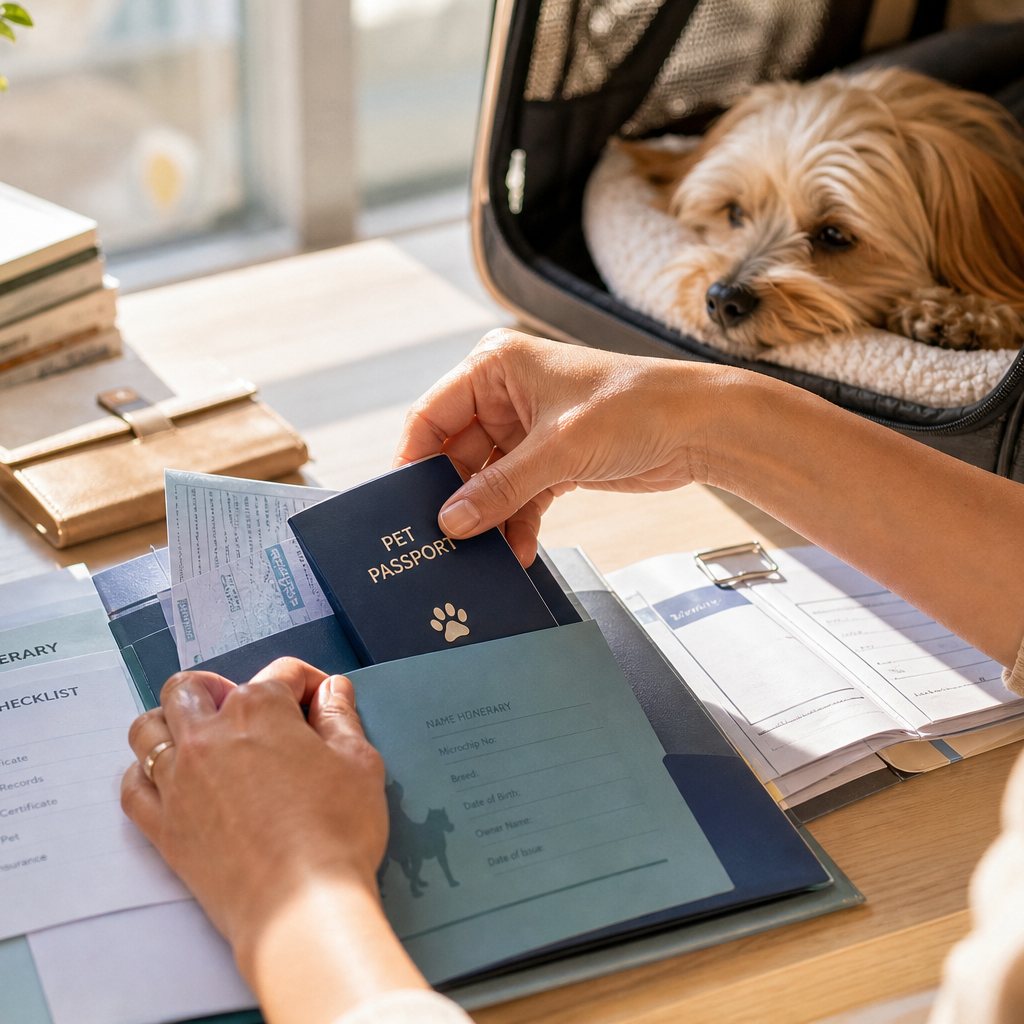
- For dogs and cats, the basic documents required are a health certificate, a rabies vaccination certificate, and a microchip registration certificate. Since the required documents vary for animal species other than dogs and cats, please check with the Animal Quarantine Station and the airline individually.
- When transporting dogs or cats on international flights,Animal Quarantine ServiceYou will then receive an export quarantine certificate (applications must be submitted at least 14 days before the desired inspection date, and inspections should generally be conducted within 10 days of departure. Since there are two deadlines, it is necessary to complete the procedures well in advance).
Final Check
- As your departure date approaches, double-check the airline, your veterinarian, and the details on your documents.
- Here is a list of emergency contacts (veterinarians and airlines).
How should we handle problems when they arise?
If your flight is delayed, the general procedure is to contact the airline to arrange a place for your pet to wait, and to contact a veterinarian immediately if your pet shows any signs of illness.These situations cannot be completely prevented by preparation alone. If you decide on a course of action in advance for each possible scenario, you’ll be able to stay calm and act appropriately on the day itself.
| Status | First Steps | Next Steps |
|---|---|---|
| Flight Delays | Contact the airline to secure a holding area for your pet | Check to see if there are any alternative flights and check on your pet's condition |
| Signs of poor health | Contact your regular veterinarian or a veterinary clinic near your departure or arrival location. | Record symptoms and consider postponing transport if necessary |
Before departure, be sure to compile a list of your regular veterinarian’s contact information and the airline’s emergency contact information. If you notice any unusual symptoms, do not make a decision on your own; consult your veterinarian immediately.
Checklist of Required Documents
The figures below areWhen Transporting Dogs and CatsThese are the basic documents required. If you are transporting animals other than dogs and cats, the required documents and procedures will differ, so please check with the Animal Quarantine Station and the airline individually.
| Category | Required Documents | precautions |
|---|---|---|
| Basic Documents for Dogs and Cats | Health certificate | A veterinarian's diagnosis is required. Use the form specified by the airline or destination. |
| Basic Documents for Dogs and Cats | rabies vaccination certificate | The validity period of vaccines varies depending on the type and destination, so it is important to check in advance. |
| Basic Documents for Dogs and Cats | Microchip registration certificate | Verify the registration number of a chip that complies with ISO standards (11784 and 11785) |
| Additional Documentation for International Flights with Dogs and Cats | Export Quarantine Certificate | Animal Quarantine ServiceObtain it here. You must apply at least 14 days before your desired test date. |
| Additional Documentation for International Flights with Dogs and Cats | Required documents for your destination, such as import permits | Requirements vary significantly by country. Please check the official information provided by the authorities in your destination country. |
*For the application deadline for the export health certificate and microchip specifications, seeOfficial Website of the Animal Quarantine ServiceBased on information as of August 2026.
We recommend that you bring the original copies of all documents and carry copies with you as well. On international flights, you may be required to present certificates in English.
Are you having trouble deciding on a shipping method or which airline to choose?
If you let us know your destination, your pet’s size, and your preferred departure date, we’ll work with you to determine whether it’s more practical to bring your pet on board or check it as cargo.
Frequently Asked Questions (FAQ)
Summary: Choose the mode of transport based on your pet’s condition and the airline’s latest requirements.
The decision between carrying your pet in the cabin or checking it as baggage should not be based solely on cost or personal preference; it should be determined by considering both your pet’s size, age, temperament, and health, as well as the specific regulations of each airline. In particular, for brachycephalic breeds and senior pets, please consult with your veterinarian and make this decision carefully. Since airline policies are subject to change, it’s a good idea to make a habit of checking the official website for the latest information every time you make a reservation.
The entire process, including quarantine requirements for each destination, isA Comprehensive Guide to Traveling Abroad, How to Choose a Cage Suitable for TransportHow to Choose the Right Pet Crate (Cage) for Air Travel, The acceptance policies for brachycephalic breeds by airline are as follows:Can Snub-Nosed Breeds Fly? Airline-by-Airline Acceptance Policies & What You Can DoPlease see this as well.
Written by: PetAirJPN Editorial Department (International Pet Transportation Operations Team)
*The information in this article is current as of August 2026. Quarantine regulations in various countries and airline policies are subject to change without notice. Be sure to check the latest official information before traveling.
🐾 Traveling abroad with your pet, start with a free consultation
Please let us know your destination, desired departure date, and pet situation.
A summary of the required procedures and deadlines will be provided.
Completely free of charge|Online support available|Open on weekends and holidays

 English
  Japanese
  Chinese
  Korean
  German
  Spanish
  Portuguese