
![Guide to Procedures and Required Documents for Importing Dogs and Cats into Malaysia [2026 Updated Edition]](https://petair.jp/wp-content/uploads/2024/12/How-to-bring-pets-to-Malaysia.jpg)
Last Updated: August 1, 2026
“I’d like to take my dog or cat to Malaysia, but the process seems complicated, and I don’t know where to start”—many people probably share this concern. Malaysia’s application rules are subject to change, and if you proceed with preparations based on outdated information, you may run into unexpected obstacles. In this article, based on information confirmed as of July 2026, we’ll summarize the key points you need to know when importing pets into Malaysia. For information on traveling to countries other than Malaysia or moving abroad in general,The Complete Guide to Shipping Pets OverseasPlease see this as well.
Conclusion: What Do You Need to Import a Pet into Malaysia?
If you're bringing your pet to Malaysia, here are the three key points you should keep in mind.
3 Key Points to Keep in Mind First
- Regarding applications for import permits to Malaysia, you will find guidance on both applying directly and applying through a registered agent. Since the required application procedures are subject to change, be sure toMAQIS Official Websiteplease check at
- Import permits are said to have a specified validity period. Please check with your registered agent or the official MAQIS website for the specific duration, whether extensions are possible, and whether you need to reapply. It is important to time your application by counting backward from your departure date.
- In Malaysia, there are certain dog breeds that are prohibited from importation and others that require special approval. Since the list of affected breeds is subject to change, be sure toDVS (Bureau of Veterinary Services) Official Websitefor the latest information.
Starting with the next chapter, we’ll take a look, in order, at the application process for MAQIS, eligible dog breeds, the criteria for quarantine exemptions, required documents, choosing an airline, and the differences between East Malaysia (Sabah and Sarawak).
How does the application process for an import permit for MAQIS work?
Two agencies—the DVS (Directorate of Veterinary Services) and MAQIS (Malaysian Agency for Quarantine and Inspection)—are involved in the review process for animal imports into Malaysia. The application procedures and review process are subject to change, and guidance may vary depending on the source of information.
Points to Check Before Submitting Your Application
- It is generally understood that the application process typically follows a two-step procedure, in which MAQIS issues an import permit after a preliminary review by the DVS.
- There are instructions for both submitting applications directly and submitting them through a registered agent. Since the required method is subject to change, please be sure to check the official website for the latest information.
- Since the review office (either DVS or MAQIS, or both) and the order of procedures may change, please check the latest guidelines in advance.
The following procedure is often presented as a general overview of the application process:
Submission and Review of Required Documents
Submit the required documents and undergo a review by the authorities. Since the review process takes a certain number of days, you should plan your application well in advance. The service counters and review procedures are subject to change, so be sure to check the official website in advance.
Obtaining an Import Permit
Following the review process, an import permit will be issued. Since these permits have a specified validity period, please check with your registered agent or the official MAQIS website for the specific duration. If you obtain the permit too far in advance of your departure date, there is a risk that it will expire before you travel. On the other hand, if you wait too long to apply, the permit may not be issued in time for your trip. It is important to time your application to align with your travel schedule.
Since the application process (including whether the application must be filed by the applicant personally or through a representative), fees, and processing times may vary depending on the source and are subject to change, be sure to check the specific detailsMAQIS Official Websiteinterpoint (interword separation)DVS Official WebsitePlease check the DVS and MAQIS official websites for details. While Malaysia’s animal import regulations are reportedly governed by multiple laws and regulations, we have not been able to confirm the relevant provisions of the underlying laws or their current status at this time; therefore, please check the DVS and MAQIS official websites for details.
Which dog breeds are not allowed, and which require special approval?
In Malaysia, there are dog breeds that are not permitted for import at all, and others that may be imported with special approval. Since the list of affected breeds is subject to change, we will not specify the exact number of breeds but will instead list some representative examples. Please note that we have not been able to confirm whether these breed requirements also apply to travel from Scheduled Countries (including Japan); therefore, be sure to check with official sources before traveling.
| Category | Dog Breeds That Fit This Description (Examples) |
|---|---|
| Dog Breeds Not Permitted for Import | Pit Bull-type breeds (including American Pit Bull and American Staffordshire Terrier), American Bulldog, Neapolitan Mastiff, Tosa Inu, Akita Inu, Dogo Argentino, Fila Brasileiro, etc. |
| Dog Breeds That Can Be Imported With Special Approval | Rottweilers, Dobermans, German Shepherds (including Belgian Shepherds), East European Shepherds, Bullmastiffs, Bull Terriers, Perro de Presa Canario, etc. |
Dog breeds requiring special approval are subject to additional procedures, such as submitting a written application to the authorities or providing a pedigree certificate. Since information regarding the application office and required procedures varies depending on the source, be sure to check the official website in advance to confirm the actual application destination and method. If it is difficult to determine whether a mixed-breed dog contains bloodlines from a prohibited breed, we recommend contacting DVS or MAQIS directly as soon as possible. Since the list of prohibited breeds is subject to change, be sure toDVS Official Websiteinterpoint (interword separation)MAQIS Official WebsitePlease check the latest list here (verified in July 2026).
Is quarantine absolutely necessary? Is Japan exempt?
Malaysia has a classification system (Scheduled Countries) established by the authorities (DVS and MAQIS), and Japan is included in this list. Travelers arriving from countries on this list are eligible for preferential quarantine measures if they meet certain conditions.
Scheduled Countries (Countries that may be eligible for preferential quarantine measures under the classifications established by the authorities)
- Japan is considered to fall under this category, but the list of countries and the application of these categories are subject to change.
- Information regarding how this preferential treatment is actually being implemented as of July 2026 varies depending on the source, and we were unable to confirm the details in this article.
- Be sure to check the latest list of eligible countries, eligibility requirements, and operational statusDVS Official Websiteinterpoint (interword separation)MAQIS Official WebsitePlease check the relevant page under "Scheduled Countries."
However, even if you are traveling from an eligible country, you will not be eligible for preferential treatment unless you meet certain conditions. Furthermore, the application of this classification itself may be reviewed, and the specific conditions and current implementation status are subject to change; therefore, be sure toDVS Official Websiteinterpoint (interword separation)MAQIS Official WebsitePlease check the relevant page for “Scheduled Countries” for the latest information. Please note that travelers arriving from countries other than those listed as “Scheduled Countries” are required to undergo quarantine for a specified period. Since the specific number of days varies depending on the source, this article does not specify a number of days. We strongly recommend that anyone planning to travel—regardless of whether they are traveling from a “Scheduled Country” or not—contact the official MAQIS or DVS websites directly in advance to confirm whether preferential measures are currently in effect.
Where should I start when preparing the required documents?
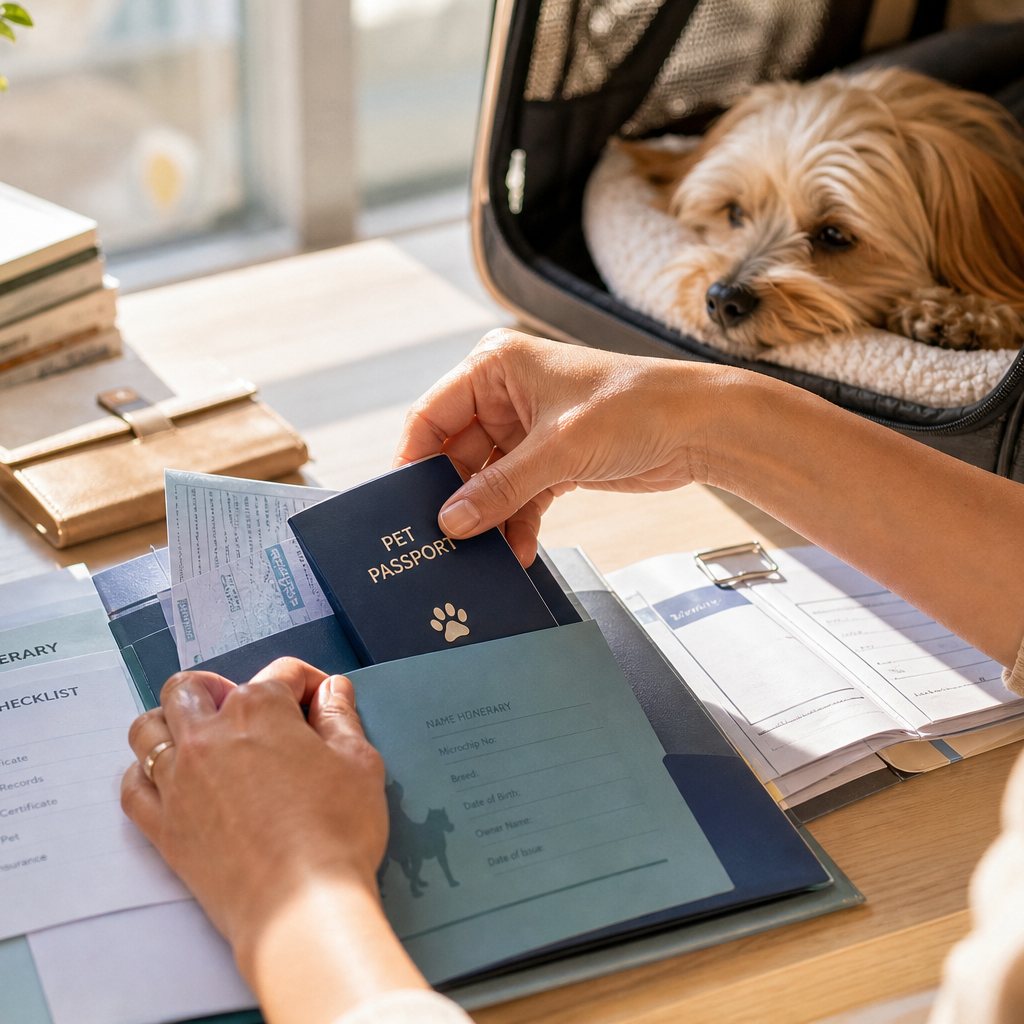
Before you begin preparing the necessary documents, you’ll want to confirm the “order” of the microchip and vaccinations. Depending on your destination, you may be required to have the microchip implanted before receiving the rabies vaccine, and getting the order wrong may result in having to repeat the vaccination. Be sure to check the specific order requirements for travel to Malaysia.DVS Official Websiteinterpoint (interword separation)MAQIS Official WebsitePlease check this, and if you're unsure, it's a good idea to compare the date on your vaccination certificate with the date you received the vaccine to be sure.
Implanting a Microchip
It is required that microchips compliant with ISO 11784 and ISO 11785 be implanted. Be sure to check the official DVS and MAQIS websites for details on the standards and certification requirements, and have your veterinary clinic issue the necessary certificate. Regarding microchips:The Complete Guide to Microchipping Dogs and CatsThis is explained in detail there.
Get a rabies vaccine
In addition to having a microchip implanted, your dog will receive a rabies vaccination. Since there may be age requirements for importing dogs into Malaysia, please check the official DVS and MAQIS websites for details on eligible dog breeds and conditions, and plan your schedule well in advance. Please keep your certificates in a safe place, as they will be required for future applications. Regarding the rabies vaccine:A Basic Guide to Rabies VaccinationsThis is explained in detail there.
Get other recommended vaccines
In addition to the rabies vaccine, you may be required to verify or provide proof of your pet’s combination vaccine status. Please be sure to check the official DVS and MAQIS websites to confirm exactly which vaccines are required. For general information on vaccines,A Guide to Essential Vaccinations and Antibody Tests for Traveling Abroad with Petsfor more details.
Undergo a pre-departure health checkup and parasite treatment
It is reported that, prior to departure, a health examination by a veterinarian and treatment for internal and external parasites may be required. Since guidance regarding the necessity, timing, and responsible party varies depending on the source, be sure to check the official DVS and MAQIS websites before departure.
Additional Requirements That May Be Necessary for Travel from Countries Other Than Those on the List
- It is noted that travel from countries other than those on the "Scheduled Countries" list may require additional testing or other conditions; however, the specifics of these requirements and their implementation status are subject to change.
- Be sure to check the official DVS and MAQIS websites for the latest information on the specific tests and requirements.
For those who are unsure if they're following the correct order of preparations
Please let us know your planned travel dates and your pet's current situation.
We will explain the necessary preparation period and the first steps you should take.
How does the export process from Japan work?
In addition to the preparations required by the Malaysian side, you must complete export procedures at the Animal Quarantine Station when departing Japan.
| Procedures | timing |
|---|---|
| Application for export inspection | At least 14 days prior to the desired inspection date (apply via NACCS) |
| Conducting Export Inspections | As a general rule, within 10 days of departure (or within the period specified by the destination, if applicable) |
It is important not to confuse the timing of the application with that of the test. You must submit your application “no later than 14 days” before departure, and, as a general rule, take the actual test “within 10 days” of departure. However, if your destination country specifies its own timeframe for testing, you must take the test within that timeframe. For more details,Animal quarantine office "to export dogs and cats."Please check here (verified in July 2026). Please note that the phrases “up to 14 days prior” and “within 10 days of departure (in principle)” refer to the timeframes for procedures set by the Animal Quarantine Service when departing Japan. The validity periods for certificates and testing requirements that may be separately required upon entry into Malaysia are subject to the destination country’s requirements.MAQIS Official Websiteinterpoint (interword separation)DVS Official WebsitePlease be sure to check this.
What are the key factors to consider when choosing an airline?
When traveling from Japan to Malaysia, you have several options, including Japanese airlines, foreign carriers such as Malaysia Airlines and Singapore Airlines, and low-cost carriers (LCCs). Since pet travel policies vary significantly by airline, it is essential to check them before booking.
| Type | General Trends | Points to Check |
|---|---|---|
| Japanese airlines (JAL, ANA, etc.) | The rules and conditions regarding how pets are handled (as carry-on or checked baggage) vary by airline and route. | Please check each company’s official website for information on how to use their services, how to make reservations, accepted dog breeds and sizes, and availability during peak seasons. |
| Foreign-owned airlines (Malaysia Airlines, Singapore Airlines, etc.) | Both direct and connecting flights may allow for the transport of pets. | Policies regarding pets at stopover locations and layover time requirements vary depending on the route and time of year. |
| LCCs (such as AirAsia) | Whether pets are accepted and the conditions for doing so vary significantly depending on the airline, route, and time of year. | Please be sure to check the official website of the airline you plan to fly with before making a reservation to confirm whether this service is available and the terms and conditions. |
Since requirements regarding the size, material, and specifications of crates (cages) are set individually by each airline, you must check the official website of the airline you plan to fly with. It is also noted that some airlines may have their own specific policies regarding whether they allow the transport of brachycephalic breeds (such as French Bulldogs) and the conditions under which they do so. Since eligible dog breeds and conditions are subject to change, please be sure to check in advance for the flight you plan to take. Regarding choosing a crate:The Complete Guide to Choosing a CrateThis is explained in detail here. Also, since flight schedules for each airline are subject to change without notice, please check the official websites of each airline for the latest flight information.
Please note that the conditions set by each airline described so far are separate from the dog breeds prohibited from importation and those requiring special approval, as mentioned in the previous chapter. Whether a particular breed is permitted or not is determined by regulations set by the Malaysian authorities and applies separately from the airlines’ conditions. The affected breeds areDVS Official Websiteinterpoint (interword separation)MAQIS Official WebsitePlease check this as well.
How is East Malaysia (Sabah and Sarawak) different from the mainland?
The states of Sabah and Sarawak are governed independently by authorities different from those of the Malay Peninsula (mainland), and the rules that apply there are also different.
Sabah
- It is said to fall under the exclusive jurisdiction of the state veterinary bureau.
- Official guidelines have been issued regarding travel from Peninsular Malaysia to Sabah, including additional requirements such as rabies antibody testing. However, as we have not been able to confirm whether these requirements apply directly to travelers arriving from overseas—such as Japan—please be sure to check the official website of the Sabah Veterinary Services Department for specific details.
- While the quarantine period is said to vary depending on the requirements met, it is unclear exactly which requirements apply to those entering directly from overseas. Please be sure to check official sources.
- The Kinarute Veterinary Quarantine Station in Papal is listed as a quarantine facility, but we have not been able to confirm whether the same facility is used for travelers arriving directly from overseas.
- Since the specific quarantine period and costs are subject to change, be sure toOfficial Website of the Sabah State Veterinary Services Departmentplease check at
Sarawak
- Although it is understood that Sarawak is governed independently by agencies different from those in mainland Malaysia (Peninsular Malaysia), we were unable to confirm the specific names of the governing agencies or the details of their regulations at this time.
- Since details such as the validity period of the import permit and designated ports of entry have not yet been confirmed, please be sure to check the latest information from the Sarawak State Veterinary Authority.
- If you are planning to travel, be sure to contact the Sarawak State Veterinary Authority directly.
In the state of Sabah, both the governing agencies and the applicable regulations differ from those in Peninsular Malaysia. If you are traveling to East Malaysia, we recommend that you do not simply apply the information intended for Peninsular Malaysia; instead, be sure to check directly with the veterinary authorities in each state.
What are the estimated costs and timeline?
The costs associated with importing a pet into Malaysia consist of several items, including the import permit application fee, veterinary fees, and airfare, and can vary depending on the time of year, the veterinary clinic, and the airline. Since the preparation process involves completing several procedures in sequence—from microchipping and vaccinations to submitting applications to the DVS and MAQIS—we recommend starting well in advance to allow for sufficient time.
| Items | remarks |
|---|---|
| Microchipping and Vaccinations | It varies by veterinary clinic. |
| Issuance of Health Examination Reports and Various Certificates | It varies by veterinary clinic. |
| Fees for DVS/MAQIS Applications | Since the amounts vary depending on the source,MAQIS Official WebsiteAlternatively, please check with your registered agent. |
| Travel Crate | It varies by size. |
| Airfare (Pets) | This varies depending on the airline, route, and travel dates. |
Since specific costs vary significantly depending on individual circumstances, this article does not list specific amounts. If you provide us with your destination, planned departure date, and your pet’s circumstances, we will provide you with an estimate along with information on the necessary procedures. For more details, please contact us using the contact information at the end of this article.
The preparation process covers everything from microchipping and vaccinations to submitting applications to DVS and MAQIS, booking air travel, and finalizing the paperwork. Since preparing the documents and submitting applications to the authorities takes some time, it’s important to plan ahead and start early. For dog breeds requiring special approval or for travel from countries other than Scheduled Countries, additional procedures are required, so it is advisable to start preparing even earlier for peace of mind.
What are some common mistakes and things to watch out for?
Frequently Asked Questions (FAQ)
Customer Stories
We’ve received some wonderful feedback from customers whose trips to Malaysia we’ve helped arrange.
"It was my first time doing this, so there were so many things I didn't understand, but I found it especially reassuring that I could ask about anything, received helpful advice, and was given support that allowed me to prepare well in advance." (Testimonial from Ms. HM, who traveled from Japan to Malaysia with her beloved cat (a mixed-breed))
Summary: Early preparation and verifying information accurately are key
Importing a pet into Malaysia is by no means difficult, provided you correctly understand the application process and prepare systematically. In particular, there are four key points you should clarify early on: confirming the application method (whether to apply personally or through an agent), verifying eligible dog breeds, confirming the order of microchipping and vaccinations, and checking the validity period of the import permit. If your destination is East Malaysia (Sabah or Sarawak), special care is required as the requirements differ from those on the mainland.
Since regulations may be revised in the future, be sure toDVS Official Websiteinterpoint (interword separation)MAQIS Official WebsitePlease check the latest requirements here. For information on export procedures when leaving Japan,Animal Quarantine ServiceWe also recommend that you check the official website. For information on traveling outside of Malaysia and the overall process of moving abroad,The Complete Guide to Shipping Pets OverseasThis is explained in detail there. For other frequently asked questions, seeFAQPlease also see that page.
PetAir is a service that provides guidance on preparing documentation, assistance with organizing the necessary information, coordination with local registration agents, and arrangements for air transport. It does not guarantee the issuance of import permits, confirmed flight reservations, or the health of your pet. Please consult with your pet’s veterinarian regarding medical treatment, vaccinations, and health management.
🐾 Shipping Pets to Malaysia: Start with a Free Consultation
Please let us know your destination, desired departure date, and pet situation.
A summary of the required procedures and deadlines will be provided.
Completely free of charge|Online support available|Open on weekends and holidays
Written by: PetAirJPN Editorial Department (International Pet Transportation Operations Team)
*The information in this article is current as of July 2026. Malaysia’s quarantine regulations and airline policies are subject to change without notice. This article is intended to provide general information only. To determine your specific eligibility to travel and any requirements, please be sure to check the latest official information from Malaysian authorities such as DVS and MAQIS, as well as animal quarantine offices and airlines.

 English
  Japanese
  Chinese
  Korean
  German
  Spanish
  Portuguese