

Last Updated: August 1, 2026
Who This Article Is For
- This article is intended for those planning to move abroad with their dogs and cats,Preparation Checklist and Common Problems and SolutionsThis explanation focuses on...
- If you would like a more detailed and comprehensive overview of the entire process,How to Take Your Pet from Japan to Another Country | A Complete Guide to Procedures and PreparationsPlease see this as well.
- For those traveling overseas for a company-sponsored assignment,Taking Your Pet on an Overseas Assignment or When Moving Abroad | A Complete Guide to Family Decisions and PreparationsSee also.
Can I move abroad with my pet? What you need to know first
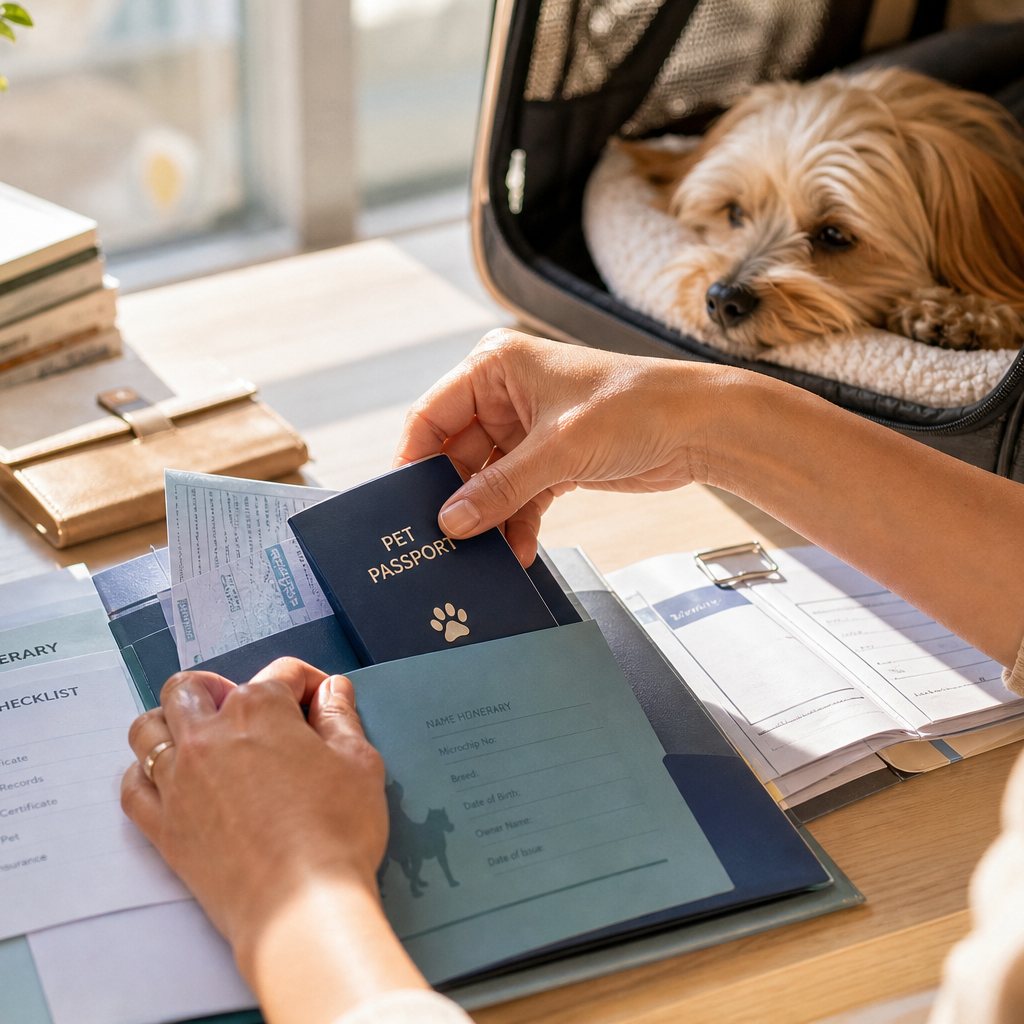
Is it possible to move abroad with your pet?That's correct. However, unlike moving people, the international transport of animals is subject to quarantine and import regulations set by each country. The required procedures vary by destination; for example, proof of vaccination to prevent infectious diseases such as rabies is required, and in some countries, an import permit must be obtained.
If there are any errors in these procedures, your entry may be delayed, or your pet may be held (quarantined) at the airport or a designated facility for a certain period of time. Carefully checking the contents and timing of your documents in advance is the best way to ensure a smooth trip.
In addition, depending on your destination, the application process can take several months. It’s a good idea to plan ahead with plenty of time to spare, keeping in mind that you should “start gathering information as soon as your trip is confirmed.” Please note that this article primarilyDogs & CatsThis applies to [specific pets]. Since the requirements for other pets, such as rabbits and birds, differ, please check with the authorities at your destination individually.
First, let's look at the overall process, focusing on the procedures on the Japanese side.Official Website of the Animal Quarantine ServiceLet's go over the next chapter's checklist while reviewing the material.
Checklist for Moving Abroad with Your Pet | What Do You Need to Prepare, and by When?
We’ve compiled a list of the steps you need to take to move abroad with your pet, so you can go through them in order. While the specific requirements vary by country, the general process is the same regardless of your destination.
Microchip Implantation and Registration
- If your pet has not yet been implanted with a microchip that complies with international standards (ISO 11784 and 11785), have one implanted as soon as possible.
- After attaching the tag, be sure to check that the registration information (owner’s name, contact information, etc.) is correct. Errors in the registration details can lead to problems with local procedures.
- For more information.All about microchips for dogs and cats: safety, benefits, and installation proceduresThis is explained there.
Receiving required vaccinations (such as rabies)
- Get the vaccinations required by your destination. Rabies vaccinations are mandatory in almost every country.
- The requirements regarding vaccination timing and the validity period of vaccination certificates are specified in detail by each country. Be sure to check the official information from the authorities of your destination for specific time frames.
- Depending on the country, you may also need proof of vaccination against diseases such as distemper (as part of a combination vaccine) or proof of parasite treatment. If you are missing any of these documents, consult your veterinarian as soon as possible.
- Even if you’ve already been vaccinated, it’s a good idea to double-check that the information on your vaccination certificate and its expiration date meet the requirements of your destination.
Veterinary Health Examination and Obtaining a Health Certificate
- Before departure, the animal will undergo a health check by a veterinarian to determine whether it is healthy enough to travel.
- Many destinations require travelers to submit an English-language health certificate. Since the validity period from the date of issuance to the date of travel varies by country, be sure to check the official information for your destination.
- The health certificate must be signed and stamped by a veterinarian. Be sure to double-check that all required information has been filled out.
Animal Quarantine Before Departure from Japan (Obtaining an Export Quarantine Certificate)
- To the animal quarantine office with jurisdiction over the departure airport, please provide the desired inspection dateAt least 14 days beforeWe will apply for an export inspection using NACCS (Animal Quarantine-Related Operations).
- The actual examination isWithin 10 days of departurewill be held. Since the application deadline and the inspection date are at different times, please be careful not to confuse the two.
- The dog will undergo testing for rabies (and leptospirosis) and receive an export health certificate. For more details,Animal Quarantine Station (Export of Dogs and Cats)please review.
Application for an import permit from the authorities in the destination country (only for countries where required)
- Some countries, such as Hong Kong and Singapore, require travelers to obtain a government-issued import permit before leaving the country.
- In countries with strict quarantine regulations, such as Australia and New Zealand, it is especially important to complete the necessary procedures and verify the required documents before departure.
- Since the required applications vary significantly depending on your destination, please also review the country-specific requirements in the next chapter.
Airline Reservations and Pet Transportation Arrangements
- Choose a flight that allows pets and make a reservation to check your pet with the airline. Since there are restrictions on the number and size of pets, as well as a maximum capacity, be sure to secure a spot for your pet at the same time you book your ticket.
- Let’s also review the process for the day of travel (check-in procedures and how to present the required documents).
- If you're unsure about making the arrangements yourself, consulting a professional pet transport service is one option.
Preparing and Acclimating Your Pet to a Travel Crate (Cage)
- We provide sturdy and secure crates for air transport. The International Air Transport Association (IATA)Live Animals RegulationsTherefore, criteria such as ensuring the size allows for a natural posture while inside are considered important.
- It’s also important to get your pet used to the crate before you leave. Have your pet practice spending time in the crate on a regular basis, and place a comforting blanket or toy inside.
- For details on how to choose, seeHow to Choose the Right Pet Crate for Air TravelThis is explained there.
Preparing for Your New Home and the Local Environment
- Make sure to find a pet-friendly place to live. If you're renting, check whether pets are allowed before signing the lease.
- It’s a good idea to look up information in advance about where to register upon arrival, as well as nearby veterinary clinics and pet stores.
How do entry requirements vary depending on the destination?
Requirements for importing and exporting pets vary significantly by country. Be sure to check the latest information for your destination before traveling and verify that you meet all necessary requirements. While we outline general trends for major countries and regions below, requirements are subject to change, so be sure to confirm the actual procedures on the official websites of the relevant authorities. A common requirement in many countries is a rabies vaccination certificate and a quarantine certificate (health certificate) issued or endorsed by a government agency. The procedure for issuing these certificates varies by country; in some countries, government agencies endorse the application forms, while in others, government veterinarians directly complete the forms.
United Kingdom
- An import permit is not required.
- After receiving the first rabies vaccination, you must wait at least 21 days before entering the country.
- There are specific rules regarding when the GB Animal Health Certificate must be issued. The latest requirements areOfficial GOV.UK Websiteplease check there.
- For travelers entering from "unlisted countries," in addition to the requirements listed above, an antibody test and a quarantine period may be required. For details,Official GOV.UK Websiteplease check there.
Australia
- Depending on the country group of origin, the requirements range from no quarantine detention to detention lasting several weeks or more.
- Strict quarantine regulations are in place, so it is particularly important to verify all documents and procedures in advance.
- Specific requirements areOfficial Website of the Australian Government (Department of Agriculture, Fisheries, and Forestry)Please be sure to check this.
Hong Kong (China)
- To import dogs and cats, you must obtain a Special Permit from the Agriculture, Fisheries, and Conservation Department (AFCD) in advance.
- Since obtaining a permit takes some time, be sure to apply well in advance.
- For details, seeAFCD Official Websiteplease check there.
Singapore
- To import dogs and cats, the owner must apply for an import permit either directly or through a certified agent.
- You must submit an application regardless of whether you are bringing a dog or a cat.
- For details, seeOfficial Website of the Singapore National Parks Board (AVS/NParks)please check there.
Countries and regions with antibody titer testing and quarantine period requirements (e.g., Hawaii, New Zealand, etc.)
- In addition to rabies vaccination, some countries and regions have established a system that requires a waiting period after antibody titer testing confirms sufficient antibody levels.
- The number of days of quarantine and testing requirements vary by country and region, and may change as a result of revisions to the system.
- This system isA system separate from the entry requirements for returning to Japan from areas other than designated regionsPlease be careful not to confuse the two, as doing so could throw off your preparation schedule.
- The latest requirements areHawaii State Animal Quarantine Division, ,New Zealand MPIPlease check the official website of the authorities in your destination country for details, etc.
Carry-on or checked baggage—which should you choose?
When moving abroad, airplanes are the primary means of transporting pets. There are two methods of air transport: traveling with your pet in the passenger cabin or shipping it in the cargo hold. Compare the characteristics of each method and choose the one that best suits your pet’s size, health, and temperament. While acceptance conditions and transport standards vary by airline, the International Air Transport Association (IATA) provides industry-wide guidelines, such asLive Animals RegulationsThis may be helpful.
| Items | Carry-on (in the cabin) | Cargo hold transport |
|---|---|---|
| Target Guidelines | Small dogs and cats that meet the weight and size restrictions set by the airline | Medium- to large-sized dogs and cats that exceed the size limit |
| Benefits | Allows the pet to stay close to its owner and enables the owner to directly monitor the pet while on the move | Transported in a dedicated space with controlled temperature and air pressure |
| Points to note | Since there is a limit on the number of passengers per flight, early reservations are required. | Since the dog will be separated from its owner, it is especially important to have a sturdy, properly sized crate ready. |
| Tips for Making a Reservation | Reserve a pet seat at the same time you book your flight | Check in advance with the airline's regulations regarding crate size and specifications. |
Safety Measures While Traveling
- Be sure to check before departure that the crate door locks securely. For peace of mind, attach a tag inside the crate with your contact information and local address.
- Depending on the airline, there may be restrictions on traveling with brachycephalic breeds (such as dogs with flat faces) based on the season or temperature. Be sure to check each airline’s official website for the specific breeds and conditions that apply.
- Consider ways to reduce the stress on your pet, such as choosing a direct flight over a connecting flight or selecting a flight during cooler times of the day.
- Avoid using sedatives on your own initiative simply because your pet is anxious during travel. There are concerns about the risk of side effects, such as respiratory depression at high altitudes. If necessary, be sure to consult your regular veterinarian.
- On the day of departure, have a light meal early on to avoid putting a strain on your pet’s digestion, and make sure your pet has had enough to drink and used the bathroom before checking in. This will help reduce the stress on your pet during the trip. Adjust the amount of water in the water bottle inside the carrier to prevent spills and excessive wetness.
What to Do Upon Arrival
Once you’ve arrived safely, it’s finally time to start your new life. To help your pet adjust to its new environment, follow these steps after you arrive.
Trouble Cases and Countermeasures for Pet Overseas Migration
Even with careful preparation, unexpected problems can arise. By familiarizing yourself with common scenarios and how to handle them, you can more easily avoid making the same mistakes.
Regarding the risks associated with being denied entry or deported,Risks of Pets Being Repatriated When Traveling AbroadBut we explain it in detail. If you're unsure about what to include in your documents, before you leave,Animal Quarantine ServiceContacting them directly is also a surefire way to get answers.
The Benefits of Consulting an Expert
Moving abroad with a pet is by no means a simple process. In addition to differences in regulations from country to country, there are many challenges—such as managing deadlines and preparing documents in English—that can be daunting for first-time travelers. That’s where experts with hands-on experience in pet transportation come in.
The Benefits of Consulting an Expert
- We are well-versed in import regulations in various countries and can provide specific advice on the necessary documents and procedures.
- Since they provide support with preparing documents and organizing the application process, this helps reduce the time and effort required of pet owners. In countries where applications to government agencies are required, some service providers have systems in place to coordinate with experts—such as administrative scriveners—as needed to guide pet owners through the process.
- Since you can get advice on how to handle situations based on past incidents, you’ll feel much more at ease when the time comes.
- They can help you manage your entire travel schedule, including vaccination dates and testing schedules.
At PetAirJPN, we also offer free consultations via our official LINE account and online form to help pets and their owners move abroad with peace of mind. Please feel free to contact us with any questions—no matter how small—regarding procedures and required documents for your destination country, or concerns about the preparation period.
Please let us know your destination and planned departure date.
Here is information on the required preparation period and the initial procedures.
Summary: How to Successfully Relocate Abroad with Your Pet
Moving abroad with your pet requires a lot of advance preparation, but if you take it one step at a time, it’s by no means impossible. Finally, here’s a summary of the key points you’ll want to check before you start preparing.
4 Things to Check Before You Start Preparing
- Start planning early — Check the entry requirements for your destination and plan your preparations well in advance. It’s especially important to keep track of the deadlines for vaccinations and tests.
- Ensure thorough management of required documents — Make sure you have all the necessary documents—such as microchip certificates, vaccination records, and export quarantine certificates—without any omissions. Be sure to do a final check to ensure there are no errors in the information or missing signatures.
- Putting pets' health and safety first — Make sure to take thorough precautions regarding your pet’s health in preparation for the trip, help them get used to their crate, and provide stress relief during the journey. Don’t push them too hard; always put your pet’s well-being first.
- Research the local environment — Do some research on local conditions—such as housing, laws, and nearby veterinary clinics—and make preparations so you can adjust smoothly.
If you have any concerns, please don’t keep them to yourself—feel free to contact us via our official LINE account or the contact form. Just let us know your destination and planned departure date, and we’ll let you know how much time you’ll need to prepare and what the first steps are.
FAQ
🐾 Traveling abroad with your pet, start with a free consultation
Please let us know your destination, desired departure date, and pet situation.
A summary of the required procedures and deadlines will be provided.
Completely free of charge|Online support available|Open on weekends and holidays
Written by: PetAirJPN Editorial Department (International Pet Transportation Operations Team)
*The information in this article is current as of August 2026. Quarantine regulations in various countries and airline policies are subject to change without notice. This article is intended to provide general information only and does not constitute a definitive determination regarding individual travel eligibility or requirements. Before traveling, be sure to check the latest official information from the relevant national authorities, animal quarantine offices, and airlines.


 English
  Japanese
  Chinese
  Korean
  German
  Spanish
  Portuguese