
![Moving Abroad with Your Pet: Where to Start? A Guide to Preparing [2026]](https://petair.jp/wp-content/uploads/2024/05/moving-abroad-with-pet.jpg)
Last Updated: August 1, 2026
Who This Article Is For
- This article is intended for those who are just beginning to consider moving abroad.The First Step: “Where Do I Start?”This explanation focuses specifically on these points.
- If you would like a more detailed and comprehensive overview of the entire process,A Comprehensive Guide to Traveling AbroadPlease see this as well.
- For those traveling overseas for a company-sponsored assignment,Guide to Overseas Assignments and RelocationHere is a summary of points to keep in mind when taking up a new assignment.
Moving Abroad with Your Pet: Where Should You Start?
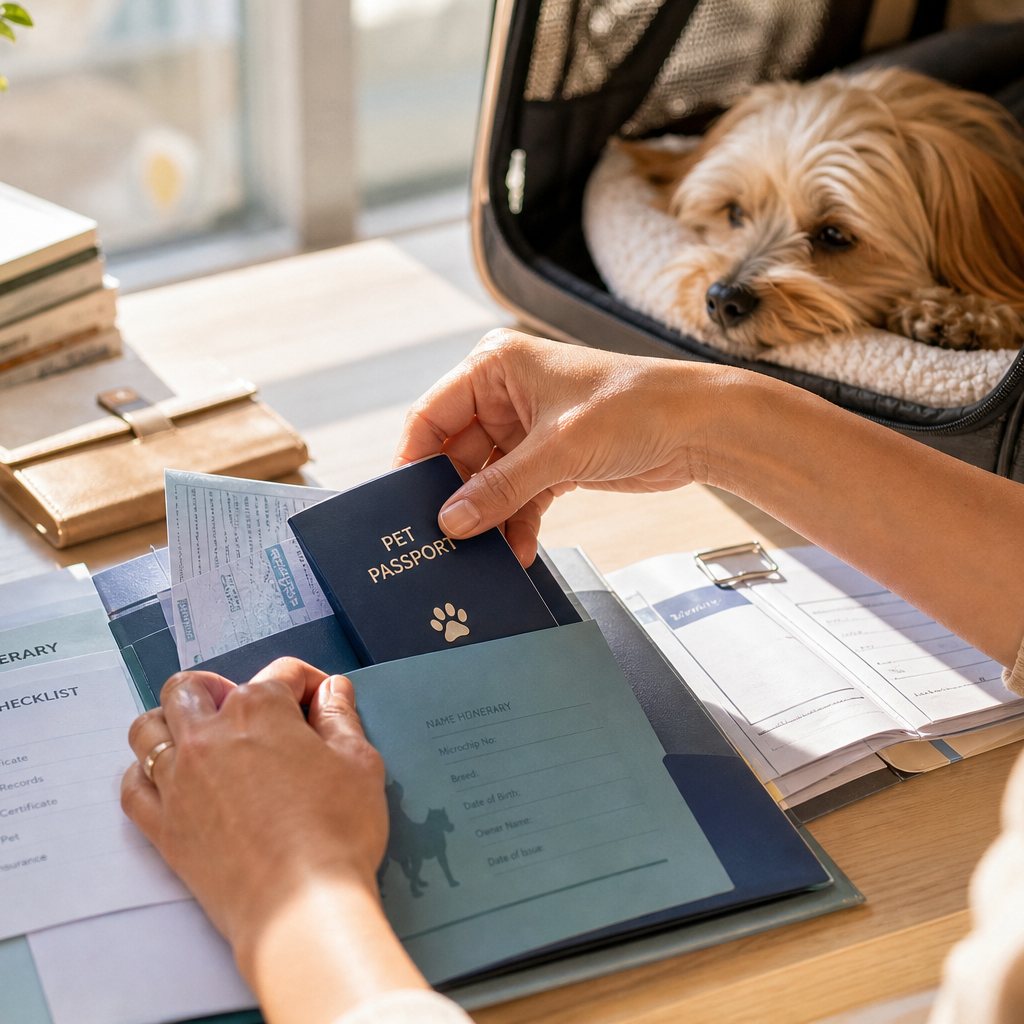
Preparing to move abroad generally involves six main steps (This article is intended for dogs and cats.(For other animal species, the procedures differ, so please check with the authorities at your destination.) While the specific requirements vary by country and region, among themWhen leaving Japan with a dog or cat, animal quarantine (obtaining an export health certificate) prior to departure from Japan is required regardless of your destination.That's right. While microchipping and vaccinations are required as entry conditions in many destinations, the requirements and conditions vary by destination, so it is essential to check the specifics for each one. We recommend first getting a general overview and then checking the individual requirements for each destination.
Attachment of microchip
- Microchips compliant with ISO standards (11784 and 11785) are implanted at veterinary clinics.
- In many countries, it is a requirement that this be fitted before the rabies vaccine is administered.
Vaccinations and medical examinations
- We will administer the necessary vaccinations, including the rabies vaccine.
- Depending on your destination, proof of vaccination with a combination vaccine or an antibody test may be required.
Animal Quarantine Before Departure from Japan (Export Quarantine Certificate)
- Animal Quarantine ServiceWe undergo an inspection there and receive an export health certificate.
- Since there are deadlines for applications and inspections, it is important to manage your schedule well in advance.
Immigration procedures and document preparation for each destination
- We will prepare the documents required by your destination, such as import permits and health certificates.
- Since requirements vary significantly from country to country, it is essential to verify them on a case-by-case basis.
Contact airline company and arrange transportation
- Decide whether to carry it on board or check it as luggage, then make your reservation.
- Since check-in requirements and acceptance policies vary by airline, you must confirm these details in advance.
Local Registration, Insurance, and Finding a Veterinarian After Arrival
- We will consider registering the pet locally (usually for dogs) and purchasing pet insurance.
- Find a regular veterinarian and get ready for your new life
When should I start preparing?
Once you’ve decided on your destination, it’s best to start preparing as soon as possible. This is because the complexity of the required procedures varies greatly depending on the destination. While some destinations only require a microchip and vaccinations, others require an antibody titer test followed by a waiting period; the latter requires a more substantial preparation period than the former.
If you’re not sure what procedures are required for your destination, rather than working backward from a specific number of months, it’s best to start by consulting official information from animal quarantine offices or the authorities at your destination—or a specialized service like PetAirJPN—to identify the necessary procedures. The preparation steps for destinations that require antibody titer testing are as follows:Procedure Guide for Rabies Antibody Titer TestingThis is explained in detail there.
Microchips and Vaccines: Why Is the Order Important?
One of the first stumbling blocks when preparing to move abroad is the order of microchipping and vaccinations. In many countries, including EU member states and Thailand,Getting a rabies vaccine after being microchippedis a prerequisite for entry requirements (Examples of EU requirements can be found on the European Commission's official website(Reference: Verified in July 2026). If the order is reversed, the vaccination itself may not be considered to meet the requirements, and a re-vaccination may be necessary.
Have the microchip implanted by a veterinarian, and be sure to receive a numbered certificate (in English) after the procedure. Regarding the rabies vaccine, many countries require proof of vaccination as a condition of entry, but the minimum age at which the vaccine can be administered and the validity period of the certificate vary depending on your destination.
Depending on your destination, some countries may require proof of vaccination not only for rabies but also for combination vaccines (such as canine distemper and parvovirus, and feline panleukopenia, among others). For information on the purpose of each vaccine and the standard vaccination schedule,The Complete Guide to Vaccinations Required for Traveling Abroad with Your PetWe're comparing them here. Basic information about microchips and rabies vaccines is explained in more detail in the following articles, respectively.
Related Articles
What do I need to do for animal quarantine before leaving Japan?
If you plan to take your dog or cat abroad, you must have it examined at a Japanese animal quarantine station and obtain an export quarantine certificate. Without this certificate, there is a high risk that your documents will be deemed incomplete upon arrival at your destination.
According to official information from the Animal Quarantine Service,At least 14 days before your preferred inspection dateApply for an export inspection using NACCS (Animal Quarantine-Related Operations), andWithin 10 days of departureThis is the process for actually undergoing the examination (Source: Animal quarantine office "to export dogs and cats."(Confirmed in July 2026). Since the “application” and the “inspection” take place at different times, please be careful not to confuse these two steps.
On the day of the examination, your pet will undergo testing for rabies (and leptospirosis, in the case of dogs); if the results are clear, you will be issued an English-language export health certificate. Since multiple copies of the document are often provided, it’s a good idea to set aside one copy for submission at your destination and keep another for future re-entry into Japan.
Documents should be prepared in English.
In most cases, documents in Japanese will not be accepted as-is during immigration checks at your destination. Be sure to consult with your veterinary clinic well in advance to have vaccination certificates and health certificates issued in English (or the local language, depending on your destination). Since many documents require a veterinarian’s signature and seal, they may not be accepted if the forms are incomplete. By confirming the language and format required by your destination in advance and sharing this information with your veterinary clinic, you can avoid any last-minute delays on the day of departure.
What Changes Depending on Your Destination? Examples from Thailand, the EU, and the U.S.
In the following section, we’ll outline the key points to keep in mind, using Thailand, EU countries, and the United States as examples of popular travel destinations. Since requirements are subject to change, be sure to check the latest information on each country’s official website.
Thailand
- You must apply for an import permit from the Thai Department of Land and Development (DLD). Before departure,7 days or more but no more than 60 daysIt is applied for and is valid for 60 days after issuance (Source: Official Information from the Royal Thai Embassy in Washington, D.C.(Confirmed in July 2026)
- The required vaccines are rabies, distemper, hepatitis, parvovirus, and leptospirosis for dogs, and rabies and panleukopenia for cats, andFirst vaccinationIn such cases, a 21-day waiting period after vaccination is required. This waiting period is not required if you have received booster shots continuously within the validity period.
- Upon arrival, present your permit and other documents at the animal quarantine counter at the airport, and500 baht per headWe will pay the applicable fees. In principle, quarantine is not required as long as all necessary documents and vaccinations are in order; however, if there are incomplete documents or health concerns, the DLD has the authority to order quarantine for up to 30 days.
EU countries
- Starting April 22, 2026, for dogs, cats, and ferrets,Non-commercial travel (such as when accompanied by an owner)The new EU pet travel regulations apply to this group. Non-EU residents, including those from Japan, who travel with pets under these conditions cannot use the pet passport intended for EU residents and must obtain an Animal Health Certificate for each trip. If your situation does not meet these criteria—such as in the case of commercial transport—different requirements apply. Please check the official information from the European Commission based on your specific travel arrangements.
- The certificate is valid for 10 days from the date of issuance, and you must cross the EU border within that period (Source: Official Information from the European Commission(Confirmed in July 2026)
- After the microchip is implanted, the dog will receive a rabies vaccine, andFirst vaccinationIn such cases, a 21-day waiting period is required after the final dose. This waiting period is not required if you have been receiving booster shots continuously within the validity period.
- The requirement for a rabies antibody titer test varies depending on the country of departure. Whether it is required for travel from Japan isEuropean Commission Official WebsiteBe sure to check the latest posting status
United Kingdom
- Under the EU’s pet travel regulations, the United Kingdom is considered a “third country” following Brexit, and different procedures apply than those for the EU. Please be careful not to treat it as if it were one of the “EU member states” subject to the same rules.
- DogsTreatment for tapeworm (Echinococcus) infection is required 24 to 120 hours prior to entry (Source: Official Information from GOV.UK(Confirmed in July 2026. The animals in question are dogs.)
- Travelers entering directly from countries such as Ireland, Malta, and Finland are not eligible for this deworming treatment.
United States
- Since the August 2024 amendment, those entering or returning to the United StatesAll DogsIn addition, a microchip (please check the CDC’s official website for specific standards) and a receipt confirming the online submission of the CDC Dog Import Form are required (Source: Official CDC Press Release(Confirmed in July 2026)
- Additionally, the dog must be in good health upon arrival and at least 6 months old. If the dog is to receive a rabies vaccination, it must be administered after the microchip has been implanted.
- Japan is still not included on the CDC's list of "countries with a high risk of rabies."Only dogs that have not stayed in a country with a high risk of rabies during the six months prior to travelWhile no additional documents—such as proof of rabies vaccination—are required beyond the mandatory items listed above, if you have a history of travel to high-risk countries, additional documents, such as proof of rabies vaccination, will be required. Be sure to check the official CDC information before traveling, including whether vaccination is required (Source: Official CDC Information(Confirmed in July 2026)
- Depending on the state or municipality, you may be required to register your dog for a license within a certain period after arrival. Since the deadline varies by municipality, please check the official information for your destination.
- In addition to federal requirements, Hawaii and Guam each have their own quarantine systems established by separate authorities. Since Hawaii and Guam fall under different jurisdictions, please be careful not to apply the requirements of one to the other.
| Countries and regions | Microchip | Rabies vaccination | Antibody titer test | Main Procedures Upon Entry |
|---|---|---|---|---|
| Thailand | Required | Required | No requirements (isolation may be required if documents are incomplete) | Presentation of the import permit; payment of fees at the airport |
| EU countries | Required (before the vaccine) | Required (21-day waiting period for the first time) | Varies by country of departure (please confirm) | Presentation of an Animal Health Certificate (AHC) |
| United Kingdom | Required | Required | To be confirmed separately from the EU | Presentation of the required certificates for entry; for dogs, presentation of a tapeworm treatment certificate (please check the official GOV.UK website for details) |
| United States | Required (Dogs, starting August 2024) | Not required (No additional documents are required if you have not been in a high-risk country within the past 6 months) | Varies by country of departure | Presentation of the CDC Dog Import Form Receipt |
*The information above summarizes general trends. For detailed requirements by country or region and links to primary sources, please be sure to check the official websites of the relevant authorities for the latest information. Regions with their own quarantine systems, such as Hawaii and Guam, are not included in the table. (Sources: Official information from the Animal Quarantine Service, the Royal Thai Embassy in Washington, D.C., the European Commission, GOV.UK, and the CDC. Verified July 2026)
Why don't we go over the requirements for your destination together?
Please let us know your destination and planned departure date.
Here is information on the required preparation period and the initial procedures.
How Should You Choose an Air Shipping Option? Carry-On vs. Checked Baggage
Air transport methods are broadly divided into two categories: “carry-on (traveling in the cabin)” and “transport in the cargo hold.” Small dogs and cats are often permitted as carry-on pets, provided their carrier fits under the seat, while medium- to large-sized dogs and brachycephalic breeds are generally transported in the cargo hold. Since booking availability, check-in requirements, and additional fees vary by airline, it is essential to check these details well in advance.
Regardless of the method you choose, it can be very stressful for your pet if it isn’t used to a carrier or crate. For peace of mind, place the crate in a room a few weeks before departure and let your pet go in and out freely, gradually getting it used to it with treats. On the day of travel, make sure your pet gets some exercise and relieves itself before departure, and we recommend finishing its meal several hours before boarding to avoid vomiting caused by a full stomach. When it comes to choosing a mode of transport and considering costs,The Complete Guide to Air Transporting PetsWe provide a detailed comparison here.
When transporting goods in the cargo hold,International Air Transport Association (IATA) StandardsMany airlines require the use of crates that comply with their standards. Since your pet may be denied boarding if the crate’s size or construction does not meet these standards, be sure to check the regulations of the airline you plan to use before purchasing one. Additionally, due to the structure of their airways, brachycephalic breeds are considered more susceptible to stress caused by heat or excitement, and some airlines may restrict their acceptance depending on the season or time of day. If you are planning to travel with a brachycephalic breed, please carefully review the specific check-in conditions for each airline in advance.
Points to Note When There Are Connecting Flights or Stopovers
If there are no direct flights and you have to take a connecting flight, you should consider not only your final destination but alsoRequirements for Transit CountriesYou’ll also need to check this. Depending on the country, your pet may be considered to have temporarily entered the country during a layover, which could result in quarantine procedures in the transit country. Since whether a flight allows pets to remain on board during a layover varies by airline, checking this before booking will help you avoid problems on the day of travel.
What Should I Do After Arrival? Local Registration, Insurance, and Finding a Veterinarian
There are a few things you’ll need to take care of after arriving at your destination. In many countries and regions, dog owners are required to register their dogs with local or state authorities, and in some areas, failure to complete the registration within a certain period after arrival may result in penalties. Since registration requirements and deadlines vary by local government and authority, please check the official information for your destination.
The cost of veterinary care varies greatly from country to country, and in some countries, it tends to be higher than in Japan. To prepare for unexpected expenses, it’s a good idea to consider getting pet insurance for peace of mind. In addition, finding a trusted local veterinarian early on will allow you to seek advice immediately if your pet becomes ill.
It can take time for pets to adjust to their new living environment. Immediately after arrival, avoid letting them roam too far; instead, help them get used to their new surroundings by starting in a small, safe space. Use blankets and toys brought from Japan to help them recognize familiar scents, and gradually switch their food and water to local brands. These precautions will help reduce your pet’s stress. Since brachycephalic breeds and older pets, in particular, may be sensitive to temperature and atmospheric pressure changes, be sure to pay attention to the season and time of day when traveling.
The new place I'm moving to isPets allowedThis is also a fundamental requirement. Depending on the property, there may be restrictions on the number of pets, weight limits, or requirements for an additional security deposit, so it’s best to mention your pet-related needs early on in your housing search to ensure a smooth process. After a long flight, spend a few days observing your pet for any changes in their condition or appetite, and if you notice anything concerning, consult a local veterinarian as soon as possible.
What are some common mistakes made during preparation, and how can they be avoided?
The waiting period and certificate formats vary by country. If you rely solely on a friend’s travel experiences or information about another country, you may not meet the requirements of your actual destination.
Measures:Once you've decided on your destination, check the official information for that country individually.
If you get vaccinated first, depending on your destination, the vaccination itself may not be considered sufficient to meet the requirements, and you may need to get vaccinated again.
Measures:If your pet does not have a microchip, be sure to have one implanted before getting it vaccinated.
As with EU travel regulations, quarantine and entry requirements are subject to change. If you take information or personal experiences from several years ago at face value, you run the risk of arriving on the day of your trip without having all the necessary documents.
Measures:As your trip approaches, be sure to double-check the latest official information.
For brachycephalic breeds and large dogs, check-in policies vary by airline, and acceptance may be restricted depending on the season. It is possible that you may not be able to make a reservation if you wait until just before departure to check.
Measures:When checking the requirements for your destination, be sure to contact the airline early on as well.
Support Provided by PetAirJPN
As we’ve seen so far, there are many details to confirm when preparing to travel with your pet overseas, and the requirements vary significantly from country to country. Guided by our vision of “eliminating borders for pets,” PetAirJPN is here to help ease the burden of travel preparations.
Examples of How We Can Help
- Guidance on Preparation Schedules Based on Quarantine and Entry Requirements for Your Destination
- Organizing the Required Documents and Guidance on Where to Obtain Them and How to Prepare Them
- If an application to a government agency is required, we will coordinate with a certified administrative scrivener (who will handle the application process).
- Coordinating shipping arrangements with airlines; consulting on crate selection
- Information on Quarantine Measures by Destination
If you’re “anxious about communicating in English” or “concerned about large dogs or brachycephalic breeds,” consulting with us early on can help you avoid any oversights in your preparations. Please start by letting us know your destination and planned departure date.
Frequently Asked Questions (FAQ)
Summary: Let's Start with an Overview of the 6 Steps
Moving abroad with a pet involves many details to confirm, so it’s only natural to feel anxious. However, if you break the process down into six steps—microchipping, vaccinations, animal quarantine before leaving Japan, preparing entry documents for your destination, arranging air transport, and local registration—it becomes clear what you need to do next. Once you’ve decided on your destination, start by checking that country’s official information to identify the necessary procedures.
If you'd like to learn more about the entire process,A Comprehensive Guide to Traveling Abroad, The procedures for returning to Japan areThe Complete Guide to Returning to Japan, The specific procedure for antibody titer testing isProcedure Guide for Rabies Antibody Titer TestingPlease see this as well.
Written by: PetAirJPN Editorial Department (International Pet Transportation Operations Team)
*The information in this article is current as of August 2026. Quarantine regulations in various countries and airline policies are subject to change without notice. This article is intended to provide general information only; to determine whether travel is permitted and to confirm specific requirements, please be sure to check the latest official information from the relevant national authorities, animal quarantine offices, and your veterinarian.
🐾 Traveling abroad with your pet, start with a free consultation
Please let us know your destination, desired departure date, and pet situation.
A summary of the required procedures and deadlines will be provided.
Completely free of charge|Online support available|Open on weekends and holidays



 English
  Japanese
  Chinese
  Korean
  German
  Spanish
  Portuguese