
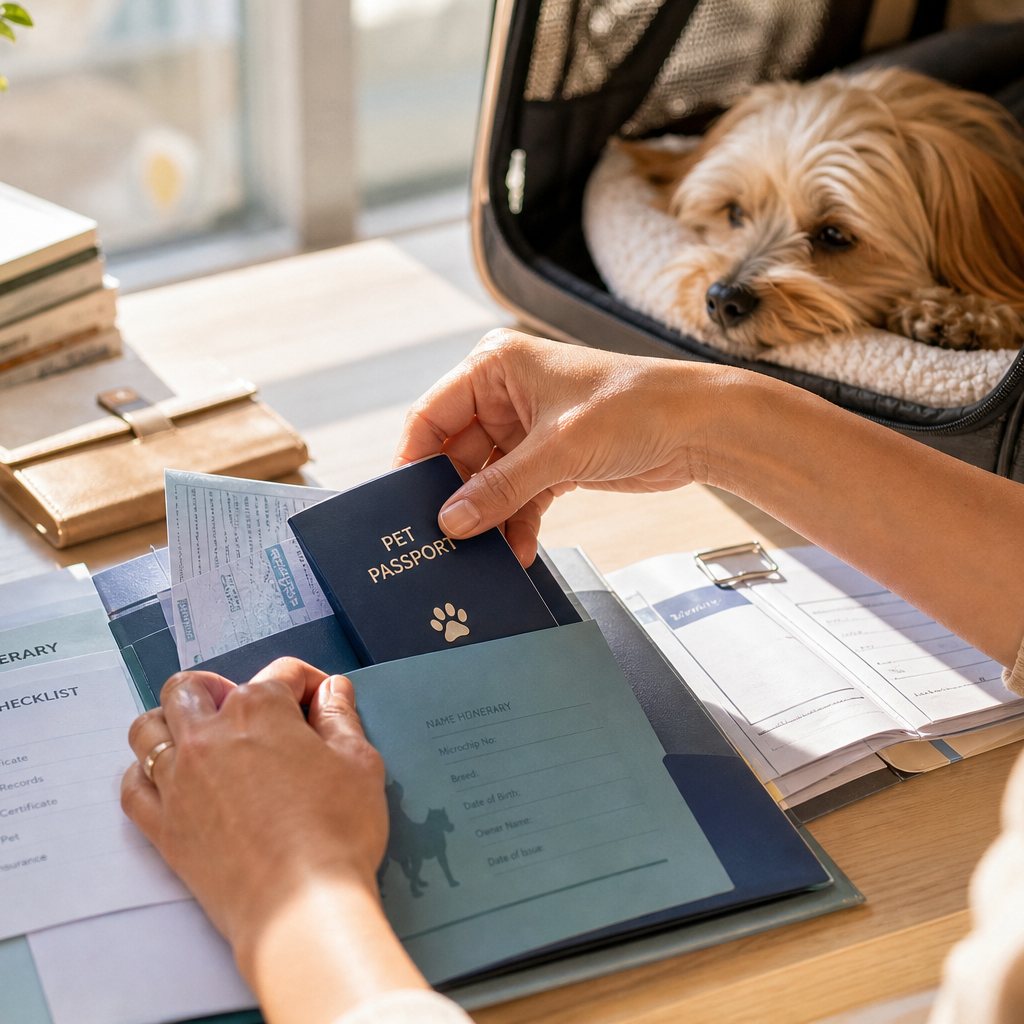
![Moving to Brazil with Your Pet | A Guide to Procedures from Departure to Return [2026 Edition]](https://petair.jp/wp-content/uploads/2025/06/Moving-to-Brazil-with-Your-Pet.jpg)
Last Updated: July 29, 2026
What this article will tell you
- When Moving or Relocating to Brazil, When and How Should You Start the Process for Your Pet?
- Preparations to Make in Advance for a Future Return to Japan, Such as Rabies Vaccinations and Microchipping
- Basics of the “CVI (International Veterinary Certificate)” Required for Entry into Brazil
- Common Mistakes and Points to Note During the Preparation Process
- Things to Consider Before Your Trip in Preparation for Your Future Return to Japan
- This article applies to dogs and cats (if you are bringing other animals, such as rabbits or ferrets, a separate import permit is required).
What Are the Pitfalls of a “One-Way Ticket” You Should Know Before Moving to Brazil?
Brazil’s entry requirements are relatively simple compared to other countries—for example, they do not require a rabies antibody titer test. However, there is one important point that’s easy to overlook. That is,"Being eligible to enter Brazil" and "being eligible to return to Japan" are two completely different things.That's what it says.
If there’s even the slightest possibility that you might return to Japan in the future—including for a temporary visit—it’s essential to start thinking about “preparing for your return” as early as possible.Brazil is not included in the designated areas specified by the Animal Quarantine Service. Upon returning to Japan, you must complete certain procedures, including receiving a rabies vaccination, undergoing an antibody titer test at a designated testing facility, and waiting at least 180 days from the date of the blood draw (Source: Animal Quarantine Service: “Importation of Dogs and Cats from Areas Other Than Designated Regions”(Confirmed in July 2026). The Animal Quarantine Service does not uniformly require these procedures to be completed before departing Japan. You may proceed with them while still in Japan or after arriving in Brazil. However, since the preparation process takes a long time—including the 180-day waiting period—we recommend planning your schedule well in advance.
It is not uncommon for people to realize this fact after arriving abroad and then find themselves forced to keep their pets in long-term boarding while they return home. We strongly recommend that you plan your schedule with a “round trip” in mind from the very beginning of your plans to move to or be assigned to Brazil. An overview of Japan’s animal quarantine system isGuide to Procedures for Traveling Abroad with Dogs and CatsIt also explains that.
Where should I start with my travel preparations, and when should I begin?
Moving to or being assigned to Brazil with a pet is a long-term project. When preparing for a future return to Japan, many pet owners tend to plan their schedule with a buffer of at least six months, including the 180-day waiting period following the rabies antibody titer test. The initial preparation phase, in particular, lays the foundation that will determine the rest of the overall schedule.
Early Preparation Period
- Find a veterinary clinic with experience in export quarantine and have your pet undergo a health examination
- If an ISO-compliant microchip has not been implanted, implant one.
- Planning a rabies vaccination schedule with an eye toward returning to Japan in the future
- Consider whether to make the arrangements on your own or proceed with the guidance of an expert
A few months before departure
- After the microchip is implanted, receive the first and second doses of the rabies vaccine.
- If you are preparing to return to Japan in the future, you should undergo an antibody titer test at a designated testing facility and begin the 180-day waiting period.
- Contact the airline to reserve space for your pet
- Prepare a crate that complies with IATA standards and begin crate training
Parasite Treatment Prior to Issuance of the CVI (International Veterinary Certificate)
We will administer medication to treat internal and external parasites. Since there are specific guidelines regarding when this treatment must be administered, please be sure toMAPA Official Websiteplease check there.
Clinical Tests Prior to CVI Issuance
You must undergo a clinical examination (health checkup) and obtain certification that you are “fit for transport.” Since there are specific regulations regarding when this must be completed, please be sure to check the MAPA official website for the exact number of days required.
At least 14 days before your preferred inspection date
Apply for an export inspection at the Animal Quarantine Station using NACCS (Animal Quarantine-Related Operations) (Source: Animal Quarantine Service(Verified in July 2026).
Within 10 days of departure
The animals undergo export inspections at the Animal Quarantine Station, and a veterinary officer issues an export quarantine certificate (a document equivalent to a CVI).
Departure Day—Arrival in Brazil
- Present your CVI and various certificates at the airport counter
- Upon arrival, entry was granted following verification by VIGIAGRO (the quarantine and surveillance division of Brazil’s Ministry of Agriculture, Livestock, and Food Supply).
Which Is Better: Arranging Things on Your Own or Consulting an Expert?
First, consider whether you want to “handle this complex process on your own (do-it-yourself)” or “proceed with the help of a professional.” Since fees vary depending on your destination, the time of year, and your pet’s condition, we recommend comparing the different approaches rather than focusing solely on cost.
| Comparison items | Personal Arrangement (DIY) | Proceed while consulting with experts |
|---|---|---|
| Time and effort | Since I have to handle all the follow-ups with various agencies and gather all the necessary documents on my own, it takes a lot of time and effort. | We can move forward while discussing how to proceed with the preparations and organizing the necessary documents. |
| information gathering | You need to research and familiarize yourself with the official information provided by the authorities and airlines in each country. | You can receive assistance in organizing information regarding the general process and points to keep in mind. |
| Schedule Management | You manage multiple deadlines (such as application, inspection, and waiting periods) on your own. | Could you help me organize the overall schedule? |
| Anxiety and Feelings of Burden | Whenever there's something I don't understand, I have to look it up myself. | Having someone to talk to about your concerns makes the burden feel lighter. |
What Is the “CVI,” a Document Required for Entry into Brazil?
The CVI (Certificado Veterinário Internacional / International Veterinary Certificate) is a mandatory document for dogs and cats entering Brazil. The CVI becomes a valid official document when it is issued or endorsed by the animal quarantine authorities of the exporting country. The issuance procedures vary by country (Source: MAPA Official Website(Confirmed in July 2026). For travel from Japan, the Animal Quarantine Station conducts export inspections, and a veterinary officer issues this certificate. If you are bringing animals other than dogs and cats—such as rabbits or ferrets—a separate import permit is required; please check the MAPA official website for details regarding these animals.
Main Contents Included in the CVI
- Parasite Control: Records of the administration of medications to treat internal and external parasites within the specified period prior to the issuance of the CVI
- Clinical Tests: Undergo a medical examination within the specified period prior to the issuance of the CVI and obtain certification that you are “fit for transport”
- Rabies Vaccination History: Proof of Vaccination Status (Since requirements regarding age in months and waiting periods are subject to change, please check the MAPA official website for the latest information)
- Report on Leishmaniasis: If you have a relevant medical history, you may be denied entry, so please be sure to consult with us in advance (please note that even if you consult with us, entry is not guaranteed).
There are regulations regarding the timing of parasite control and clinical testing. The CVI form has been updated in accordance with Portaria MAPA No. 741/2024. Please be sure to check the MAPA official website for specific timeframes and required information (verified in July 2026).
The CVI has an expiration date.The CVI form has been updated in accordance with the new regulations (MAPA Ordinance No. 741/2024), and its validity period varies depending on the country or region in question. If the timing of issuance is incorrect, the CVI may be deemed invalid upon entry into Brazil; therefore, please be sure to check the MAPA official website or contact us to confirm the specific validity period, effective date, and latest form before finalizing your schedule.
Furthermore, Brazil is not believed to have a law that uniformly requires microchipping as an entry requirement. However, if you plan to return to Japan in the future,ISO-compliant microchipSince wearing a mask is a mandatory requirement, we recommend that you put one on before traveling.
What procedures should I complete in preparation for returning to my home country?
If you are planning to return to Japan in the future, the following procedures are required. The Animal Quarantine Service does not require that these be completed before departing Japan. You may complete them while you are still in Japan or after you arrive at your destination (Source: Animal Quarantine Service: “Importation of Dogs and Cats from Areas Other Than Designated Regions”(Verified in July 2026).
A microchip that complies with both ISO 11784 and ISO 11785 standards is implanted before the first rabies vaccination.
Vaccination is administered after the microchip is implanted. The second dose is administered at least 30 days after the first dose.
A blood sample must be drawn at a testing facility designated by the Minister of Agriculture, Forestry and Fisheries to confirm that the antibody titer is 0.5 IU/mL or higher. Unless at least 180 days have passed since the date of the blood draw, entry without quarantine will not be permitted upon return to Japan. The test results are valid for two years from the date of the blood draw.
If you get the order or timing of these three procedures wrong, your return date will be significantly delayed. Whether before or after your trip, it’s important to plan your schedule with your return in mind as early as possible. Regarding the rabies vaccine and microchip,A Basic Guide to Rabies VaccinationsBut it explains this in detail.
What are the export procedures at Japan's animal quarantine stations?
When leaving Japan, you must file an export notification with the Animal Quarantine Service (AQS) (Source: Animal quarantine office "to export dogs and cats."(Verified in July 2026).
Export Procedure Flowchart
- How to Apply: You submit your application using an online system called NACCS (Animal Quarantine-Related Operations).
- Timing of the Application: Submit an application to the Animal Quarantine Station where the animal will be examined at least 14 days before the desired examination date to schedule an appointment.
- Conducting the Inspection: Within 10 days of departure, the animal will undergo an export inspection (document review, clinical examination, and microchip verification).
People often misunderstand that “applications must be submitted 10 days in advance,” but the correct information isApplications must be submitted at least 14 days in advance; the test must be conducted within 10 days of departure.These are the two steps. If you keep these two separate in mind, you’ll avoid panicking at the last minute. If you have any concerns about preparing documents or communicating with the quarantine office, you’re welcome to consult with us starting from the information-gathering stage.
For those who are unsure whether they are following the correct procedure
Please let us know your destination and your planned departure date.
Here is the required preparation period and the order in which you should complete the necessary procedures.
What should I keep in mind when choosing an airline and preparing a pet carrier?
Pet owners must make reservations and inquiries with the airline directly. Before making a reservation, be sure to contact the airline’s customer service desk to secure space for your pet. The number of pets that can be transported is limited.
On international flights departing from Japan, pets are typically checked as baggage in the air-conditioned cargo hold. Please feel free to contact us for assistance with scheduling and confirming the necessary information.
Points to consider when selecting a crate
- IATA (International Air Transport Association) StandardsWe provide sturdy, safe crates that comply with the relevant standards.
- The space must be large enough for your pet to stand up naturally, turn around, and lie down comfortably.
- Start "crate training" several months before departure to help your pet recognize the crate as a "safe, comfortable space of their own."
Many airlines impose restrictions on the transport of brachycephalic dogs and cats to ensure their comfort and ease of breathing. While many airlines tend to restrict transport during periods of high temperatures, the specific breeds affected and the restriction periods vary by airline; therefore, be sure to check the latest conditions on each airline’s official website before purchasing a ticket. For more details,Guide to Flying with Brachycephalic Breeds, How to Choose a CrateThe Complete Guide to Choosing a CrateThis is explained there. Please note that flight schedules are subject to change without notice, so please check the official websites of each airline for the latest flight information.
What is the process on the day of departure and after arrival?
On the day of departure, the process begins with presenting your CVI at the airport, and upon arrival in Brazil, you will be granted entry after verification by VIGIAGRO. The specific procedure is as follows:
A few hours before departure
To prevent motion sickness, have a light meal a few hours before departure. Be sure to use the restroom one last time right before heading to the airport.
3 to 4 hours before departure
Aim to arrive at the airport 3 to 4 hours before your international flight’s departure time, and present your endorsed export health certificate at the airline counter. Be sure to consult your regular veterinarian in advance regarding the use of sedatives.
Arrival in Brazil
You will be reunited with your pet near the baggage claim area. An official from VIGIAGRO (the quarantine and surveillance division of Brazil’s Ministry of Agriculture, Livestock, and Food Supply) will verify the original CVI endorsed by the Japanese Animal Quarantine Service and visually inspect your pet’s health.
entry permission (to a country)
Provided there are no issues with your documents or your pet, you will be granted entry on the spot. While you are not required to undergo quarantine if you meet the regulations, these regulations are subject to change, so for the latest information,MAPA Official Websiteplease check there.
If you’re arranging the flight yourself, it’s a good idea to check the estimated arrival time in advance for peace of mind. For the first few days after arrival, let your pet rest comfortably in a quiet, safe place. Having familiar blankets and toys can help alleviate stress caused by the change in environment. In your new city, it’s a good idea to research reliable veterinary clinics in advance. Depending on the area, there may be specific local rules, such as dog registration requirements. Please check with your local city hall or a local veterinary clinic.
How much will it cost?
The cost of traveling to Brazil with a pet consists of several items, including veterinary fees, microchip implantation fees, rabies vaccination fees, antibody titer test fees, crate costs, and airline transport fees. Since costs vary significantly depending on the pet’s size, the veterinary clinic you use, and the airline, we cannot provide specific amounts in this article alone. If you consult with an expert, a service fee will be charged in addition to the costs associated with making your own arrangements. Please feel free to contact us first, and we will provide you with an estimate based on your destination, travel dates, and your pet’s condition.
What are some common mistakes and things to watch out for during preparation?
Based on what we’ve covered so far, we’ve summarized the points where people tend to run into trouble. As for the official deadlines and required documents, the Japanese sideAnimal quarantine office "to export dogs and cats.", The Brazilian sideMAPA Official WebsitePlease be sure to check this (verified in July 2026).
What should I keep in mind when returning to Japan from Brazil?
Since Brazil is not included in the designated areas specified by the Animal Quarantine Service, a certain amount of preparation time is required to complete the procedures for returning to Japan. The main requirements are as follows (Source: Animal Quarantine Service: “Importation of Dogs and Cats from Areas Other Than Designated Regions”(Verified in July 2026).
| Requirements | Details |
|---|---|
| Microchip | Microchip implantation in accordance with ISO 11784 and 11785 standards (to be performed prior to rabies vaccination) |
| rabies vaccination | Two or more doses (with at least 30 days between the first and second doses) |
| Rabies antibody titer test | Conducted by an inspection agency designated by the Minister of Agriculture, Forestry and Fisheries, and confirmed to be 0.5 IU/ml or higher |
| Waiting period | At least 180 days from the date of blood collection for the antibody titer test |
| Advance notification | Submit a notification to the animal quarantine office with jurisdiction over the airport or seaport of arrival at least 40 days before arrival in Japan. |
If you return to Japan without meeting these requirements, you may be subject to a quarantine period of up to 180 days. We strongly recommend that you include your return preparations in your travel plans from the very beginning of your trip to Brazil.
What can PetAir do?
PetAir provides guidance on how to prepare the necessary documents and compiles information regarding animal quarantine procedures for those moving to or being assigned to Brazil. We also offer a full range of support for the travel process—from coordinating schedules with airlines and providing guidance on customs clearance to the handover at the airport (please note that pet owners are responsible for making reservations and contacting the airline directly). Please let us know your destination, planned departure date, and your pet’s condition, and we will advise you on the necessary preparation time and next steps.
We do not prepare documents or file applications on your behalf; rather, our services focus on organizing the necessary information and guiding you through the procedural steps. The issuance of the CVI and the endorsement on the export health certificate are performed by the animal quarantine authorities of the exporting country (in Japan, a veterinary officer at an Animal Quarantine Station); this does not guarantee entry approval, confirm flight reservations, or certify your pet’s health status. Please consult with your pet’s veterinarian regarding medical treatments, vaccinations, and the use of sedatives at the veterinary clinic. Fees vary depending on the destination, travel dates, and your pet’s condition; we will provide an estimate when you contact us.
Frequently Asked Questions (FAQ)
Summary: Preparing for a round trip gives you peace of mind
Brazil is a country with relatively low entry requirements, as it does not mandate rabies antibody titer testing. However, this does not mean you do not need to consider “returning to Japan.” If there is a possibility you might return to Japan—including for temporary visits in the future—it will give you peace of mind later on to start preparing for your return well in advance of your trip by having your pet microchipped, vaccinated against rabies, tested for rabies antibodies, and observing the 180-day waiting period.
The CVI (International Veterinary Certificate) required for dogs and cats entering Brazil contains numerous details, such as proof of parasite treatment, clinical tests, and rabies vaccination, and its validity period varies depending on the destination country or region. Be sure to check the latest form and validity period.MAPA Official WebsitePlease check the details here. The export procedures on the Japanese side consist of two steps: submitting an application via NACCS (at least 14 days prior to the desired inspection date) and undergoing the export inspection (within 10 days of departure). With this basic information in mind, be sure to plan your schedule with plenty of time to spare.
🐾 Moving to Brazil with Your Pet or Relocating for Work: Start with a Free Consultation
Please let us know your destination, desired departure date, and pet situation.
A summary of the required procedures and deadlines will be provided.
Completely free of charge|Online support available|Open on weekends and holidays
Written by: PetAirJPN Editorial Department (International Pet Transportation Operations Team)
*The information in this article is current as of July 2026. Quarantine regulations in various countries and airline policies are subject to change without notice. This article is intended to provide general information only; to determine whether travel is permitted and to confirm specific requirements, please be sure to check the latest official information from the relevant national authorities, animal quarantine offices, and airlines.

 English
  Japanese
  Chinese
  Korean
  German
  Spanish
  Portuguese