
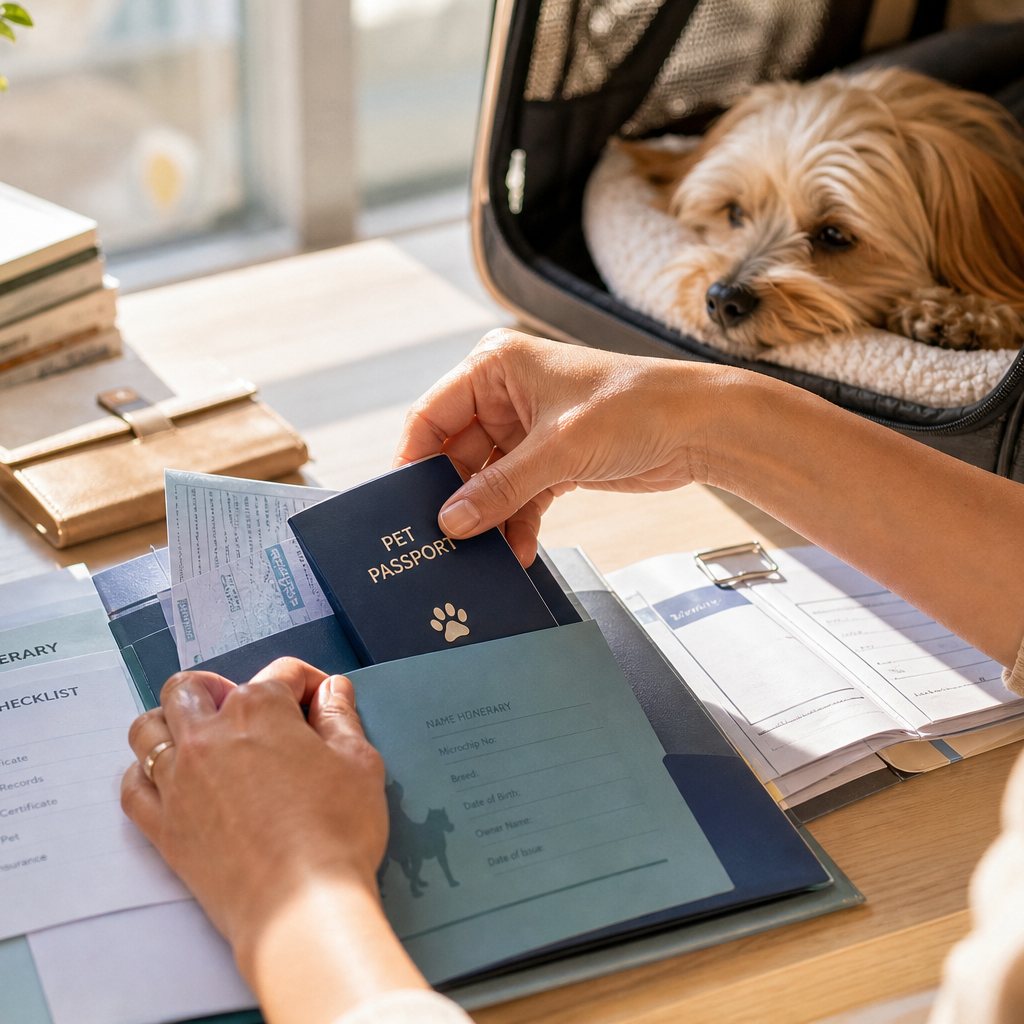
![How Long Does Pet Transportation Take? And the Benefits of Hiring a Professional | Including Examples of What Not to Do [2026 Edition]](https://petair.jp/wp-content/uploads/2024/11/time-required-for-pet-transportation-procedures.jpg)
Last Updated: August 1, 2026
What this article will tell you
Time required for the entire procedure
- We’ll explain the estimated time required for self-service and the tasks needed at each stage.
Overview of required procedures
- Here’s a step-by-step guide to everything you need to do, from microchipping to export inspections.
Advantages of Using Experts
- We'll explain not only how to save time, but also how to reduce paperwork errors and risks.
Common mistakes and countermeasures
- Here are some examples of common mistakes that can actually happen, along with tips on how to prevent them.
Three important points to check first
Before you begin the process of shipping your pet overseas, be sure to keep the following three points in mind. Simply being aware of these three points will make it much easier to avoid significant delays in your schedule.
Start preparing early. The time required varies depending on your destination.
- It takes a certain amount of time to complete the process from receiving the rabies vaccine to undergoing an antibody titer test, waiting for the results, and meeting the destination country’s requirements.
- Destinations that require antibody tests or quarantine upon arrival (such as Hawaii and Australia) tend to have longer preparation periods. Since the requirements vary depending on the destination and point of departure, be sure to check the official website of the destination’s authorities.
- For many countries, last-minute preparations right before departure simply won’t be enough. Once you’ve decided on your destination, be sure to check the required processing time well in advance.
Requirements vary significantly depending on the destination.
- United States:CDC official websiteAccording to the information provided, as of August 1, 2024, all dogs entering the United States must have a Dog Import Form submitted, and the dogs must be at least 6 months old.
- EU:Official Website of the European CommissionAccording to the report, document screening has been tightened under the new regulations effective April 22, 2026, and beyond.
- Australia: Specific procedures are required, such as prior import authorization and quarantine in port.
Rules vary by airline
- ANA has suspended the acceptance of international cargo shipments of brachycephalic breeds year-round (ANA Cargo Official(Please check the list of eligible dog breeds.)
- JAL also excludes several brachycephalic breeds from its international cargo service. Since the list of affected breeds is subject to change (JALCARGO Official) Please be sure to check there.
- Conditions vary depending on the size of the cage, weight restrictions, and whether the animal is traveling as a companion or as cargo.
Important:Import restrictions in various countries and airline policies are subject to change at any time. While this article is based on information current as of August 2026, be sure to check the latest information before your actual trip.
How Long Does the Pet Transportation Process Take? A Guide to Planning Your Schedule
If you’re handling the international transport of your pet on your own, throughout the entire processApproximately 90 to 125 hours (actual working hours; our estimate)This may be required. This is equivalent to approximately 2 to 3 weeks’ worth of work, calculated on a weekday basis. The following is a general schedule guideline.
More than 8 months before departure | Gathering information and conducting research (estimated 25–35 hours)
Research the import regulations of the destination country and understand the overall schedule. This is the stage of checking the official websites of each country's quarantine authorities, airline regulations, and required documents one by one.
- Research on Import Restrictions at the Destination Country
- Identifying and Verifying Required Documents
- Understanding the Procedure Flow
- Check and Compare Airline Policies
6–7 Months Before Departure | Basic Preparations (Estimated Time: 30–40 Hours)
Basic preparations such as microchipping, rabies vaccination, antibody titer testing, etc. are carried out in accordance with the requirements of the destination country. Cooperation with veterinarians is an important stage.
- Microchip Implantation and Verification
- Coordination with the Veterinarian and Hospital Visits
- Management of Rabies Vaccines and Other Immunizations
- Document Preparation, Review, and Translation
3 Months Before Departure | Complete Procedures (Estimated Time: 20–25 Hours)
This is the stage where the actual procedures move forward, such as applications to the Animal Quarantine Service, coordination with airlines and obtaining import permits. This is a stage that involves a great deal of communication with various agencies.
- Animal Quarantine ServiceApplication (via NACCS or email)
- Obtaining Import Permits and Prior Approval
- Coordination and Reservations with Airlines
Just Before Departure to Departure Day | Final Checks and Handling Unexpected Issues (Estimated 15–25 hours)
This involves final checks before departure and addressing any missing documents or additional requirements. Re-work at this stage is the most time-consuming part of the process.
- Amending and Resubmitting Documents
- Addressing Additional Requirements
- General Inquiries and Troubleshooting
What Documents and Procedures Are Required for Shipping Dogs and Cats Overseas? Check the List
Here,Dogs & CatsThis list outlines the documents and procedures generally required for international transport. Since the necessary procedures differ for animals other than dogs and cats—such as rabbits and birds—please check the specific requirements for each animal individually. The required items also vary depending on the destination, whether the animal is a dog or cat, its age, breed, and health condition.
| Items | Details | Approximate time required |
|---|---|---|
| Microchip implantation | Microchips compliant with both ISO 11784 and ISO 11785 must be implanted. As a general rule, implantation must occur before the rabies vaccination (please check with the Animal Quarantine Office regarding the order of procedures and any exceptions). | Treatment and Follow-up at the Veterinarian's Office |
| rabies vaccination | Vaccination is administered after microchip implantation. The number of doses and the intervals between them vary depending on the destination. | 1 or 2 visits to the hospital |
| Rabies antibody titer test | Serological testing must show antibody titers above the reference range (0.5 IU/ml or higher for entry into Japan from outside designated regions). The criteria vary depending on the destination. | Blood draw + waiting for results (varies by facility) |
| Health certificate | Issued by a veterinarian within the validity period specified for each destination. The form must comply with the requirements of the destination. | Hospital visits + paperwork |
| Export Quarantine Certificate | 動物検疫所での検査・発行。輸出日の14日前までにNACCSで申請し、出発10日以内に検査を受けます | Application + inspection day |
| Import Permits for Destination | Some countries require advance application (e.g., Australia, Hawaii, India, etc.) | A certain period from application to receipt |
| CDC Dog Import Form | This form must be submitted for all dogs entering the United States. Additionally, dogs must be at least 6 months old (effective August 1, 2024). | Online Application |
| EU Animal Health Certificate | This may be required when entering from outside the EU. Since requirements vary depending on whether you have a valid pet passport and the mode of transport, please be sure to check the European Commission’s official website for details on whether it is required and the necessary procedures (new regulations have been in effect since April 22, 2026). | Veterinarian-issued + certified |
Caution:The information above provides a general guide to the procedures for dogs and cats. The required documents and procedures vary depending on the destination country or region, the animal species, and the animal’s health status. For the exact requirements,Animal Quarantine Station (Export Procedures)andAnimal Quarantine Station (Import Procedures)Please check with the quarantine authorities in each country for details. (Source: Animal Quarantine Service official website and official websites of various national authorities; verified on August 2026)
Want to know which documents you need now?
We will guide you through all the necessary procedures according to your destination and pet's situation.
Handling It Yourself or Seeking Professional Help: Which Is Better? A Comparison of Time and Risk
Handling matters on your own takes time and effort, whereas hiring a professional tends to reduce the amount of time pet owners need to spend on the task. Below, we’ll provide a detailed comparison of the differences in time, paperwork, and risk.
| Comparison items | self-response | Utilization of experts (PetAirJPN) |
|---|---|---|
| Actual working hours of the owner | As a rough estimate, about 90 to 125 hours | As a general guideline, about 8 to 11 hours |
| Period (weekday equivalent) | Equivalent to about 2 to 3 weeks' worth of work | Focuses on veterinary supervision, signatures, and final confirmation |
| regulation research | Research the websites of the authorities in your country by yourself | Experts provide support in verifying and explaining the latest requirements |
| Document Preparation | All created and translated by myself | Support for reviewing content and organizing information for preparation |
| Quarantine Procedures | Handling Applications and Reservations on NACCS on Your Own | Support for organizing the information needed for applications and coordinating appointments |
| Airline Coordination | Checking the Rules and Making Reservations on Your Own | We provide consultation on choosing routes and airlines |
| Risk of incomplete documentation | First time, it is easy for deficiencies to occur. | Reduce the risk of oversights with experience-based checks |
| Responding to sudden changes | Contact and coordinate with various offices by yourself | Experts serve as contact points and provide flexible support |
*The actual working hours listed in the table (approx. 90–125 hours; approx. 8–11 hours) are all estimates provided by our company.
This is where hiring an expert makes a difference.
Can help reduce regulatory oversights
- We verify the complex requirements that vary by country based on our experience.
Reduce incomplete paperwork.
- Lower risk of resubmission or delayed departure due to errors in forms and descriptions
It makes schedule management easier
- We help you manage your schedule by working backward from vaccination dates and application deadlines.
Reducing the Burden of Language and Customer Service Support
- We provide support for communications with overseas quarantine authorities and local agents.
Common mistakes|This is what we want to avoid.
These are real-life examples of problems that can occur when shipping pets internationally. Knowing about them in advance will help you avoid making the same mistakes.
If you have your pet vaccinated against rabies before having it microchipped, the vaccination may be deemed invalid. This may require a revaccination, which could delay your travel plans by several months. Be sure to follow the order of microchipping first, then vaccination, and check with the Animal Quarantine Service if you have any questions.
If your rabies antibody titer test results fall below the reference range, you will need to be revaccinated and retested. Since it takes some time to receive the results, it is important to schedule these appointments well in advance.
Depending on the airport and the time of year, you may not be able to secure an appointment at the animal quarantine station on your preferred date. There have been cases where travelers were unable to get an appointment on their desired date and were forced to change their flight. We recommend making your reservation well in advance.
There have been cases where import requirements for a destination country changed during the preparation process, resulting in the need for additional documents. It is essential to check for the latest information on a regular basis. For example, under new EU regulations effective April 22, 2026, document reviews have become stricter than before (Official Website of the European Commission)。
You must obtain a health certificate within the validity period specified for each destination. There have been cases where a flight change caused the certificate to expire, making it necessary to obtain a new one.
Both ANA and JAL exclude several brachycephalic dog breeds from their checked baggage policies on international flights. There have been cases where this was discovered just before departure, requiring a change of airline or route. Be sure to check the official websites of each airline for the specific breeds affected.
Frequently Asked Questions (FAQ)
Cases where consulting PetAirJPN is easier.
So much paperwork, I don't know where to start.
- Microchips, vaccinations, antibody titer tests, health certificates, export inspections… We’ll organize the necessary procedures and provide you with a summary of their priorities and schedule.
- We also provide assistance with checking document formats and the information contained therein.
Complex import requirements for destination countries
- Australia's quarantine in port, Hawaii's pre-entry authorization,New EU RegulationsWe also provide support for complex requirements, such as customer service, based on our experience.
- Please feel free to consult with us regarding coordination with quarantine authorities and local agents in various countries.
I don't have time to prepare while working
- While you are busy just preparing for overseas assignment or emigration, it is a big burden to deal with the pet transportation procedures on your own!
- We help organize information related to regulatory research and document preparation, as well as coordinate quarantine procedures and communications with airlines, to reduce the burden on pet owners.
I'm concerned about a specific situation
- Flexible handling of cases with more complicated conditions than usual, such as large dogs, elderly pets, short-breed pets, and multi-pet households
- We can assist you in selecting airlines and routes, including advice on cages.
Things to Check Before Departure | Checklist
Caution:The above are general checklist items. There may be additional requirements depending on the destination and pet's situation. If you are unsure, please feel free to contact us.
🐾 Traveling abroad with your pet, start with a free consultation
Please let us know your destination, desired departure date, and pet situation.
A summary of the required procedures and deadlines will be provided.
Completely free of charge|Online support available|Open on weekends and holidays
Written by: PetAirJPN Editorial Department (International Pet Transportation Operations Team)
*The information in this article is current as of August 2026. Quarantine regulations in various countries and airline policies are subject to change without notice. Be sure to check the latest official information before traveling.

 English
  Japanese
  Chinese
  Korean
  German
  Spanish
  Portuguese