
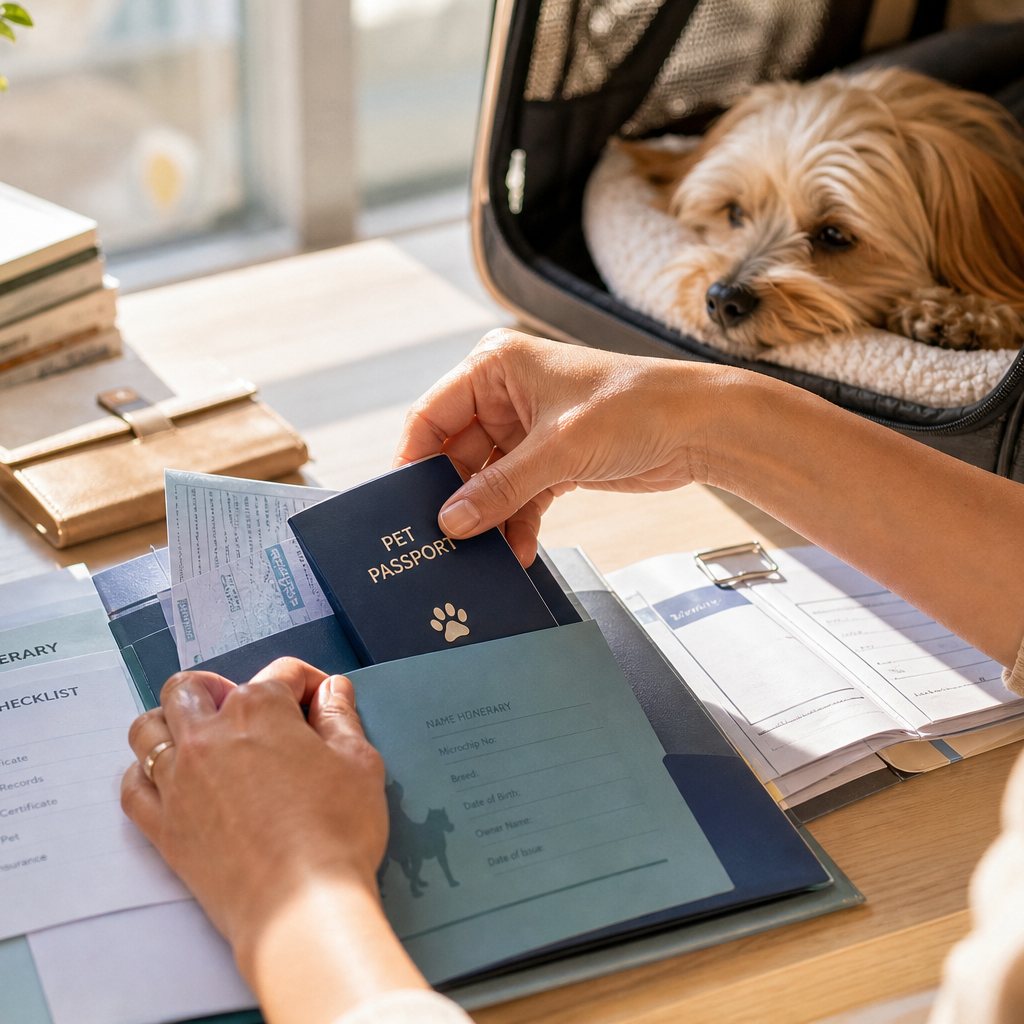
![Guide to Traveling to Mexico with Your Dog or Cat | 9-Month Preparation Process [2026 Edition]](https://petair.jp/wp-content/uploads/2025/07/mexico-pet-import.jpg)
Last Updated: July 29, 2026
Why do I need nine months to prepare for a trip to Mexico?
The length of the preparation period is determined not by the hurdles involved in entering Mexico itself, but byProcedures for returning to Japan afterwardThat's right. The legal requirements for entering Mexico are not as strict as those of many other countries.
According to the Animal Quarantine Service’s classification, Mexico is not included in the “designated regions” for import quarantine and is treated as a country outside the designated regions. Returning from a country outside the designated regions requires several procedures. The animal must be microchipped, receive two doses of the rabies vaccine, and undergo a rabies antibody titer test. By ensuring an interval of at least 180 days between the blood draw date and arrival in Japan, you become eligible for a route that allows you to avoid prolonged quarantine at the airport (Source: Animal Quarantine Service: "Procedures for Importing Dogs, Cats, and Other Animals (From Areas Other Than Designated Regions)"(as of July 2026). These 180 days may be accumulated while staying in Mexico; it is not necessary to complete the entire period before leaving Japan. However, if the 180-day period has not been completed by the time you arrive in Japan, your pet will be subject to a quarantine period of up to 180 days at an animal quarantine station.
Three Basic Points to Keep in Mind First
- The requirements for entering Mexico itself are not as strict as those of many other countries. What determines the length of the preparation period isProcedures upon returning homeis
- The 180-day waiting period required upon returning to Japan is,Blood Draw Date for Rabies Antibody Titer Testwill be the starting date. How smoothly your return to Japan goes depends largely on how far you can get this waiting process completed before your trip.
- "Preparations for Entering Mexico" and "Preparations for Returning to Japan" are,SimultaneouslyYou need to proceed as follows
If you'd like to learn more about the basics of rabies vaccinations, please also check out this article.
Rabies Vaccination Basics You Need to Know: Traveling Safely Abroad with Your Pet
A 9-Month Preparation Schedule: What Needs to Be Done by When?
Considering the 180-day waiting period and the deadlines for various documents, it’s best to start preparing nine months before departure to allow plenty of time. The following is a recommended schedule provided by PetAirJPN; it does not represent the exact deadlines set by law. The actual timeline may vary depending on your pet’s age and the status of your document preparation.
About 9 months before departure: Begin basic preparations
Have your pet microchipped with a chip that complies with ISO 11784 and 11785 standards, and consult with your regular veterinarian about your travel plans. Please note that rabies vaccinations or tests received prior to microchip implantation are generally not recognized as valid for entry procedures upon your return to Japan. However, they may be accepted under certain conditions, so please check with the Animal Quarantine Service to confirm whether they are valid in your specific case.
About 7 months before departure: Get a rabies antibody titer test
A blood sample will be taken after the second rabies vaccination, and antibody titers will be measured at a testing facility designated by the Ministry of Agriculture, Forestry and Fisheries. Since the date of this blood draw marks the start of the 180-day waiting period, please keep the original certificate in a safe place.
7 to 2 months before departure: Prepare documents and arrange transportation while waiting
While serving the 180-day waiting period, we will simultaneously prepare the documents required for entry into Mexico (such as animal health certificates) and confirm the airline and transportation route we will use.
About one month before departure: Final review of Mexico entry documents
We will perform a final check to ensure that there are no errors in the information on the documents required by SENASICA (Mexico’s animal quarantine authority), such as health certificates and rabies vaccination certificates.
Up to 14 days before the desired inspection date: Apply for an export inspection
Animal Quarantine ServiceApply for an export inspection via NACCS (a system for conducting animal quarantine-related procedures online) and schedule an inspection time (Source: Animal Quarantine Service; verified July 2026).
Within 10 days of departure: Undergo an export inspection
You must undergo an export inspection at the Animal Quarantine Station and receive an export quarantine certificate (Source: Animal Quarantine Station, verified July 2026). The application deadline (14 days prior) and the inspection date (within 10 days) are separate, so be sure not to confuse them.
Day of Departure: Check-in at the Airport
Submit all required documents, such as health certificates and export quarantine certificates. Since the timing and process for submission vary depending on the airline you’re using, be sure to check the guidelines in advance.
Once Your Return Date Is Set: Submit a Prior Notification to the Animal Quarantine Station
Once you have decided to return to Japan, you must submit a prior notification to the Animal Quarantine Station with jurisdiction over the airport or seaport of your intended arrival at least 40 days before your scheduled arrival date (Source: Animal Quarantine Station, verified July 2026). This notification must be submitted once your return to Japan is confirmed, not at the time of your departure for Mexico.
In what order should microchipping, vaccinations, and antibody titer testing be performed?
For customs procedures when returning to Japan, the order of these three steps is important. As a general rule, rabies vaccinations or tests conducted before the microchip is implanted will not be recognized as valid. While they may be accepted under certain conditions, please check with the Animal Quarantine Station to confirm whether they are valid in your specific case. If you are unsure, be sure to start by having the microchip implanted.
| Step | Details |
|---|---|
| 1. Microchip Implantation | Equipped with chips that comply with ISO 11784 and 11785 standards |
| 2. First Rabies Vaccination | Vaccinate after microchipping, starting at 91 days of age |
| 3. Second Rabies Vaccination | Receive the second dose at least 30 days after the first dose (with the first dose counted as Day 0) |
| 4. Rabies Antibody Titer Test | Blood sample taken after the second dose. The threshold is an antibody titer of 0.5 IU/ml or higher. |
| 5. Waiting Period | More than 180 days from the date of blood collection to arrival in Japan |
Source: Animal Quarantine Service: "Procedures for Importing Dogs, Cats, and Other Animals (From Areas Other Than Designated Regions)", Verified in July 2026. This is a requirement for returning to Japan.
For detailed information on how to choose a microchip and the best time to have it implanted, please see this article.
Essential for pet travel abroad! A Thorough Guide to Microchipping Dogs and Cats
What documents and requirements are needed to enter Mexico?
When entering Mexico,SENASICA (Mexico's Animal Health Authority)The main requirements are as follows. Since these requirements are subject to change, be sure to check the official website for the latest information before traveling.
Key Points for Preparing Documents
- Since documents are often required to be submitted in English or the local language (Spanish), be sure to confirm early on whether a translation is needed.
- It’s a good idea to prepare multiple copies of the original document and keep them in separate locations.
- Since Mexico is not a designated region, you should proceed with your preparations for returning to Japan (such as the 180-day waiting period) at the same time.
What is the process for handling paperwork?
The actual paperwork process generally involves four main steps.
1. Preparations at the Veterinarian's Office
Please request the issuance of a microchip registration certificate, a rabies vaccination certificate, the results of an antibody titer test, and a health certificate (which is often required to be presented in English or the local language).
2. Procedures at the Animal Quarantine Station (Departure Airport)
Animal Quarantine ServiceSubmit the export inspection application form, and after undergoing a document review and health inspection, you will receive an export quarantine certificate.
3. Check-in at the airline (on the day of departure)
The process involves confirming the shipping reservation, checking the supporting documents, and inspecting the crate before proceeding to check-in.
4. Quarantine upon arrival in Mexico (SENASICA)
Submit your documents at the SENASICA counter, undergo a health check if necessary, and you will be granted entry. Upon arrival, follow the instructions of the SENASICA staff, and if you have any questions, consult with a local veterinarian.
Why not check what you need in your specific situation?
Please let us know your destination and planned departure date.
Here is information on the required preparation period and the initial procedures.
What should you keep in mind when choosing an airline?
Avoid assuming that a particular airline will be able to transport your pet just based on its name. This is because whether an airline accepts pets—especially dogs and cats—for cargo transport varies significantly from airline to airline and depending on the time of year.
Some airlines operate direct flights between Japan and Mexico. However, routes and schedules vary depending on the time of year, and it is not uncommon to have to take a connecting flight. Whether you’re taking a direct or connecting flight, the things you need to check remain the same. Whether your planned flight accepts pets in the cargo hold is a separate matter, so be sure to check the airline’s official website.
International Air Transport Association (IATA)While there are general guidelines in place, the actual decision on whether to accept pets and the conditions for doing so are left to the discretion of each airline. Some airlines have suspended the acceptance of pet cargo for general passengers for an extended period.
Before making a reservation, be sure to check the official website of the airline you’re considering to confirm its current pet transport policies, restrictions on dog breeds, crate size requirements, and any seasonal restrictions. Since some airlines restrict pet transport during periods of high temperatures, such as the summer, it’s a good idea to check early to see if there are any regulations that apply to your planned travel dates.
How should I choose a crate (cage)?
We will provide a crate that meets the standards set by the International Air Transport Association (IATA). As a general guideline, the crate should be large enough for your pet to stand up and turn around inside. Be sure to check for proper ventilation, sturdiness, and whether a water dish can be attached. Specific size requirements vary depending on the airline you’re using andIATA's Official WebsitePlease check there for the latest information.
This article also explains the key points to consider when choosing a crate.
A complete guide to choosing a crate to fly safely with your pet - PetAir JPN
How much will it cost?
The cost of shipping a pet to Mexico varies significantly depending on the pet’s size and weight, the transit points, the airline used, and whether you hire a shipping agent. Because there are such large differences depending on the individual pet and route, this article does not list specific amounts. The breakdown of costs primarily includes the following items:
| Cost Categories | Main Content | Main Factors Affecting Fluctuations |
|---|---|---|
| Veterinary-related expenses | Microchipping, vaccinations, antibody titer testing, health checkups, etc. | Veterinary Clinics, Types of Tests |
| Document-Related Expenses | Fees for obtaining export quarantine certificates, translations, and various applications, etc. | Number of Required Documents; Whether Translation Is Required |
| Air transportation costs | Shipping charges, crate fees, handling fees at transit points, etc. | Pet size and weight, layover locations, airline, and whether it is peak season |
The exact cost will vary depending on your destination, planned departure date, and your pet’s size. We recommend comparing quotes from multiple providers and planning your budget with some flexibility.
What are the keys to successful preparation, and what are some common mistakes?
Key Points for Moving Forward with Preparations
- Early preparation: Plan your actions by working backward from 9 months ago
- Accuracy of documents: Be sure to review your work for any errors or omissions before submitting it.
- Collaboration with Experts: Consult with a veterinarian or a specialized transport company early on
- risk management: Set aside a backup schedule to prepare for unforeseen circumstances
- Health management: Make sure your pet is in good health right up until departure
Frequently Asked Questions (FAQ)
Summary
The length of preparation required for traveling to Mexico with a pet is determined not by the entry requirements themselves, but by the 180-day waiting period required for re-entry into Japan. It is crucial to follow the correct sequence of steps—from microchipping to receiving two doses of the rabies vaccine, undergoing an antibody titer test, and completing the waiting period. Additionally, be sure to check official sources well in advance for the documents required for entry into Mexico (such as the rabies vaccination certificate and records of parasite treatment) and the transport requirements, which vary by airline.
If you'd like to learn more about immunizations and vaccines, please also check out this article.
Traveling Abroad with Pets|Experts Explain Required Vaccinations, Vaccine and Antibody Titer Tests
Reference Information and Related Links
- Animal Quarantine Station: Procedures for Importing Dogs, Cats, and Other Animals (For Areas Other Than Designated Regions)
- Animal Quarantine Station: Export Quarantine for Dogs and Cats (Removal from Japan)
- SENASICA (Mexican Ministry of Agriculture and Rural Development): Guide to Traveling with Pets
- SENASICA: Regarding Animal Health Certificates for Export
- IATA: Live Animals Regulations
- Embassy of Japan in Mexico: Quarantine Regulations for Dogs, Cats, and Other Animals
🐾 Traveling to Mexico with Your Pet: Start with a Free Consultation
Please let us know your destination, desired departure date, and pet situation.
A summary of the required procedures and deadlines will be provided.
Completely free of charge|Online support available|Open on weekends and holidays
Written by: PetAirJPN Editorial Department (International Pet Transportation Operations Team)
*The information in this article is current as of July 2026. Quarantine regulations in various countries and airline policies are subject to change without notice. This article is intended to provide general information only; to determine whether travel is permitted and to confirm specific requirements, please be sure to check the latest official information from the relevant national authorities, animal quarantine offices, and airlines.

 English
  Japanese
  Chinese
  Korean
  German
  Spanish
  Portuguese